

Is GCSE Arabic Similar to GCSE Modern Hebrew?
GCSE Arabic similar to GCSE Modern Hebrew? Compare scripts, grammar, vocabulary, exam formats and workload before choosing your next GCSE language.
There is a particular kind of confidence that comes from finishing a GCSE in a language written from right to left. The page no longer feels unfamiliar. New sounds seem less intimidating. Grammar has taught you to notice patterns rather than guess.
So, is GCSE Arabic similar to GCSE Modern Hebrew? Yes, in several meaningful ways: both are Semitic languages, both use right-to-left scripts, and both GCSEs assess listening, speaking, reading and writing. But the overlap is not large enough to make Modern Hebrew an easy continuation of Arabic. The alphabet, pronunciation, vocabulary and many grammatical details must still be learnt separately.
The practical answer is simple: enjoying Arabic is a good reason to investigate Modern Hebrew, but not enough on its own to choose it. Your interest, access to teaching and willingness to begin a new writing system matter more than linguistic family resemblance.
The quick comparison checklist
Before deciding, consider these questions:
- Did you enjoy learning how a language works, or mainly enjoy Arabic culture and content?
- Are you comfortable starting a different alphabet from the beginning?
- Can your school provide suitable teaching and enter you for the qualification?
- Do you have enough time alongside GCSE maths and your other subjects?
- Have you looked at the current specification and assessment materials for both courses?
- Would Modern Hebrew serve a personal, cultural, academic or future career interest?
A promising answer to most of these questions matters more than whether a few words or grammatical patterns look familiar.
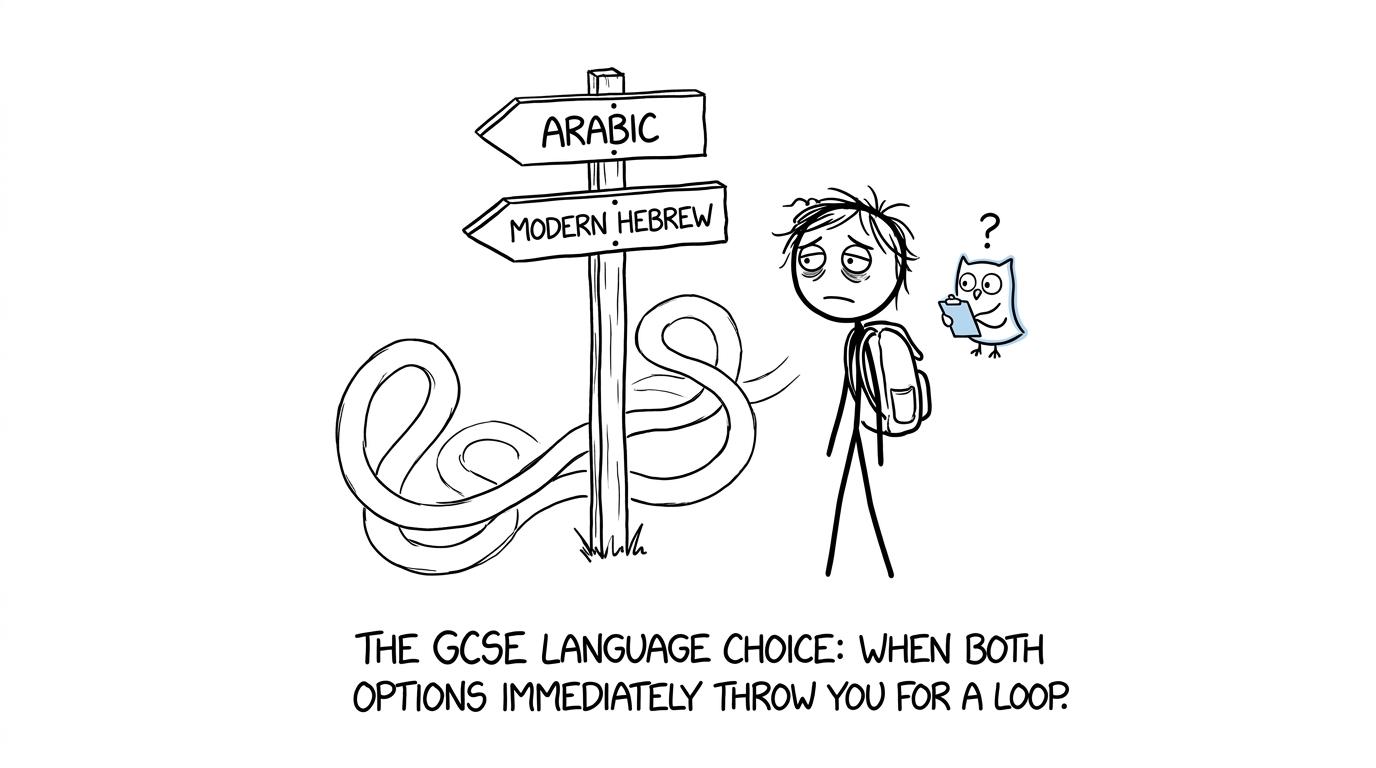 A student choosing between two right-to-left language paths
How much genuine linguistic overlap is there?
Arabic and Hebrew belong to the Semitic language family. That shared history creates real structural similarities, particularly in how words can be built from roots and patterns. It does not, however, make the modern languages mutually intelligible.
A student who has learnt Arabic may recognise the general idea that a group of consonants can carry a central meaning while vowels and other additions help form related words. This habit of looking inside words is useful when beginning Modern Hebrew. You are less likely to see vocabulary as an arbitrary list and more likely to search for connections.
Both languages also:
- are normally written from right to left;
- use alphabets based primarily on consonants;
- distinguish grammatical gender;
- change verbs according to features such as person and tense;
- use prefixes and suffixes to carry grammatical information;
- contain some historically related vocabulary.
This is genuine overlap. Yet it is better understood as a shared architectural style than a shared building. Knowing how one building is designed helps you read the plans, but it does not give you the keys to every room.
The scripts are related in direction, not appearance
Experience reading Arabic from right to left removes one early psychological barrier. You already know that direction is a convention, not a difficulty.
The visual systems themselves are substantially different. Arabic letters commonly connect and can change shape according to their position in a word. Modern Hebrew uses a different alphabet, and its standard printed letters do not connect in the same way. Handwriting conventions differ too.
Both systems can represent vowels less fully in ordinary text than English does, although each language has its own methods and conventions. Your Arabic experience may help you tolerate this ambiguity, but it will not remove the need to learn Hebrew spelling and reading patterns carefully.
Related roots do not mean interchangeable vocabulary
Because the languages are historically related, learners may encounter words that resemble one another in sound or meaning. Recognising such relationships can make individual items memorable.
The danger is assuming that resemblance creates a dependable conversion rule. Sound changes, differences in meaning and centuries of separate development mean that most GCSE vocabulary still needs deliberate learning. Modern Hebrew also contains vocabulary shaped by its own history and modern usage, while Arabic presents its own relationship between standard forms and regional spoken varieties.
For GCSE Arabic, Pearson's current published specification assesses understanding of standard spoken Arabic. Students familiar mainly with a regional variety may therefore still need focused work on the language expected in the examination.
How similar are the two GCSE qualifications?
At assessment level, the courses look more alike than the languages themselves.
The current published GCSE Arabic qualification is offered by Pearson Edexcel, while GCSE Modern Hebrew is offered by AQA. Both are linear GCSEs with Foundation and Higher tiers. Students take their assessments at one tier rather than mixing tiers across papers.
| Feature | GCSE Arabic | GCSE Modern Hebrew |
|---|---|---|
| Current exam board | Pearson Edexcel | AQA |
| Main skills | Listening, speaking, reading and writing | Listening, speaking, reading and writing |
| Weighting | Each skill is worth 25%25\%25% | Each skill is worth 25%25\%25% |
| Tiers | Foundation and Higher | Foundation and Higher |
| Speaking format | Role play, picture stimulus and conversation | Role play, photo card and general conversation |
| Translation | Included in reading and writing | Included in reading and writing |
This similarity is useful. If you have completed GCSE Arabic, ideas such as role plays, picture-based discussion, translation and extended writing will not feel new. You will understand that language exams reward communication, comprehension and accurate use of language across several skills.
There are still board-specific differences in timing, marks, task wording and administration. Do not prepare for AQA Modern Hebrew by relying on an Edexcel Arabic paper structure. Specifications can also be updated, so confirm the exact course and examination series with your school before making plans.
Which skills from GCSE Arabic will transfer?
The strongest transfer may come from your revision habits rather than from individual words.
Reading without translating every word
Arabic learners often become more comfortable extracting meaning from context, identifying familiar roots and continuing when one word is unknown. That is valuable in Modern Hebrew reading, where stopping at every unfamiliar item can waste time and obscure the wider message.
Listening for the information that matters
A GCSE listening paper rarely requires perfect understanding of every sound. Experience identifying speakers, opinions, time references, negatives and changes of tense transfers well between language courses, even when the vocabulary does not.
Building answers for speaking and writing
If Arabic taught you to extend an answer with a reason, opinion or contrasting point, that examination instinct remains useful. You will still need new Hebrew language to express those ideas, but the underlying discipline survives.
Revising through retrieval
Vocabulary improves when it is recalled, checked and revisited. The same principle works in maths: attempting a question reveals more than rereading a method. Maths students can apply the cycle in the GCSE 20-minute maths revision routine, then use a similar rhythm for short language recall sessions.
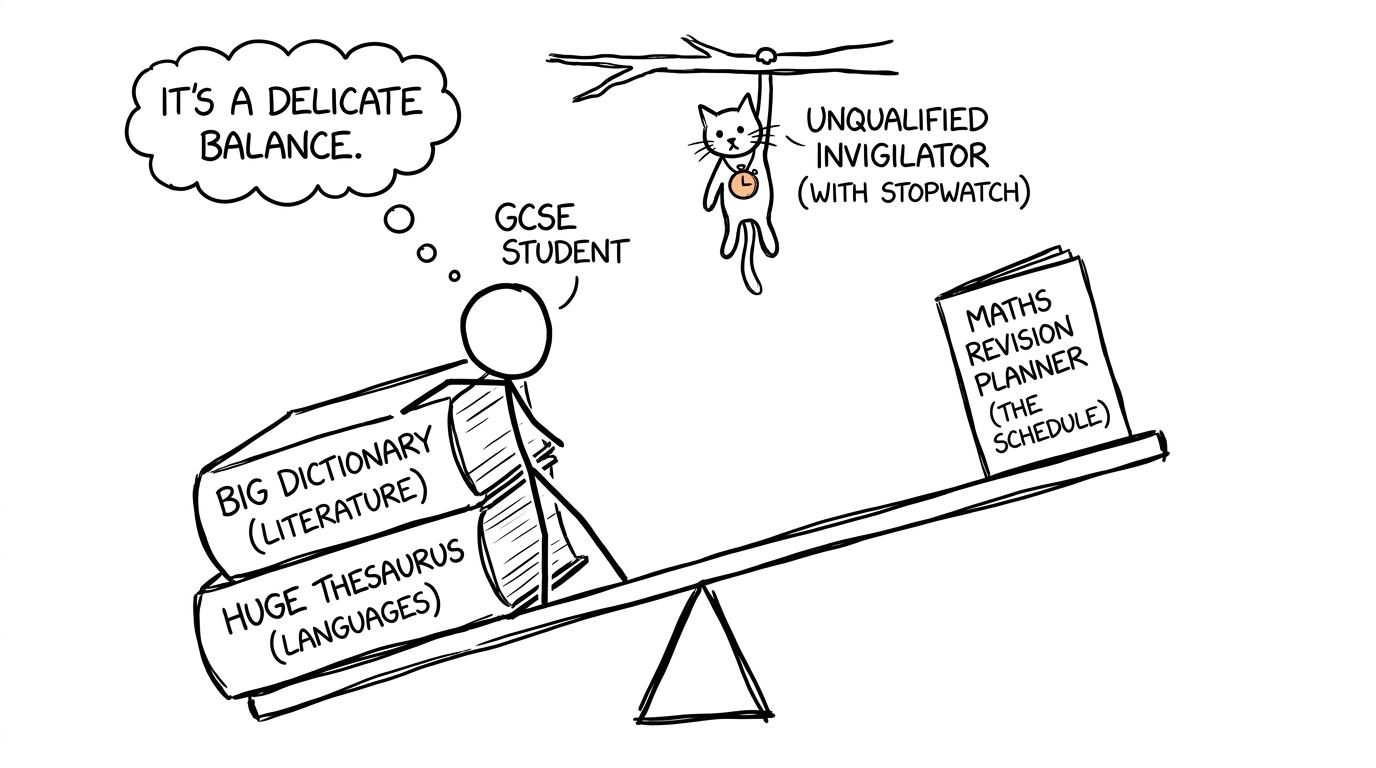 A student balancing language dictionaries with a maths revision planner
Where the transfer stops
Modern Hebrew should still be treated as a new subject.
You must learn a new alphabet, sound system, core vocabulary and spelling conventions. Although both languages use gender and root-based structures, their verb patterns, plural forms, sentence conventions and everyday expressions are not identical. Pronunciation also contains important differences.
Arabic itself is not one uniform spoken experience. A student may know Modern Standard Arabic, a regional variety, or a mixture of both. That background can affect what feels transferable. Likewise, previous exposure to Hebrew through family, community or religious contexts may help, but the GCSE assesses Modern Hebrew and its specified language skills. Familiarity with another form of Hebrew should not be assumed to equal exam readiness.
In short, Arabic gives you a useful lens. It does not give you the Modern Hebrew course for free.
Should a maths-focused student take another language GCSE?
The decision is partly about opportunity cost. Every additional subject consumes revision time, and that time must come from somewhere.
Begin with evidence rather than enthusiasm alone. Check your latest maths assessments, identify recurring gaps and decide whether your current timetable can absorb another language without weakening core subjects. The GCSE maths topics by exam board and tier guide can help you see the scope of Edexcel, AQA, OCR and Eduqas maths before you commit.
If maths already needs substantial repair, build a stable routine first. Use the free GCSE maths revision hub for topic lessons and practice questions, then check progress with GCSE mini tests. A decision made after two consistent weeks of revision is usually more realistic than one made during a burst of motivation.
A sustainable weekly plan might separate the purposes of each session:
- language vocabulary retrieval;
- listening or reading practice;
- maths topic repair;
- a timed maths or language task;
- careful marking and correction.
For a broader structure, adapt the GCSE maths revision timetable across your subjects. Nearer the exams, the one-month GCSE maths revision plan can protect enough time for past papers while language preparation continues.
Common mistakes when comparing the subjects
Assuming both languages are nearly the same
They are related, not interchangeable. Shared roots and grammatical concepts help, but direct comprehension will be limited without specific Modern Hebrew learning.
Choosing from the script direction alone
Writing from right to left may feel familiar, yet the Hebrew alphabet must still be learnt independently. Script direction is one small part of literacy.
Ignoring the change of exam board
Pearson Edexcel Arabic and AQA Modern Hebrew do not use identical papers or mark schemes. Revise from the materials for the qualification you will actually sit.
Treating enjoyment as proof of available time
Interest helps persistence, but it does not create extra hours. Review your whole GCSE workload, including maths, English and science, before committing.
Forgetting to confirm entry arrangements
A qualification appearing in an exam board's current materials does not guarantee that every school teaches it or can provide the required speaking assessment. Discuss teaching, supervision and entry arrangements with your school early.
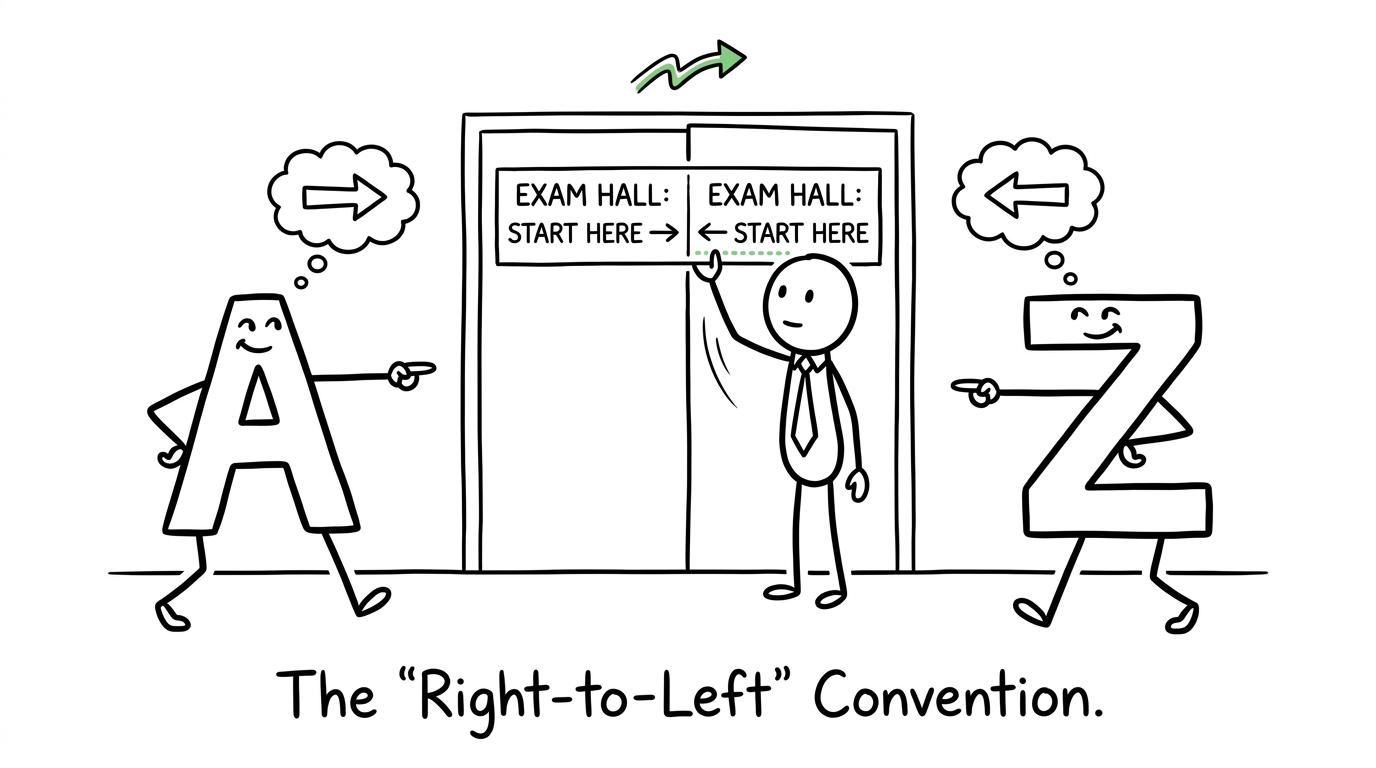 Two alphabets confidently disagreeing about the exam hall direction
The best reason to try Modern Hebrew
The best reason is not that it will be easy. It is that the challenge interests you enough to do the work.
GCSE Arabic can give you useful foundations: comfort with right-to-left reading, awareness of Semitic word structures and experience across four language skills. Modern Hebrew will still ask you to become a beginner again. That can be humbling, but it is also where much of the value lies.
Before choosing, inspect the current specification, look at official assessment materials, speak to your school and test whether the subject fits your timetable. Then keep your maths preparation steady with MathsGenie's free revision lessons, practice questions, mark schemes and video solutions. Use past papers to build examination stamina, mini tests to expose small gaps and predicted papers to sharpen your preparation nearer the exam.
Start at the MathsGenie GCSE maths revision area, choose your board and tier, and build a revision plan that leaves room for curiosity without sacrificing the marks already within reach.










