With reference to Figure 1 and Extract A, discuss the benefits of introducing a system of differential tuition fees where universities are allowed to charge higher fees for certain degree courses.
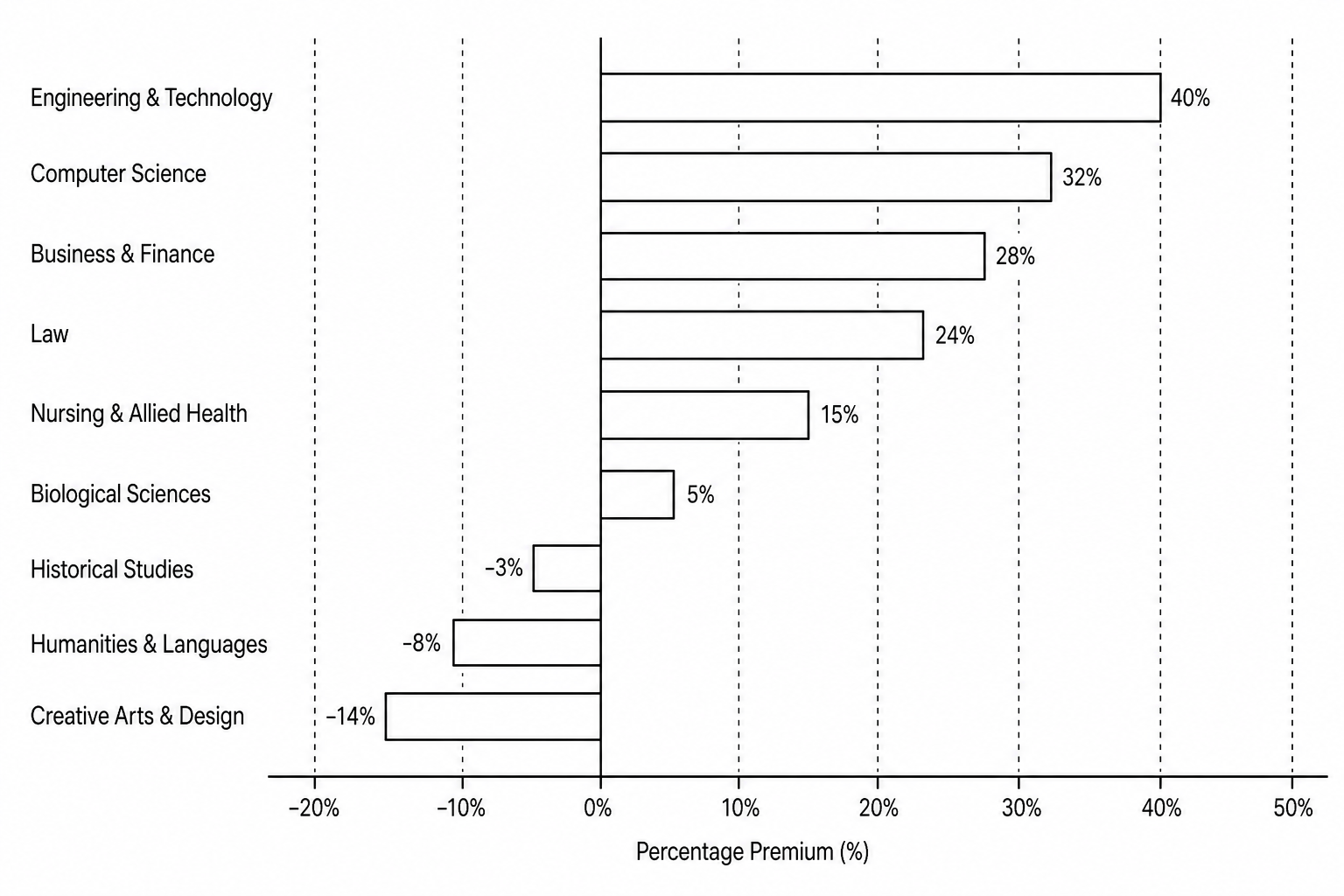
| Subject Field | Percentage Premium (%) |
|---|---|
| Engineering & Technology | 40% |
| Computer Science | 32% |
| Business & Finance | 28% |
| Law | 24% |
| Nursing & Allied Health | 15% |
| Biological Sciences | 5% |
| Historical Studies | -3% |
| Humanities & Languages | -8% |
| Creative Arts & Design | -14% |
The economic returns of a university degree remain substantial. In 2022, the median starting salary for graduates was £9,500 higher than that of non-graduates. This graduate salary premium ensures that young professionals make a significant contribution to economic productivity, while also boosting government income tax receipts.
However, financing higher education has become highly unsustainable. The average student in England now graduates with approximately £48,000 of debt, and interest rates on student loans have risen. Many graduates work in roles where their lifetime earnings are lower than the non-graduate average, meaning they are unlikely to make significant repayments on their debt.
The Department for Education estimates that approximately 42% of the value of student loans will never be fully repaid. Total outstanding student loan debt reached £145 billion in 2022 and is projected to escalate to £195 billion by 2028.
To address this, some policy experts suggest abandoning flat-rate tuition fees (which are capped at £9,250 per year for most domestic undergraduates). Instead, universities could charge differential tuition fees: pricing courses based on their delivery cost or their expected financial return. This would mean that resource-intensive or high-earning degrees, like Engineering or Computer Science, would cost more than Humanities or Creative Arts.
Currently, flat-rate fees of £9,250 apply to almost all undergraduate programs. Yet, science-based and engineering courses require exceptionally expensive laboratory equipment, and clinical courses demand intensive, hands-on instructional time.
Economists estimate that the price elasticity of demand (PED) for higher education is approximately -0.4.
International models offer distinct alternatives. In Australia, the 'Job-Ready Graduates' package restructured fees, making humanities courses more expensive to encourage enrollment in high-demand fields like nursing and STEM. Conversely, several European countries, such as Germany, charge no tuition fees at all, funding universities entirely through general taxation.
Despite the rising costs, higher education remains popular, with UK applicant numbers rising to over 720,000 in 2022. However, stark social disparities persist. Only 21% of young people from the most socio-economically deprived areas went to university in 2022, compared with 52% from the most affluent areas. Educational research indicates that low-income applicants suffer from high debt aversion, making them less likely to apply even when they hold identical academic qualifications to their wealthier peers.

