Question 16
FFigure: Environmental data for producing and recycling a metal
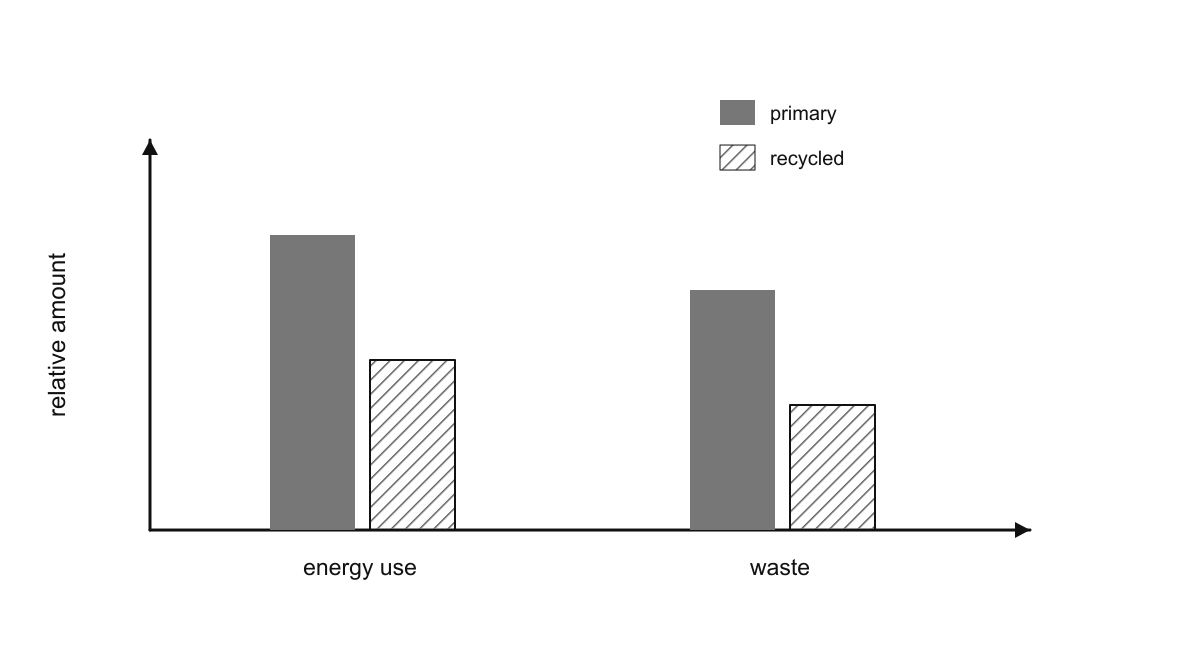
The chart compares primary production and recycling. Which conclusion is best supported?
Recycling uses less energy but produces more waste
Recycling uses less energy and produces less waste
Recycling uses more energy but produces less waste
Primary production uses less ore
5.1 Obtaining and using metals Questions
45 exam-style questions on Edexcel GCSE Chemistry 5.1 Obtaining and using metals, covering 5.1.1 The reactivity series of metals, 5.1.2 Displacement reactions as redox reactions, 5.1.3 Extracting metals from ores by reduction, 5.1.4 Biological methods of metal extraction, 5.1.5 Resistance to oxidation and recycling metals, and 5.1.6 Life cycle assessment. Each one has a worked solution and a mark scheme showing where the marks go.