

Will the Grade 4 Pass Change? Parent Guide
Will the grade 4 pass change? As of November 2026, no announced change affects current GCSE pupils. See what reforms could mean for maths.
Last updated: 3 November 2026. This article concerns GCSEs in England. Qualifications and grading arrangements differ elsewhere in the UK.
No. As of November 2026, there is no announced change to grade 444 as the standard pass for current GCSE maths pupils in England.
That is the straight answer a parent needs. Your child should continue preparing for the GCSE maths course and grading system their school is currently teaching.
The nuance is that GCSE reform is coming. The Government has said it will review Key Stage 4 curriculum and GCSE content following the Curriculum and Assessment Review. A new national curriculum is expected to be published in spring 2027, with schools beginning to teach it from September 2028. That is not the same as announcing that grade 444 will stop being the standard pass.
The answer at a glance
For a parent trying to separate policy from headlines, these are the important points:
- Grade 444 remains the standard pass in GCSE maths in England.
- Grade 555 is described as a strong pass.
- Grade boundaries can change each exam series without changing what grade 444 means.
- The Government plans to review GCSE maths content, but this does not automatically change the grading scale.
- Pupils should revise the specification and tier they are currently entered for.
- Entry requirements are set by individual sixth forms, colleges, employers and courses, so some may ask for grade 555 or higher.
Why parents are asking whether the grade 4 pass will change
Imagine a parent opening three tabs after hearing the words “new GCSE maths”. One discusses curriculum reform. Another mentions grade standards. A third talks about post-161616 resits. By the fifth tab, a simple question seems to have acquired five different answers.
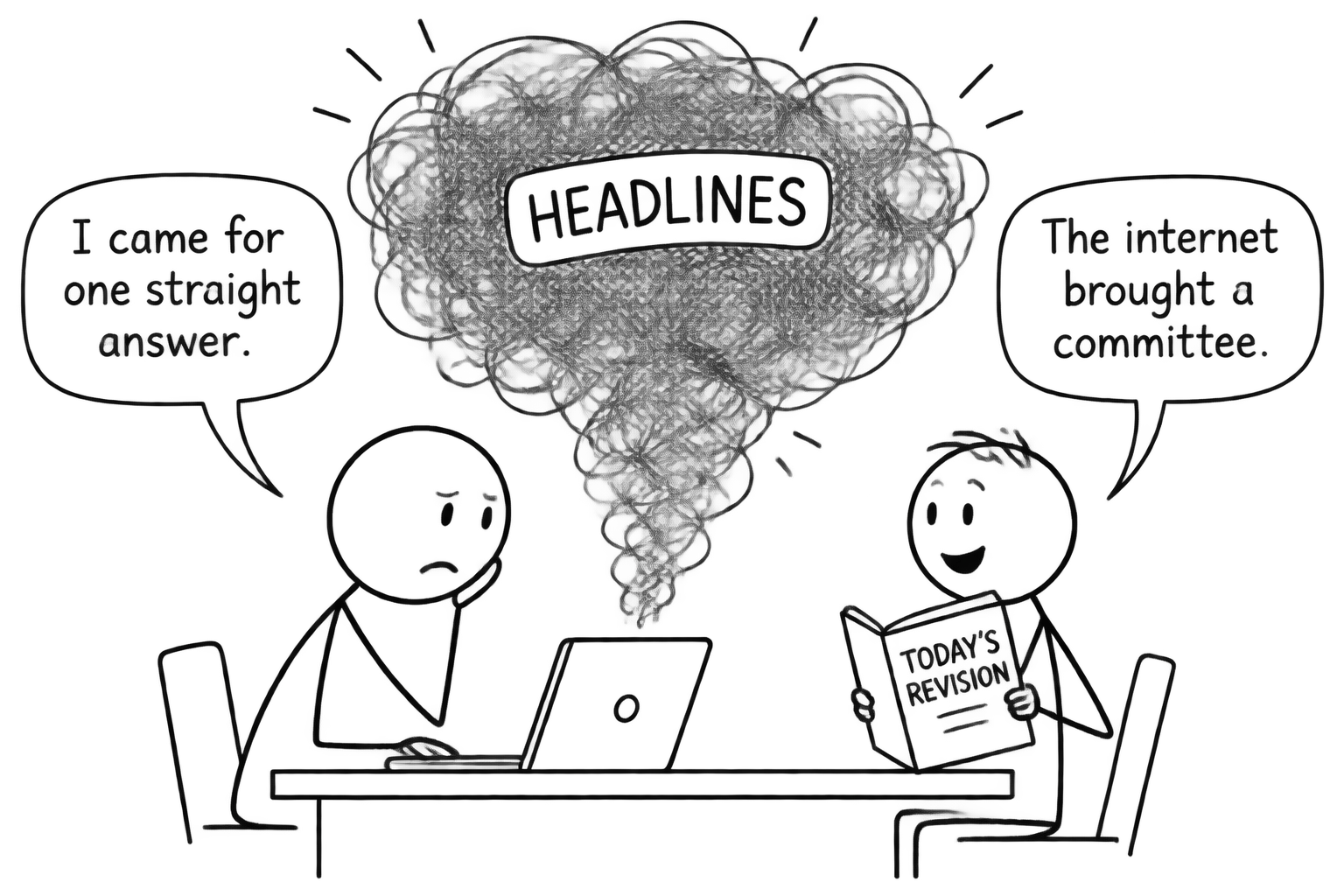 A parent encounters a tangle of GCSE headlines while a pupil focuses on today's revision
The confusion comes from several separate ideas being discussed at once:
- what pupils learn in maths;
- how GCSEs are assessed;
- how grades are awarded;
- what schools and colleges require after Year 111111;
- and what happens when a pupil does not achieve grade 444.
A proposal affecting one of these areas does not necessarily alter the others. New content, for example, would not by itself turn grade 555 into the standard pass.
Grade 4, grade 5 and grade boundaries are different things
Under England's numerical GCSE grading scale, grade 444 is the standard pass and grade 555 is the strong pass. Grade 444 was designed to align broadly with the bottom of the former grade C standard, while grade 555 represents a higher level of attainment.
The word “pass” can still be misleading in everyday conversation. A pupil may have passed GCSE maths with grade 444, yet find that a particular A Level course asks for grade 666 or 777. Another college course may accept grade 444, while an employer could set its own requirement.
That does not redefine the national grade. It means the destination has its own entry criteria.
Grade boundaries are another matter. Ofqual explains that boundaries are set for each exam series after the papers have been taken and marked. They account for differences in paper difficulty, helping to maintain a comparable qualification standard over time.
So the raw mark needed for grade 444 may move. The status of grade 444 can remain unchanged.
What the GCSE reform plans actually say
The Curriculum and Assessment Review's final report was published in November 2025. It treated achieving grade 444 in maths as reaching Level 222, rather than recommending that the standard pass should immediately move to a different grade.
The Government's response said that it would review the Key Stage 4 curriculum and GCSE content in maths. The stated direction is therefore a review of what is taught and assessed. It is not a published decision to remove grade 444 as the standard pass.
The Government has also indicated that the final revised national curriculum will be published in spring 2027 and taught from September 2028. Detailed GCSE specifications, assessment arrangements and first-examination dates require their own development and communication. Parents should not assume that every pupil in school during 2028 will immediately sit a redesigned GCSE.
This distinction matters. Policy develops in stages:
- a review recommends a direction;
- the Government responds;
- curriculum and qualification details are developed;
- exam boards publish accredited specifications and specimen materials;
- schools prepare before first teaching and assessment.
Until an official decision changes the grading standard, current pupils should work towards the present qualification.
What parents should do now
The useful response is not to predict every detail of new GCSE maths. It is to establish which rules apply to your child.
Confirm the exam board and tier
Ask the school which exam board your child follows: Edexcel, AQA, OCR or Eduqas. Also confirm whether the current plan is foundation or higher tier.
In England, foundation tier provides access to grades 111-555, while higher tier provides access to grades 444-999, with an allowed grade 333 for candidates who narrowly miss grade 444. Tier decisions should be discussed with the school because they depend on a pupil's current attainment and the most suitable assessment route.
Check the destination, not just the word “pass”
If your child has a likely college, apprenticeship or sixth-form route, read its current entry requirements. Grade 444 may satisfy one course while another asks for grade 555 or above. Requirements can also change between admissions cycles, so use information published for your child's year of entry.
Revise the current specification
Do not pause revision because reform has been announced. A Year 101010 or Year 111111 pupil needs fluency in the course being taught now, not speculation about a later specification.
A practical weekly routine is:
- choose one weak topic identified through schoolwork or a recent paper;
- review the method;
- complete practice questions without relying on notes;
- mark the work carefully;
- write down the exact cause of each lost mark;
- revisit the same skill several days later.
If setting that up feels like another policy document to manage, use Maths Genie GCSE revision lessons to move directly from a weak topic to current-specification teaching and practice.
How to judge future announcements
A genuine change to the grade 444 pass would be communicated clearly through the Department for Education and Ofqual, with implementation arrangements for schools and exam boards. A newspaper headline, consultation proposal or discussion of resit policy is not enough on its own.
When you encounter a claim about GCSE maths changes, ask four questions:
- Is this a proposal, consultation response or confirmed decision?
- Does it concern curriculum content, assessment, grading or post-161616 requirements?
- Which pupil cohort would be affected?
- Has Ofqual explained how the qualification and grade standard will operate?
Those questions turn a vague headline into something a family can act upon.
Common mistakes parents can avoid
Treating grade 5 as the only pass
Grade 555 is the strong pass, but grade 444 remains the standard pass. A school accountability measure or course requirement involving grade 555 does not erase grade 444.
Confusing a boundary change with a grading change
The number of marks needed for grade 444 is not fixed permanently. Boundaries may vary because papers vary in difficulty. This does not mean the national meaning of grade 444 has quietly changed.
Assuming curriculum reform affects every pupil immediately
Curriculum publication, first teaching and first assessment are different milestones. Always check the cohort and implementation date attached to an official announcement.
Aiming only for a guessed boundary
Grade boundaries are not known in advance. A safer goal is secure understanding across the specification, followed by timed practice and careful use of mark schemes.
Keep revision tied to the qualification your child will sit
You now have the policy answer: grade 444 remains the standard pass, and announced GCSE reform does not change what current pupils should revise. The remaining gap is turning that certainty into regular, topic-by-topic work before the fixed exam dates arrive.
Start with Maths Genie Lessons for the current GCSE specification.















