

Will GCSE Maths Papers Get Shorter? 2026 Update
Will GCSE Maths papers get shorter? See what is confirmed for current pupils, what future GCSE reform may change, and what parents should do now.
Updated: 3 November 2026
Will GCSE Maths papers get shorter? No shorter format has been confirmed for pupils taking the current specification. Families should prepare for the paper structure published by their child’s exam board.
The question comes from a policy change. The Curriculum and Assessment Review recommended reducing total GCSE examination time by at least 10%10\%10%, and the government accepted that direction. However, less examination time overall does not mean every Maths paper will lose the same number of minutes or questions.
For parents, the distinction is useful: future reform deserves attention, but current assessment arrangements should guide revision.
The short answer for parents
As of November 2026:
- Current pupils should revise for their existing specification and paper format.
- The review recommended reducing overall GCSE examination time by at least 10%10\%10%.
- The government proposed an average saving of approximately 2.52.52.5-333 hours across eight or nine GCSEs.
- Updated GCSEs are planned for first teaching in phases from 2029 onwards.
- Future Maths paper lengths, numbers and mark totals remain subject to detailed decisions.
That overall saving cannot safely be divided between subjects to predict a reduction in Maths. Different qualifications may offer different opportunities to shorten assessment.
Why shorter GCSE papers are being discussed
Exam reform often reaches headlines before classrooms. Seeing “GCSE exam time to be cut”, a parent might reasonably wonder whether next summer’s Maths examination will suddenly look different.
The Curriculum and Assessment Review final report, published in November 2025, examined England’s curriculum and assessment system. It recommended reducing examination time while retaining terminal examinations as the main assessment method in most subjects.
The government accepted the need to reduce formal examination time while preserving fairness, validity and reliability. Its estimate concerns a pupil’s complete examination programme, rather than a guaranteed change to each subject.
Regulators must still ensure that assessments cover enough content to support dependable grades. Until detailed arrangements are published, a national target cannot tell families exactly what an individual Maths paper will contain.
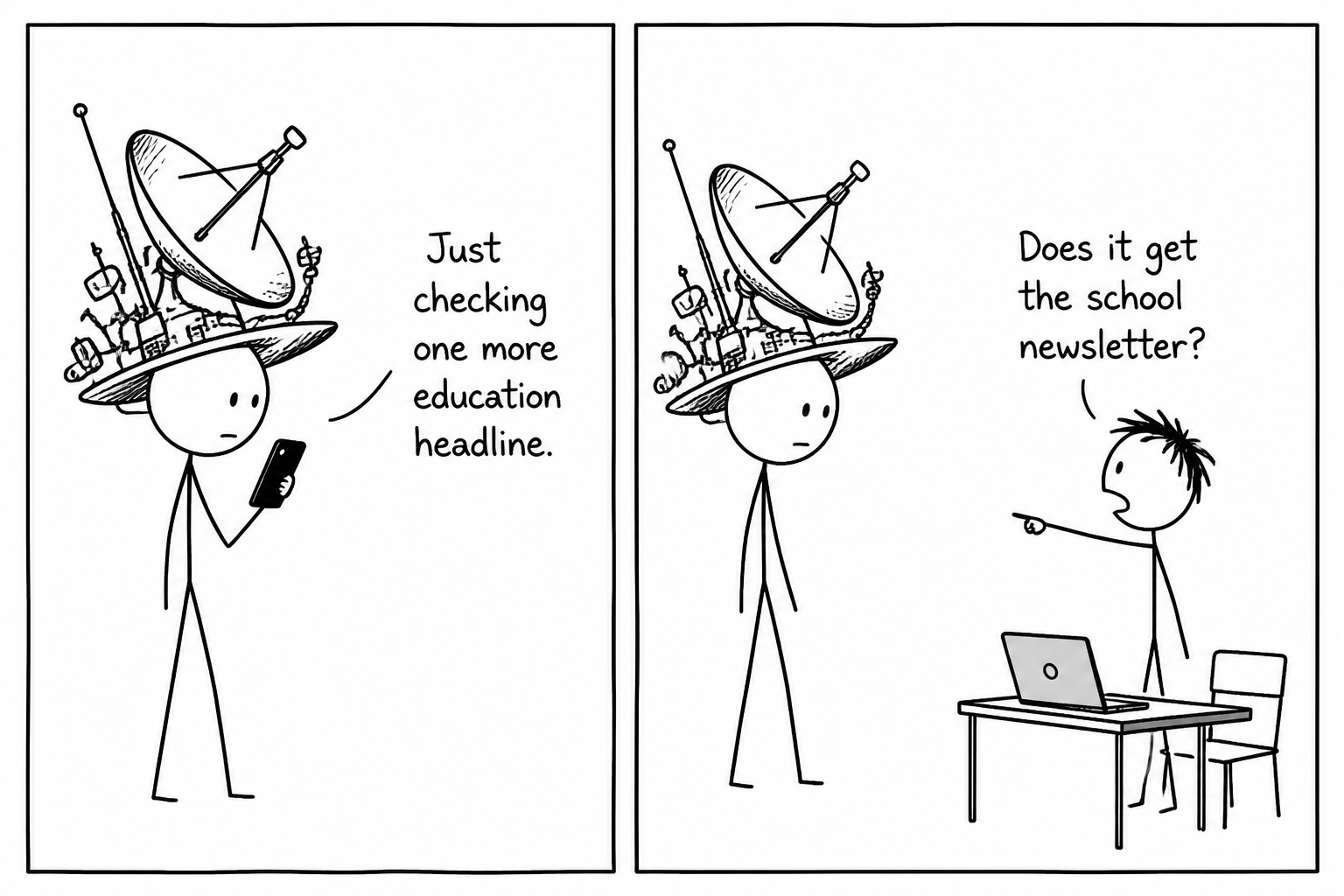 A parent uses an enormous satellite dish hat to monitor education headlines while a teenager asks whether it receives the school newsletter
What current GCSE Maths students should follow
The existing specification remains the right starting point. Schools should prepare pupils for the published arrangements of their chosen qualification, including the correct board and tier.
Begin with the GCSE Maths revision hub. MathsGenie provides resources for boards including AQA, Edexcel, OCR and Eduqas, although the national reform discussed here concerns England. Families elsewhere in the UK should check their own qualification arrangements.
A separate decision can cause confusion: in 2026, Ofqual decided that formulae sheets should remain available for GCSE Mathematics throughout the lifetime of the current specifications. Providing formulae does not itself shorten a paper or change its mark total.
Ask the school to confirm the exam board, foundation or higher tier, and current specification. Then use matching resources and practise within the stated examination time. The GCSE Maths topics by exam board and tier guide helps families check that revision follows the correct course.
What future GCSE reform could change
The government plans a refreshed national curriculum from September 2028, followed by updated GCSEs introduced in phases for first teaching from 2029 onwards. Its response also committed to reviewing Key Stage 4 Maths content, including possible modest adjustments to encourage deeper understanding.
Assessment changes could include fewer questions, shorter papers, different mark totals or a revised distribution of examination time. These remain possibilities, rather than confirmed Maths arrangements. Revised subject content and regulatory requirements must establish what happens.
Shorter does not automatically mean easier. A shorter assessment can still demand reasoning, fluency and problem-solving. Grade boundaries would reflect evidence from the relevant examination series, rather than simply being copied from an older paper.
Parents should therefore separate three questions: how much content pupils learn, how it is assessed, and how grades are awarded. A change to examination duration does not answer all three.
A revision plan while details develop
A useful plan starts with the qualification your child will actually sit:
- Check: Confirm the board, tier and specification with school.
- Diagnose: Identify weak topics across the main areas of maths.
- Learn: Revisit one topic through a lesson or video explanation.
- Practise: Attempt questions independently before checking solutions.
- Review: Correct mistakes and revisit the topic several days later.
- Time: Complete current-format papers to develop pacing.
For weak number skills, revisit fractions, decimals and percentages. Edexcel pupils can follow the Edexcel GCSE Maths lessons, while the GCSE Lessons collection provides another starting point for selecting relevant material.
Use practice questions to build understanding, then past papers and mark schemes to check how that understanding holds up under examination conditions. Video solutions can help explain errors; pupils should then retry the question independently.
Common mistakes parents should avoid
Changing revision because of a headline
A policy announcement does not immediately rewrite examination papers. Wait for official specification and exam-board information before changing preparation.
Applying the reduction to every paper
The 10%10\%10% recommendation concerns overall GCSE examination time. It does not guarantee an identical reduction in each Maths paper.
Treating shorter as easier
Duration, difficulty and grade standards are separate matters. Fewer minutes could accompany fewer marks while mathematical demand remains comparable.
Choosing the wrong resources
Check the board before choosing materials. The Edexcel GCSE Maths revision page organises topics by grade, but families should first confirm that Edexcel is their child’s board.
Prepare for the paper your child will sit
Current pupils should prepare for their present specification. Shorter examination time forms part of future reform, but individual Maths paper arrangements remain unconfirmed.
Use that distinction to keep revision focused. Start with MathsGenie’s free lessons, strengthen one weak topic, and build towards timed practice using the papers your child is expected to sit.















