How to Revise for Maths Mocks in Two Weeks
How to revise for maths mocks in two weeks: follow a calm daily plan with targeted practice, past papers and careful marking to build GCSE maths confidence.
A mock timetable can make the amount left to revise feel larger than the time available. If you are wondering how to revise for maths mocks in two weeks, start with a diagnostic paper, identify the topics costing you accessible marks, practise those topics, then finish with timed exam practice.
You do not need to cover every page of the specification. You need evidence about what needs attention. A mock records your current performance; it does not decide your final GCSE grade.
Your two-week revision checklist
Build your fortnight around these tasks:
- Complete and mark a diagnostic paper.
- Sort topics into secure, shaky and unfamiliar.
- Practise specific weaknesses each day.
- Revisit earlier topics without notes.
- Introduce mixed, timed questions.
- Correct mistakes and protect sleep.
The free MathsGenie revision planner can help organise your available time and chosen topics.
Begin with evidence
Writing “algebra on Monday” looks organised, but it may leave the real problem untouched. Perhaps you can solve equations confidently but struggle to form them from worded questions. A diagnostic attempt reveals that distinction.
Use the GCSE Maths Mock Exam Builder to create a practice paper. Choose your tier and the exam board followed by your school where applicable. Ask your teacher which topics your mock covers, because school assessments may reflect what you have been taught so far.
Mark honestly and label each error:
- Knowledge: you did not know the method.
- Application: you could not adapt a familiar method.
- Accuracy: arithmetic, signs or calculator input went wrong.
- Exam technique: you misread instructions or omitted working.
These labels tell you more about tomorrow’s revision than a score alone.
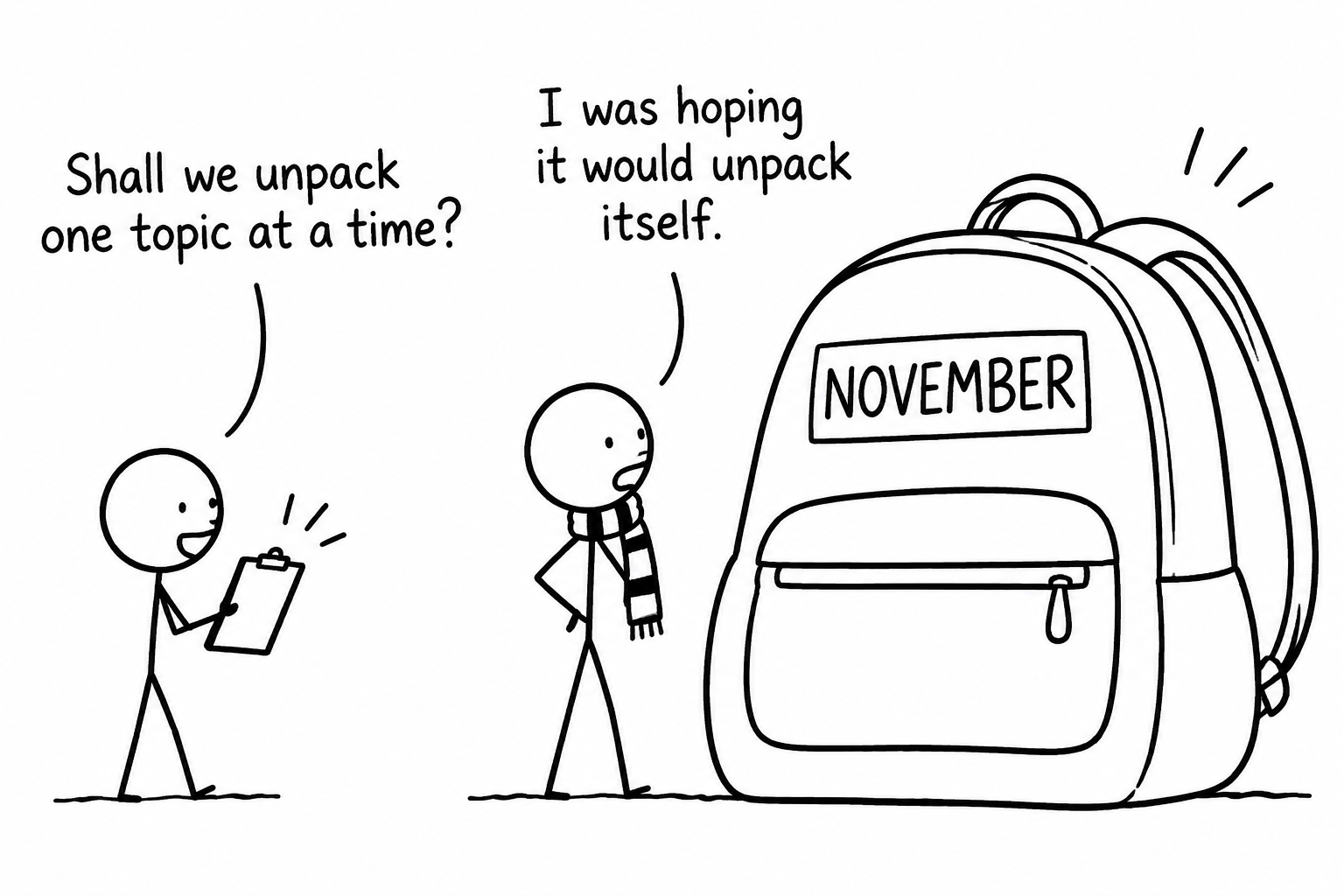 XKCD-style comic of a student facing an enormous school bag while a helper suggests unpacking one topic at a time
A practical two-week maths revision plan
Allow around 454545-606060 minutes on most school days if that fits your workload. Treat this as a starting point, adjusting around homework and other subjects.
| Stage | Main task | Purpose |
|---|---|---|
| Opening weekend | Complete and mark diagnostic questions | Identify priorities |
| Early first week | Relearn a few weak topics | Repair knowledge gaps |
| Late first week | Answer topic questions independently | Test understanding |
| Second weekend | Attempt a timed paper or section | Practise under pressure |
| Early second week | Correct errors and revisit weaknesses | Make revision specific |
| Final two days | Complete short mixed practice | Keep methods accessible |
| Evening before | Prepare equipment and rest | Arrive ready to concentrate |
Give each session a clear purpose
Begin with a few questions from yesterday, without notes. Review one method, practise it independently, then mark your answers. Finish by recording what still needs attention.
Use GCSE maths revision lessons and practice questions to move from explanation to independent work. For Edexcel practice, the GCSE Maths mini tests offer another way to check your understanding.
After watching a solution, close it and attempt the question again. Understanding someone else’s working is useful; producing your own shows whether the method is available when you need it.
Choose topics that can improve your result
Prioritise weaknesses that are within reach. One student may need fractions, percentages and ratio. Another may need probability or geometry. Your diagnostic work should determine the order.
Mark topics red if unfamiliar, amber if unreliable and green if usually correct independently. Spend most of the first week on red and amber topics, while keeping green topics active through brief retrieval practice.
The guide to finding your weakest GCSE maths topics explains how papers and mini tests can support this process.
During the second week, mix topics together. A worksheet headed “percentages” supplies a clue that an exam question may not give you. Mixed practice develops the skill of choosing a method yourself.
Make marking part of revision
A paper becomes useful when its mistakes change your next session. Use mark schemes to check both your answer and the working required for method marks.
For each significant error, record what the question tested, why your attempt failed and what you will do differently. Keep this brief enough to revisit.
MathsGenie’s paper marking tool provides another route to reviewing completed papers. Compare feedback with your working, and ask your teacher about anything unclear.
Return to corrected questions after a gap. Solving one immediately after reading its solution can reflect short-term memory; solving it later gives stronger evidence of learning.
Practise decisions for the exam room
Timed practice should teach you how to use the paper as well as how to answer it. Read instructions carefully, show relevant working and check units and rounding requirements.
If you become stuck, write anything useful, leave space and return later. Keep moving so that one difficult question does not consume time needed elsewhere.
Practise written arithmetic for non-calculator work. On calculator questions, estimate the likely size of your answer to catch obvious input errors.
Common mistakes during revision
Trying to cover everything
Rushed coverage leaves little time to check understanding. Choose a manageable set of priorities and test them properly.
Watching without practising
Videos explain methods, but independent questions reveal gaps. Follow every explanation with an attempt without support.
Repeating comfortable work
Familiar questions can fill a page without addressing weaknesses. Include questions that require thought, then use solutions when needed.
Sacrificing sleep
Set a finishing time and prepare your equipment beforehand. Leave room for rest alongside revision.
Let the mock guide your next step
Parents can help by protecting a regular revision slot and asking which topic needs attention. The guide to supporting GCSE maths revision without nagging offers practical suggestions.
Start with a MathsGenie practice paper today. Mark it honestly, choose your priorities and use the free lessons and questions to work through them. After the mock, repeat the process with better evidence about what comes next.