

GCSE Maths Reform in Wales and Northern Ireland
GCSE maths reform in Wales and Northern Ireland explained for parents, including Wales’s new double award and the current position in Northern Ireland.
Last updated: 3 November 2026
The definitive answer is this: GCSE maths reform in Wales and Northern Ireland is not one shared reform. Wales began teaching a new Mathematics and Numeracy double award in September 2025. Northern Ireland has been reviewing its qualifications and assessment system, but parents should not assume that the Welsh course or changes proposed for England apply there.
That distinction matters. A parent searching for a straight answer can easily find announcements from three different education systems, all using the words “GCSE”, “maths” and “reform”. The qualification a child is actually taking depends on where their school is located, its exam board and the specification named by the school.
This guide explains what has changed, what has not, and what parents should ask before changing a revision plan.
The position at a glance
| Question | Wales | Northern Ireland |
|---|---|---|
| Is there a new GCSE maths qualification? | Yes. The new GCSE Mathematics and Numeracy double award began teaching in September 2025. | Do not assume so. Check the current CCEA specification and your school’s entry arrangements. |
| Is this the same as reform in England? | No. Wales has its own curriculum and qualifications regulator. | No. Northern Ireland has its own curriculum and qualifications arrangements. |
| Who regulates qualifications? | Qualifications Wales | CCEA Regulation |
| What should parents check? | Whether the pupil is on the new double award or completing a legacy course | The exact qualification, specification, tier and examination series used by the school |
| Should revision resources change immediately? | They should match the specification being taught. | Only when the school confirms a specification or assessment change. |
A useful rule is simple: follow the specification, not the headline.
What GCSE maths reform means in Wales
Wales has made the clearer and more immediate change. From September 2025, learners starting the new course study GCSE Mathematics and Numeracy (Double Award). It replaces the previous separate GCSE Mathematics and GCSE Mathematics-Numeracy qualifications for those learners.
“Double award” means the qualification is the size of two GCSEs and leads to two grades. It does not mean a pupil casually sits one ordinary GCSE and receives an extra grade. Mathematics and numeracy are brought together within one connected qualification, while retaining attention to mathematical understanding and the application of maths in practical contexts.
There is also a transition period. Pupils who began legacy qualifications before the new course was introduced may still be following the previous specification. This is why a parent with children in different year groups can receive two different, yet perfectly correct, answers from the same school.
The key date is the course start date, not merely the year in which the parent reads about the reform.
What parents in Wales should ask
Ask the school these four questions:
- What is the full title of my child’s qualification?
- Is this the new double award or a legacy specification?
- Which tier or entry route is my child following?
- Which specimen papers and topic lists should revision be based on?
Write the answers at the top of the revision folder. That small act prevents an expensive mistake in attention: spending weeks preparing for the wrong assessment structure.
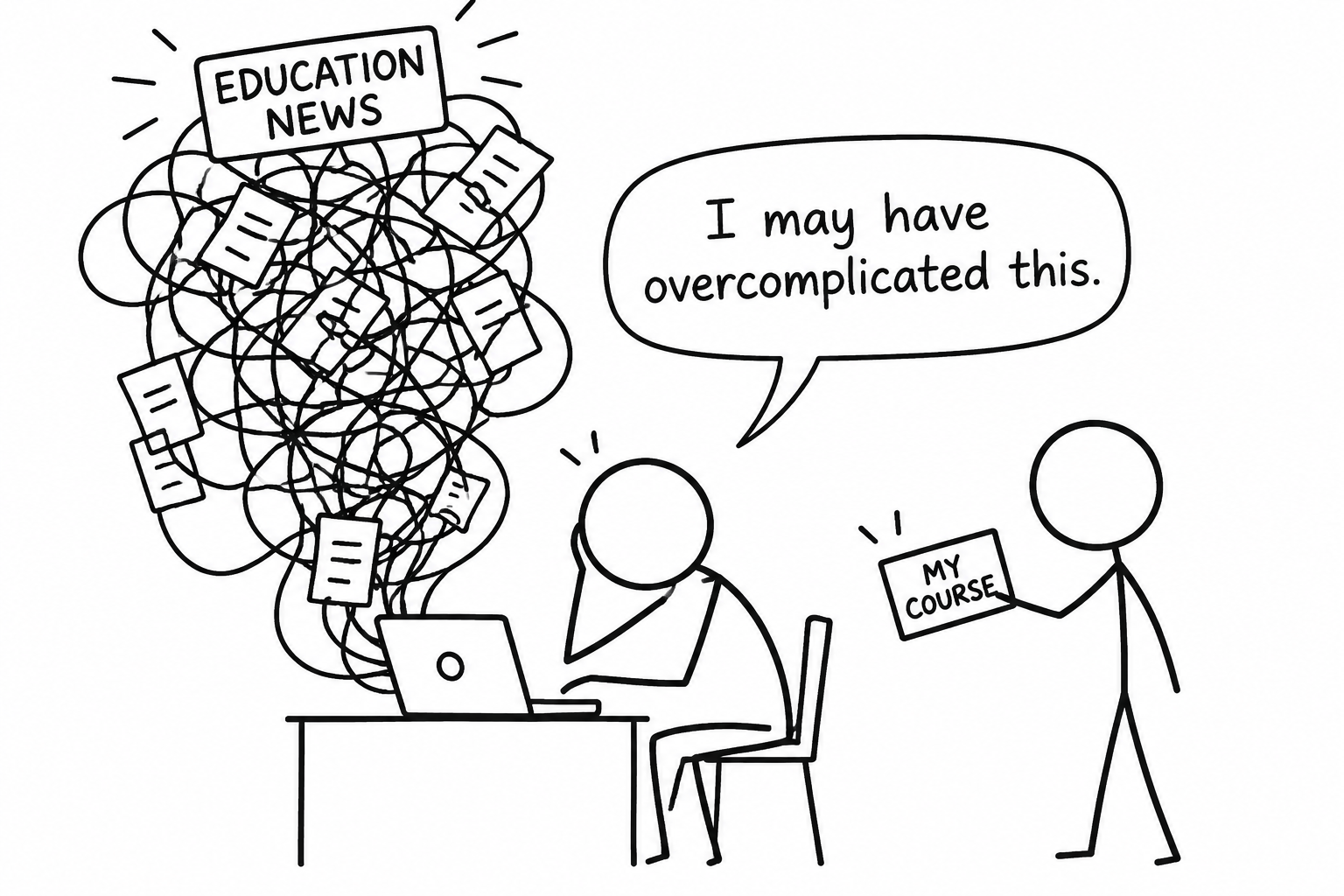 A parent realises that education headlines are more complicated than the pupil's actual course
What is happening in Northern Ireland
Northern Ireland should be treated separately. CCEA is responsible for curriculum, examinations and assessment, while CCEA Regulation regulates qualifications offered there. The Department of Education has considered the future of CCEA GCSE and A Level qualifications, and wider assessment arrangements have also been under review.
However, a review, consultation or recommendation is not automatically a new GCSE maths specification in your child’s classroom. Implementation requires confirmed decisions, qualification documentation, teaching dates and assessment arrangements.
That is the nuance parents need. Northern Ireland may be discussing change without being at the same implementation stage as Wales. Unless a school confirms otherwise, pupils should continue preparing for the specification under which they have been entered.
Parents should therefore ask for:
- the exact qualification title and exam board;
- the current specification code;
- the pupil’s tier of entry;
- the number and timing of papers;
- whether any school-based or external assessment applies;
- the correct past papers for that specification.
Once those details are known, use Maths Genie’s GCSE revision lessons to strengthen the relevant skills rather than trying to revise every rumoured change.
Why England’s announcements can cause confusion
The Department for Education and Ofqual govern GCSE policy and regulated qualifications in England. Their publications are important, but they do not set the Welsh or Northern Irish curriculum.
England’s Curriculum and Assessment Review published its final report in 2025. Its discussion of maths, assessment volume and future curriculum design concerns England’s system. An Ofqual announcement likewise applies to qualifications within Ofqual’s regulatory remit, unless the publication explicitly states something broader.
This gives parents a quick reliability test:
- Check which nation the announcement covers.
- Check whether it is a proposal, consultation response or final decision.
- Look for a first-teaching date.
- Find the named specification.
- Confirm the position with the school.
If a report supplies no implementation date or specification, it should not yet replace the revision instructions provided by the pupil’s teacher.
A practical revision plan during GCSE changes
Qualification reform can alter content, emphasis or assessment. It does not make secure mathematical knowledge obsolete. Fractions, percentages, algebra, geometry, probability and statistics still develop through explanation, practice and correction.
Use this parent-friendly plan:
- Identify the course. Record the nation, exam board, qualification title, specification and tier.
- Use the specification as a checklist. Mark topics as secure, developing or not yet taught.
- Match questions carefully. Use practice questions and papers intended for the correct qualification.
- Keep transferable skills moving. Continue practising arithmetic, algebraic manipulation, graphs, measures and interpreting data.
- Treat new materials cautiously. Prioritise official specimen assessments where a qualification is too new to have a substantial bank of past papers.
- Review errors. A completed paper has limited value until mistakes are corrected and the weak topic is practised again.
At this point, the setup can feel larger than the maths itself, so use Maths Genie Lessons for the current specification once the school has confirmed exactly what your child is taking.
What is likely to remain familiar
Reform often sounds like a demolition. In practice, it is more like rearranging a house while many of the bricks remain useful.
A pupil who can reason proportionally, manipulate expressions and interpret a graph keeps those capabilities when a specification changes. What may differ is how skills are grouped, contextualised or assessed. That is why topic practice remains valuable, provided parents do not mistake broad similarity for exact specification coverage.
The safest balance is to combine two views:
- the specification view, which shows what can be assessed;
- the learning view, which reveals what the pupil can actually do.
A specification prevents omissions. Practice reveals understanding.
Common mistakes parents should avoid
Assuming every UK GCSE is changing together
Education is devolved. Wales, Northern Ireland and England make separate decisions. Similar qualification names do not create identical courses.
Using a child’s year group as the only guide
Year group helps, but the course start date and school entry policy provide the firmer answer. Transition cohorts can follow different specifications.
Treating consultation as implementation
A published review may recommend change. A confirmed qualification normally also has an approved specification, teaching date and assessment information.
Buying or downloading resources before checking the course
A resource can teach good maths and still be poorly matched to the examination. Confirm the qualification and tier first.
Abandoning foundational practice
Parents sometimes respond to uncertainty by waiting. That costs useful revision time. Core fluency and reasoning can continue while assessment details are checked.
Turn clarity into the right revision
The parent in this story did not need to understand every policy document. They needed five reliable details: nation, qualification, specification, tier and assessment series. Knowing those details closes the information gap; following the right lessons each week closes the learning gap.















