

GCSE Food and Nutrition Coursework vs Exam Marks
GCSE food and nutrition coursework vs exam marks explained: discover where marks are commonly lost, why it happens, and how to protect both halves of your grade.
A polished plate can create a dangerous feeling: the hard part is finished. Yet a strong practical outcome does not automatically produce strong coursework marks, just as knowing the subject does not guarantee that you will express it precisely in an exam.
The clearest answer to GCSE food and nutrition coursework vs exam marks is this: there is no reliable national rule proving that every cohort loses more marks in one component. Both halves matter equally on the major GCSE Food Preparation and Nutrition specifications. However, the written exam often creates the more sudden and visible loss because it tests broad knowledge under time pressure. In the non-exam assessment, or NEA, marks tend to disappear more gradually through weak evidence, generic analysis and decisions that are not linked closely enough to the task.
Your best strategy is not to choose which half deserves attention. It is to identify how each half leaks marks and close both gaps.
The quick answer: where are marks most vulnerable?
Use this checklist before planning your revision:
- Written exam: marks are commonly lost through incomplete knowledge, vague terminology, misread command words and underdeveloped longer answers.
- NEA coursework: marks are commonly lost when research, testing, planning and evaluation are descriptive rather than analytical.
- Practical work: attractive dishes help, but marks depend on the skills demonstrated, the suitability of the choices and the quality of the supporting evidence.
- Your personal answer: compare component percentages rather than raw marks.
- Best response: protect completed NEA marks while preparing systematically for the less predictable written paper.
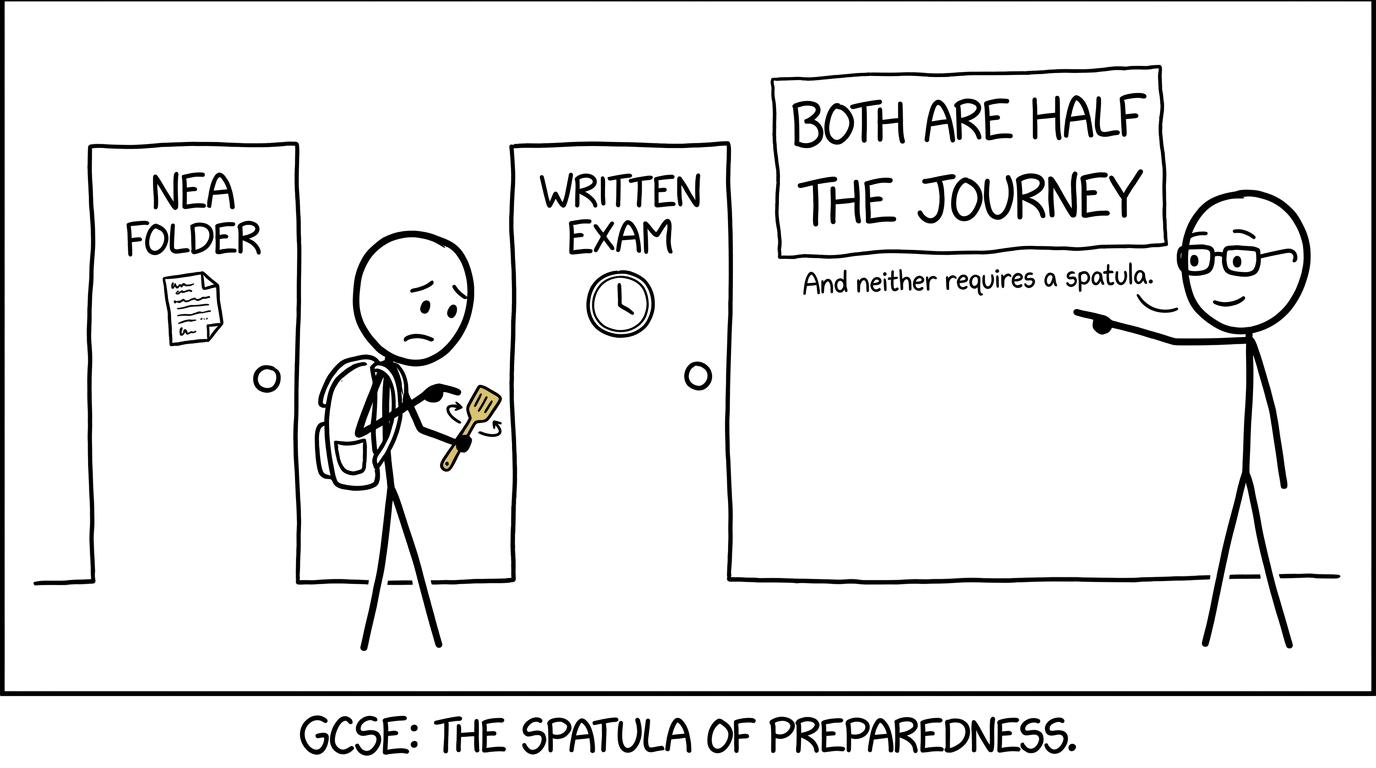 A student deciding between the NEA folder and written exam
How GCSE Food Preparation and Nutrition is assessed
Although students often call it coursework, exam boards normally describe the internally assessed work as non-exam assessment. The exact task titles, timings and marking arrangements depend on your board, so always use your current specification and your teacher's instructions.
The broad structure is balanced. For example, AQA's current specification gives the written examination 50%50\%50% of the qualification and the two NEA tasks together the other 50%50\%50%. Its written paper is worth 100100100 raw marks. The NEA comprises a food investigation task worth 303030 marks and a food preparation assessment worth 707070 marks.
OCR also divides the qualification between a written component and NEA. Eduqas uses the same broad principle of theoretical assessment alongside practical and investigative work, although component names and detailed requirements differ. Do not assume that an AQA checklist applies word for word to OCR or Eduqas.
Because the two sides are equally weighted, the useful calculation is:
weighted marks lost=50(1−component percentage100)\text{weighted marks lost}=50\left(1-\frac{\text{component percentage}}{100}\right)weighted marks lost=50(1−100component percentage)This matters because raw marks can mislead. A task marked out of a smaller total may look less important, but its weighting determines its real contribution to the final grade. If percentages feel uncertain, strengthen that skill with MathsGenie's GCSE percentages practice questions.
Why the written exam can become the bigger marks leak
The examination concentrates a large amount of knowledge into one sitting. There is no opportunity to replace a weak answer after checking a result, retake a photograph or improve an evaluation over several lessons.
Breadth of knowledge
Students may need to recall and apply ideas from nutrition, food science, food safety, food choice, provenance and preparation. Knowing a fact loosely is often not enough. The answer must use accurate terminology and connect the fact to the situation in the question.
OCR's summer 2024 examiner report identified weaknesses including chemical raising agents, minerals, milk processing and fish preparation. It also noted problems with command words and longer responses. These findings do not prove that every student loses more marks in the exam, but they reveal why exam performance can fall below classroom expectations: recognition is not the same as precise recall and application.
Command words change the required answer
A question asking students to state something needs a brief fact. Explain requires linked reasoning. Evaluate normally requires a balanced judgement supported by relevant evidence.
Students often know something useful but answer at the wrong depth. A one-line response to a higher-tariff question leaves marks untouched, while a long paragraph on a low-tariff question consumes time without creating additional credit.
Time pressure magnifies small weaknesses
Slow recall, repeatedly rereading a question or spending too long on an early section can squeeze later answers. This is why timed practice matters. The same principle applies in maths: a paper tests knowledge and the ability to deploy it efficiently.
MathsGenie's guide to using GCSE past papers properly explains a useful cycle: complete work under realistic conditions, mark it carefully, diagnose the reason for each loss and revisit the weakest skills. Apply that process to your own board's Food Preparation and Nutrition papers.
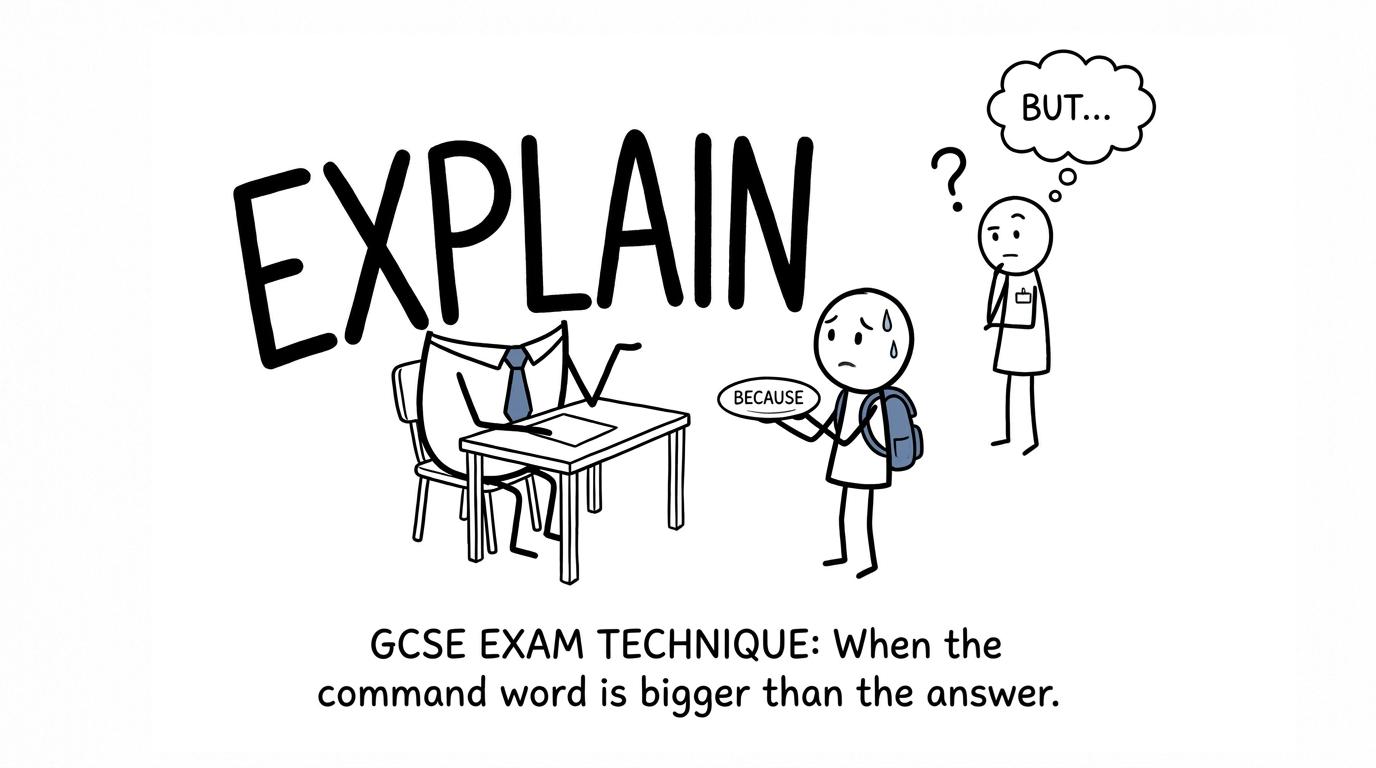 A command word waiting for more than a one-word answer
Why coursework loses marks more quietly
NEA feels safer because it develops over time. That is partly true: students can plan, gather evidence and reflect. But time only helps when it is used to satisfy the assessment criteria.
Description replaces analysis
A weak investigation may record what happened without explaining why. A weak evaluation may say that a product tasted good or looked attractive without using specific sensory evidence, scientific understanding or a justified improvement.
Analysis should connect three things:
- the evidence collected;
- the relevant food science or nutritional principle;
- a conclusion that answers the original task.
The 2024 OCR moderators' report warned about generic descriptors, limited analysis and evaluations that did not return clearly to the task. It also identified research that lacked detail and recipe choices based on personal preference rather than suitability.
Evidence does not demonstrate the claimed skill
A photograph is evidence, not an explanation. It must clearly support what the student says was completed. Missing stages, unclear images or portfolios that fail to connect evidence to the criteria can make good practical work difficult to reward fully.
Likewise, presenting nutritional information in a table does not automatically demonstrate understanding. Data must be selected, interpreted and applied. MathsGenie's GCSE Statistics revision area can help with reading tables, summarising results and interpreting data accurately.
The dish becomes more important than the brief
Students naturally care about the final plate. Examiners and moderators must care about the stated assessment criteria. A complicated dish is not automatically a high-level choice, and an attractive outcome cannot compensate for weak planning or limited evaluation.
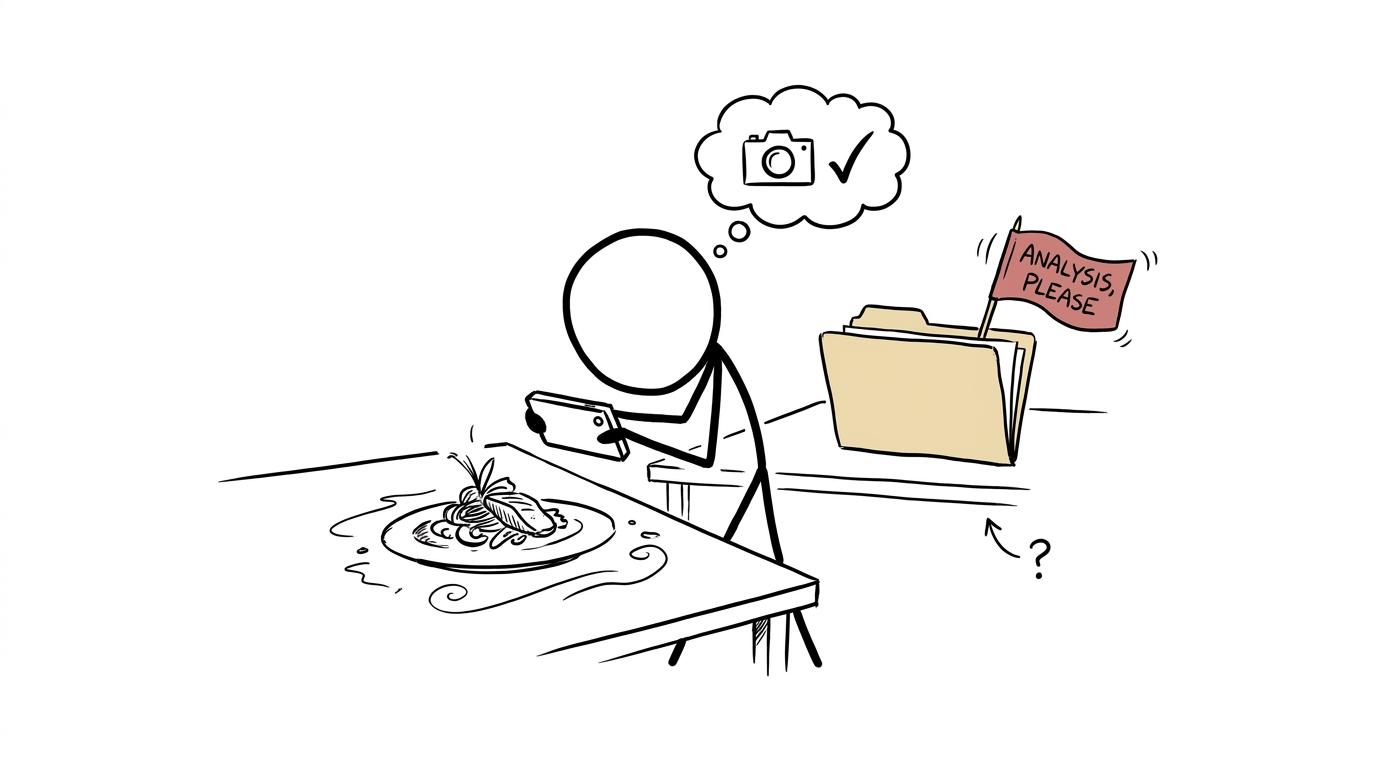 A beautiful dish receives attention while the analysis folder waits
So which component usually costs more marks?
Without comparable component-level data for your cohort, the honest answer is it depends. Exam boards publish specifications, grade boundaries and examiner guidance, but these do not establish a universal rule that students always lose more marks in coursework or in the examination.
Still, the risk is different in each component:
- The written exam is more volatile. One paper tests broad understanding, recall, application and timing.
- NEA losses are more cumulative. Marks disappear through repeated weaknesses in research, evidence, analysis and task focus.
- The exam often needs more late-stage attention. Once authenticated NEA work has been submitted, those marks are largely fixed, while examination performance can still change substantially through revision.
- Weak NEA should not be dismissed. Losing marks repeatedly across planning, technical skills and evaluation can create a sizeable deficit before the written paper begins.
Your own figures provide the best diagnosis. Calculate the percentage achieved in each completed assessment:
component percentage=marks achievedmarks available×100\text{component percentage}=\frac{\text{marks achieved}}{\text{marks available}}\times 100component percentage=marks availablemarks achieved×100Then classify every lost mark by reason: missing knowledge, weak application, insufficient evidence, poor analysis, timing or misreading. This mirrors MathsGenie's method for finding your weakest GCSE topics.
How maths skills protect Food and Nutrition marks
Food Preparation and Nutrition is not a maths paper, but numerical confidence supports both components.
You may need to interpret nutritional data, compare proportions, scale recipes, read graphs, calculate percentages or judge whether quantities are reasonable. Units also matter. A correct method attached to the wrong unit can produce a conclusion that makes little practical sense.
Recipe scaling is direct proportion. The general relationship is:
new quantity=original quantity×new number of portionsoriginal number of portions\text{new quantity}=\text{original quantity}\times\frac{\text{new number of portions}}{\text{original number of portions}}new quantity=original quantity×original number of portionsnew number of portionsMathsGenie's proportion and recipe lessons build this skill through exam-style practice. For a broader sequence covering number, percentages, ratio and statistics, use the guide to the best order for learning GCSE maths topics.
These skills are useful beyond one subject. They reduce cognitive load: when the calculation feels routine, more attention remains for explaining what the result means.
A practical revision plan for protecting both halves
Begin with evidence, not instinct.
Audit the NEA feedback you already have
Use permitted teacher feedback and the assessment criteria to identify broad weaknesses. Do not attempt to add unauthorised help or rewrite authenticated work outside your board's rules. Instead, carry lessons from completed tasks into your exam answers: precise terminology, justified choices and conclusions tied to evidence.
Build a written-exam error log
After each timed section, record:
- the topic;
- the command word;
- the marks available;
- why the mark was lost;
- the fact or answer structure that would have secured it.
A list of wrong question numbers is not enough. The cause is what makes the next revision session useful.
Revise through retrieval, then application
First recall the content without notes. Then answer an exam-style question requiring that knowledge in context. Finally, use the mark scheme to check precision. Reading notes repeatedly can feel fluent while leaving recall fragile.
Maths students can use the same routine with MathsGenie's GCSE predicted papers: sit the paper, mark it, repair the topic and retest it. Predicted papers should complement past papers rather than replace them.
Common mistakes that cost avoidable marks
- Treating NEA as a cooking competition: assessment rewards documented skills, relevant decisions, analysis and evaluation, not appearance alone.
- Using generic sensory language: words such as “nice” or “good” provide little precise evidence.
- Forgetting the original task: research, dish selection and conclusions should remain connected to the brief.
- Listing facts without applying them: relevant knowledge must answer the actual context given.
- Ignoring command words: the required depth changes between state, describe, explain, analyse and evaluate.
- Confusing raw marks with weighting: compare component percentages before deciding where the biggest weakness lies.
- Leaving exam practice until NEA is finished: spaced retrieval should begin while coursework is still under way.
- Copying data without interpreting it: tables and graphs need a written conclusion linked to nutrition, food science or the investigation.
Turn mark loss into a revision decision
The difference between coursework and an examination is not simply practical work versus writing. It is controlled evidence gathered over time versus performance produced under pressure. Each exposes a different weakness.
Do not ask which half you can afford to neglect. Ask where your evidence shows the next recoverable mark is hiding. Protect NEA marks by following the task, demonstrating skills and analysing evidence precisely. Protect examination marks through accurate knowledge, command-word practice and timed papers.
Then bring the same disciplined approach back to maths. Use MathsGenie's free revision lessons, practice questions, mini tests, mark schemes and video solutions to repair specific gaps. When the methods are secure, move to past papers and GCSE predicted papers to test whether your improvement survives exam conditions. That is where revision stops being a plan and starts becoming proof.










