GCSE Bengali Exam Board Differences Explained
GCSE Bengali exam board differences explained: compare AQA GCSE with Edexcel International GCSE Bangla and learn what really affects exam difficulty.
A student can spend weeks worrying that somebody else has the “easier” exam board. It happens in maths, science and languages. Yet the label on the paper often matters less than whether the revision matches what that paper will actually assess.
The answer to gcse bengali exam board differences is unusually clear: for the current regulated GCSE in Bengali in England, AQA is the accredited exam board. OCR, Pearson Edexcel and Eduqas do not currently offer an equivalent GCSE Bengali qualification. Pearson does offer an International GCSE in Bangla, but that is a different qualification with a markedly different assessment structure.
So does the board make Bengali harder or easier? Not automatically. However, comparing AQA GCSE Bengali with Edexcel International GCSE Bangla matters because they test different combinations of language skills. The better fit depends on your listening, speaking, reading, writing and translation strengths, and, more practically, which qualification your school or examination centre enters you for.
The short answer
Use this checklist before changing any part of your revision:
- Confirm the full qualification title, not just “Bengali GCSE”.
- Check the exam board and specification code on your entry information.
- Find out whether you are taking AQA GCSE Bengali 8638 or Pearson Edexcel International GCSE Bangla 4BA0.
- For AQA, confirm whether you are entered for foundation or higher tier.
- Revise every assessed skill, including speaking and listening where applicable.
- Use past papers and mark schemes from your exact qualification.
- Ask your teacher or examinations officer if anything remains unclear.
This is the same first step students should take in maths. The GCSE Maths revision hub asks students to choose their board because precise preparation begins with knowing the paper in front of you.
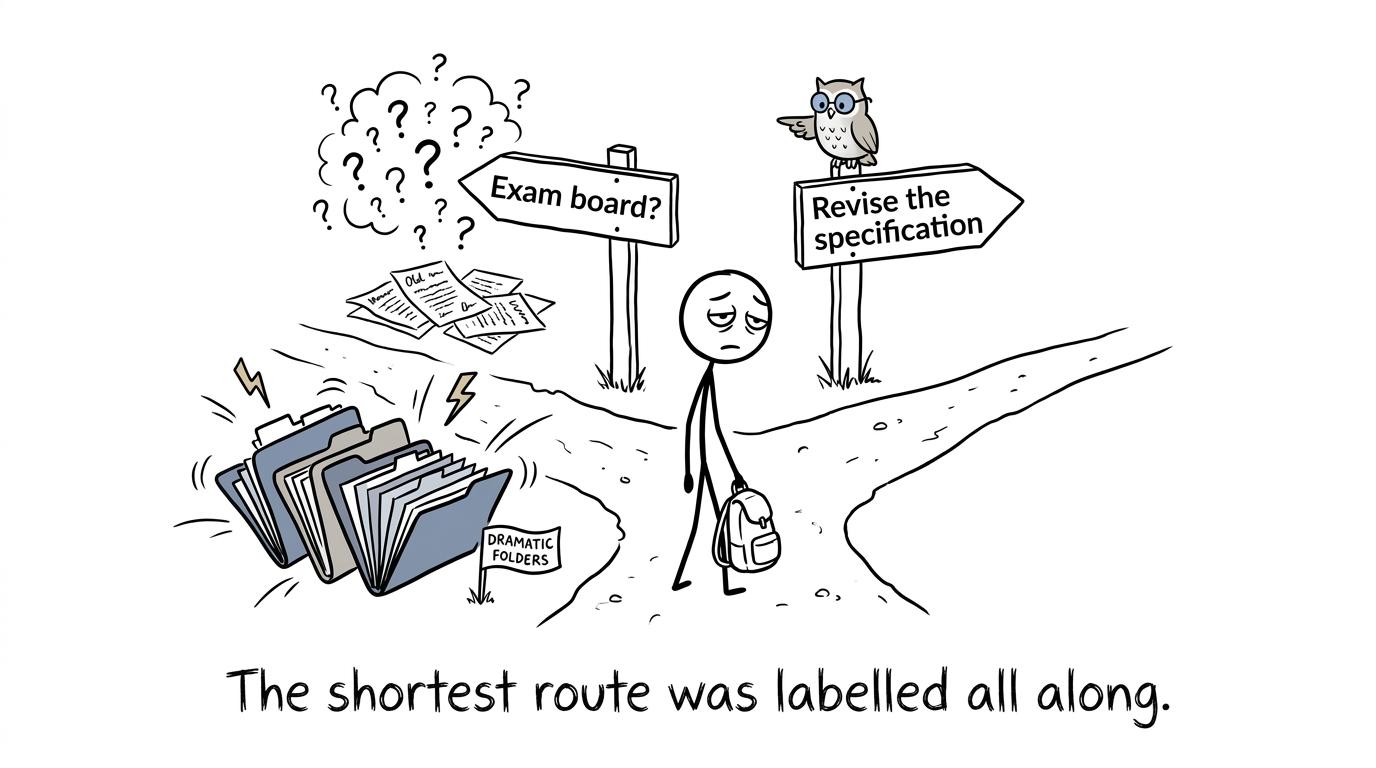 A student discovers that the specification is the shortest route through exam-board confusion
Which exam boards currently offer GCSE Bengali?
As of August 2026, the current GCSE Bengali qualification listed for England is offered by AQA. Its specification code is 8638, and it has foundation and higher tiers.
OCR and Eduqas do not offer a current GCSE Bengali specification. Pearson Edexcel does not offer a regulated GCSE Bengali equivalent, although it does offer International GCSE Bangla 4BA0. The similar names can cause confusion, especially when schools, tutors or families use “GCSE Bengali” informally to describe either route.
That distinction is not administrative trivia. It changes the papers you sit.
AQA GCSE Bengali
AQA GCSE Bengali is a linear qualification. Students take all assessments at the end of the course, in the same examination series and at the same tier.
It assesses four skills through four papers:
- listening
- speaking
- reading
- writing
Each skill contributes 25%25\%25% of the qualification after scaling. Foundation tier covers grades 1 to 5, while higher tier covers grades 4 to 9, with an allowed grade 3 for candidates who narrowly miss grade 4 under the awarding rules. Students must take all four papers at one tier.
The specification covers identity and culture; local, national, international and global interests; and current and future study and employment. Questions can therefore move from family and technology to the environment, travel, education and careers.
Pearson Edexcel International GCSE Bangla
Pearson Edexcel International GCSE Bangla is not simply the AQA course with a different logo. The current 4BA0 qualification is assessed through one externally examined paper lasting two hours and thirty minutes.
The paper assesses:
- reading comprehension, worth 40%40\%40%
- writing, worth 40%40\%40%
- translation, worth 20%20\%20%
There is no separate listening or speaking assessment in this qualification. It is also not divided into foundation and higher tiers.
That makes the comparison meaningful. AQA spreads assessment across spoken and written communication; Edexcel International GCSE Bangla concentrates assessment into one extended reading, writing and translation paper.
Are the GCSE Bengali exam board differences about difficulty?
Calling one route “easier” hides the most important question: easier for whom?
A student who speaks Bengali confidently at home may feel comfortable in AQA’s speaking and listening assessments but discover that formal writing requires more attention. Another student may read and write accurately yet feel nervous responding spontaneously in a speaking test. The International GCSE structure could suit the second profile better, but its single long paper also places greater pressure on written accuracy, concentration and time management.
Neither observation proves that one qualification is universally easier. It shows that assessment design interacts with individual strengths.
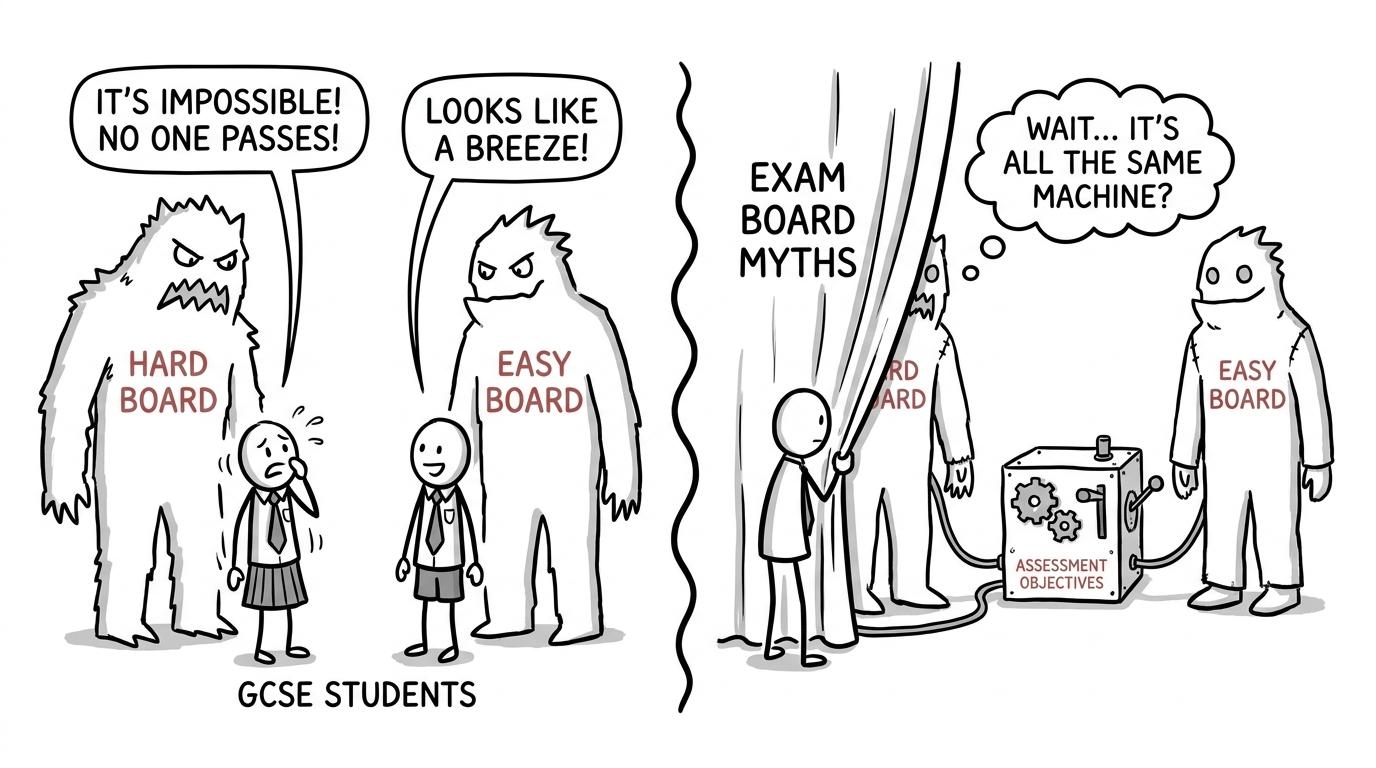 Two imaginary easy and hard exam-board monsters are secretly operated by assessment objectives
Paper structure changes the experience
Four shorter components create a different kind of pressure from one extended written examination. With AQA, performance is distributed across four skills. A difficult listening section does not directly determine the marks earned in speaking, reading or writing.
With Edexcel International GCSE Bangla, the whole result comes from one written paper. There is no oral examination to prepare for, but there is also no speaking component in which a fluent speaker can gain marks.
The board therefore matters as a revision map, not as a reliable shortcut to a higher grade.
Grade boundaries do not reveal an easy board
Students sometimes compare raw grade boundaries and assume that the qualification requiring fewer marks must be easier. That conclusion is unsafe.
Grade boundaries can change between examination series because papers vary in demand and awarding bodies use evidence from the assessment process when setting them. A lower raw boundary may indicate a more demanding paper rather than an easier qualification.
The sensible comparison is not “Which boundary looks friendlier?” It is “Which skills are assessed, and am I preparing for all of them?” Maths students face the same trap. The better habit is to complete a paper, mark it honestly and diagnose lost marks, as explained in MathsGenie’s guide to using AQA GCSE Maths past papers properly.
What actually makes GCSE Bengali feel difficult?
Exam-board anxiety is often a visible problem covering several quieter ones.
Informal fluency is not the entire course
Being able to hold everyday conversations is valuable, especially for AQA speaking and listening. It does not automatically guarantee secure spelling, grammatical control, translation accuracy or extended written communication.
Heritage speakers can have very different profiles. Some speak fluently but have had less experience reading formal Bengali. Others have strong literacy but need practice responding without a prepared script. Revision should begin with evidence from each assessed skill rather than assumptions about being a “native” or “non-native” speaker.
Translation requires precision
Translation is not a general summary. Meaning, tense, viewpoint and important details must survive the move between languages. A response can sound natural while quietly changing what the source says.
Build a correction log for omitted details, inaccurate verb forms, false assumptions and spelling errors. This resembles a maths error log: the useful information is not merely that an answer was wrong, but why it went wrong.
Timing is part of the assessment
A student may know enough Bengali yet lose marks because too much time is spent perfecting an early response. This is particularly important in a single extended International GCSE paper, but it also matters in AQA reading and writing.
Timed practice should be introduced gradually. Begin with individual sections, then progress to complete papers. MathsGenie’s advice on when to start GCSE past papers explains the same principle: papers are most useful while there is still time to respond to what they reveal.
How to prepare for the qualification you actually take
Your centre normally chooses the qualification, so most students are not shopping between boards. Your task is to make your revision specific.
If you are taking AQA GCSE Bengali
Divide revision across all four skills. Do not allow the most comfortable skill to occupy the whole timetable.
For listening, practise extracting details, opinions, time references and changes of viewpoint. For speaking, prepare flexible language rather than memorising one answer that may not fit the prompt. For reading, work with unfamiliar passages and translation into English. For writing, practise accurate responses at the length and tier required by the specification.
Check that practice material is labelled foundation or higher where relevant. AQA students must enter every component at the same tier.
If you are taking International GCSE Bangla
Build stamina for one substantial written paper. Revision should include reading comprehension, extended writing and translation in both directions required by the specification.
Practise allocating time across sections and leave a realistic checking period. Because speaking confidence is not assessed, do not mistake conversational fluency for complete readiness. Written control carries the result.
Keep Bengali and maths revision organised
Students preparing for Bengali are usually balancing several GCSEs. A complicated plan rarely survives a busy school week. A repeatable one can.
MathsGenie’s one-month GCSE revision plan shows how to combine diagnosis, targeted practice and timed papers. For maths itself, you can use AQA GCSE Maths past papers, the OCR GCSE Maths revision hub or Edexcel GCSE Maths mini tests, depending on your board.
The subjects differ, but the revision loop transfers well:
- attempt a defined task
- mark it carefully
- identify the exact weakness
- practise that weakness
- return to an unseen task
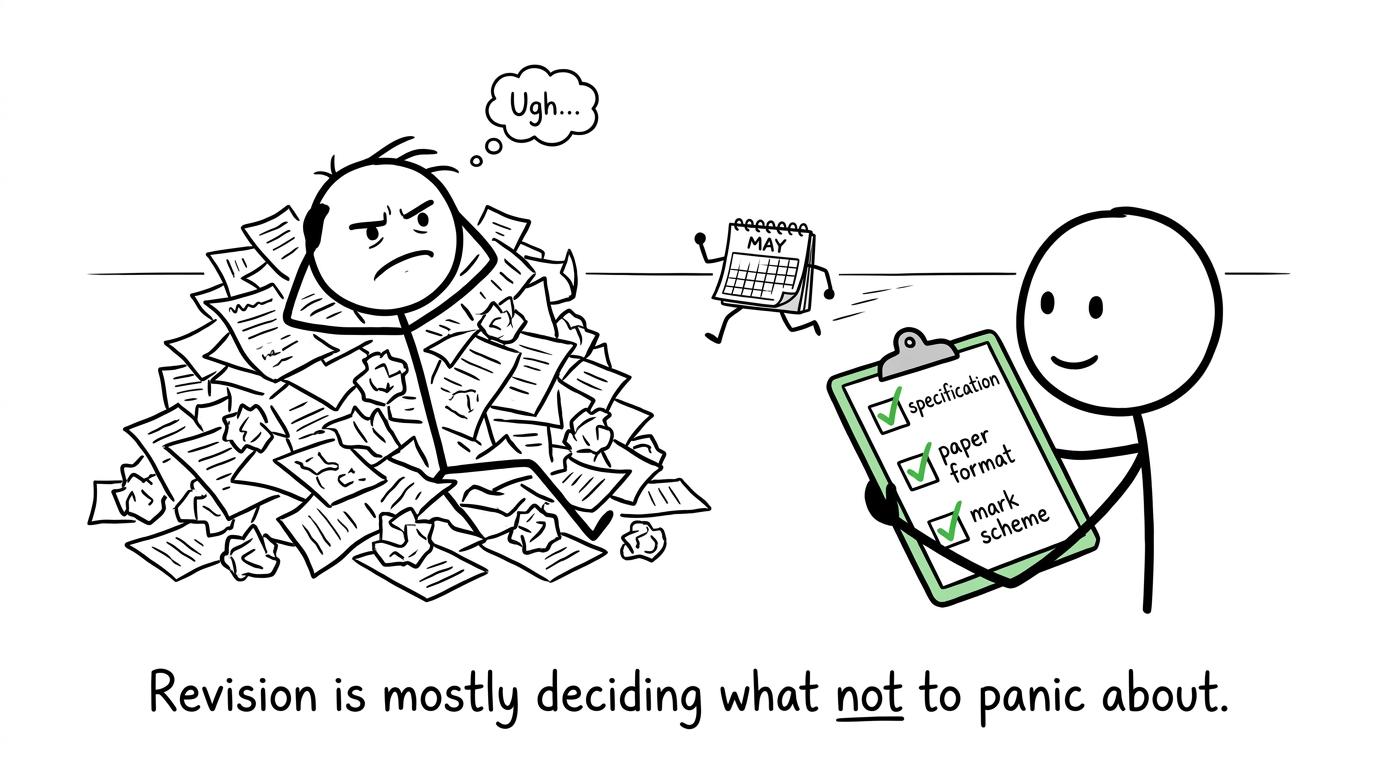 One student uses a calm checklist while another is buried under random revision papers
Common mistakes when comparing Bengali qualifications
Assuming Edexcel and AQA offer the same GCSE
AQA GCSE Bengali and Pearson Edexcel International GCSE Bangla are different qualifications. Always check the full title and specification code.
Revising from any Bengali paper you can find
Extra language practice can help, but an unfamiliar paper may assess different skills, timings or task formats. Prioritise materials from your exact specification.
Ignoring speaking and listening for AQA
Together, these skills account for 50%50\%50% of the scaled qualification. Written revision alone leaves half the assessment insufficiently prepared.
Choosing a tier from one strong skill
AQA tier decisions apply across all four papers. Speaking fluency alone is not enough evidence for higher tier if reading and writing remain insecure. Discuss the complete profile with your teacher.
Treating past papers as a prediction service
Past papers reveal format, wording and recurring demands, but they do not tell you the exact future questions. Mark schemes should become feedback, not fortune-telling.
The exam board matters, but not in the way rumours suggest
For current GCSE Bengali in England, there is not a four-way AQA, Edexcel, OCR and Eduqas contest. AQA provides the regulated GCSE. Pearson’s International GCSE Bangla is a separate route with a substantially different written assessment.
That difference can make one route feel more suitable for a particular student, but it does not establish a universally easy or hard board. Your strongest advantage is simpler: know the qualification, understand every assessed skill and practise in its real format.
Then give the rest of your GCSE timetable the same clarity. Start from the free MathsGenie GCSE Maths revision hub, choose your board and tier, and combine revision lessons with practice questions, mini tests, past papers, predicted papers, mark schemes and video solutions. The board name tells you which road you are on. Deliberate practice is what moves you along it.