

GCSE Arabic Foundation Tier Grade Cap Explained
GCSE Arabic foundation tier grade cap is grade 5. Learn what the limit means, how boundaries work and when to discuss moving to Higher tier with school.
The choice between Foundation and Higher tier can feel like an ordinary box on an exam form. It is not. That small decision sets the range of grades available before the first answer is written.
The GCSE Arabic foundation tier grade cap is grade 555 for Pearson Edexcel GCSE Arabic. A student entered for Foundation tier can receive grades 111 to 555, or be unclassified. Grades 666 to 999 are unavailable on that tier, regardless of how strong the final performance is.
So, if your target is grade 666 or above, you need to discuss Higher tier entry with your Arabic teacher and exams officer. If your priority is securing a grade within the Foundation range, Foundation may offer the more appropriate assessment. The right choice depends on evidence, not pride.
The answer at a glance
Here is the essential checklist:
- The highest grade available on Foundation tier GCSE Arabic is grade 555.
- Edexcel Higher tier offers grades 444 to 999.
- A narrow grade 333 safety net may be available on Higher tier when a candidate falls just below the grade 444 boundary.
- Students must take one tier across all four Arabic papers.
- Your total subject mark determines your qualification grade; individual papers do not receive separate GCSE grades.
- Grade boundaries change between exam series, but the Foundation grade ceiling remains grade 555.
- If you are aiming for grade 666, 777, 888 or 999, Foundation tier cannot deliver that outcome.
You can check previous figures on the Edexcel GCSE Arabic grade boundaries page.
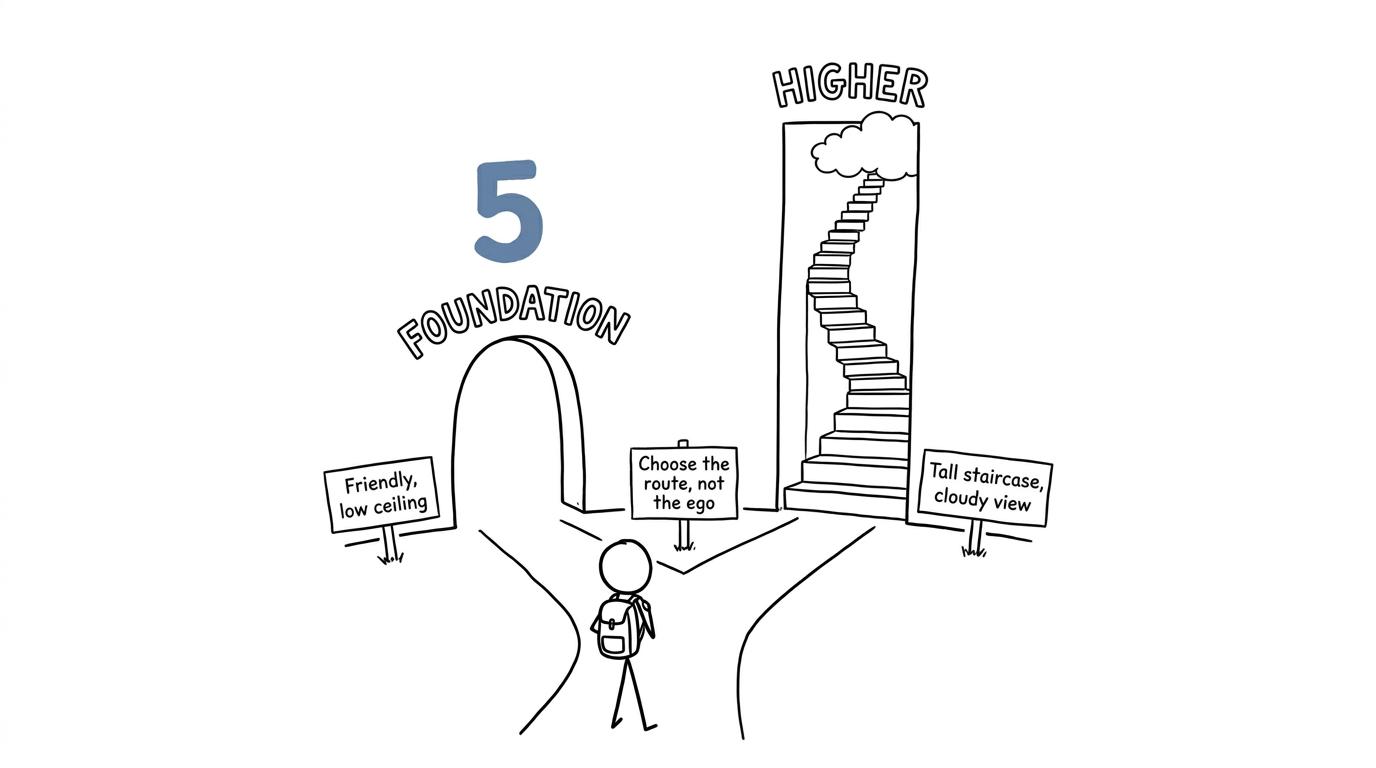 A student choosing between Foundation and Higher exam routes
Why the GCSE Arabic foundation tier grade cap is grade 555
The current Pearson Edexcel GCSE Arabic qualification, specification code 1AA01AA01AA0, uses an overlapping tier model. Foundation assessments target grades 111 to 555, while Higher assessments target grades 444 to 999.
The overlap at grades 444 and 555 matters. It means a student can achieve either grade through Foundation or Higher tier. The grade should represent a comparable standard, even though the papers contain different ranges of difficulty.
Foundation tier is not simply a Higher paper with the hardest questions removed. It is designed around a different range of demand. Students receive more opportunities to demonstrate the knowledge and language skills associated with grades 111 to 555. Higher tier includes the more demanding material needed to distinguish between grades 666 to 999.
This is similar to the tier structure familiar to students using the GCSE Maths revision hub. But Arabic and maths boundaries are completely separate. A mark associated with grade 555 in maths tells you nothing about the mark required for grade 555 in Arabic.
How GCSE Arabic is assessed
Edexcel GCSE Arabic assesses four language skills:
- listening and understanding in Arabic;
- speaking in Arabic;
- reading and understanding in Arabic;
- writing in Arabic.
Each contributes 25%25\%25% of the qualification after scaling. The total subject mark is 280280280, with each component contributing a scaled total of 707070 marks.
| Component | Qualification weighting | Scaled contribution |
|---|---|---|
| Listening | 25%25\%25% | 707070 marks |
| Speaking | 25%25\%25% | 707070 marks |
| Reading | 25%25\%25% | 707070 marks |
| Writing | 25%25\%25% | 707070 marks |
You cannot mix tiers by taking, for example, Foundation listening and Higher writing. The Pearson entry information requires candidates to be entered for a single tier across the qualification, with the tier decided before the speaking assessment.
That makes an early conversation important. If your performance suggests that your target has changed, speak to your teacher while entry decisions can still be reviewed. Do not assume that a change will be possible after the speaking assessment or the relevant entry deadline.
Grade cap and grade boundary mean different things
These terms are often confused.
The grade cap is the highest grade the tier permits. On Foundation GCSE Arabic, that is always grade 555 under the current specification.
A grade boundary is the minimum total mark required for a particular grade in one exam series. Boundaries are set after the assessments have been taken and marked. They can move because the difficulty of papers and candidate performance are not identical every year.
Recent official Edexcel summer boundaries show this variation:
| Exam series | Maximum mark | Grade 555 boundary | Grade 444 boundary |
|---|---|---|---|
| June 2022 | 280280280 | 142142142 | 101101101 |
| June 2023 | 280280280 | 137137137 | 112112112 |
| June 2024 | 280280280 | 158158158 | 136136136 |
| June 2025 | 280280280 | 164164164 | 144144144 |
These historical marks are useful context, not predictions. A previous boundary should never be treated as a guaranteed target for a future paper. The safe revision goal is to collect as many marks as possible across all four skills rather than trying to land exactly on an old figure.
The same principle applies in maths. The Edexcel GCSE Maths grade boundaries move between series even though the available grade ranges remain defined by tier.
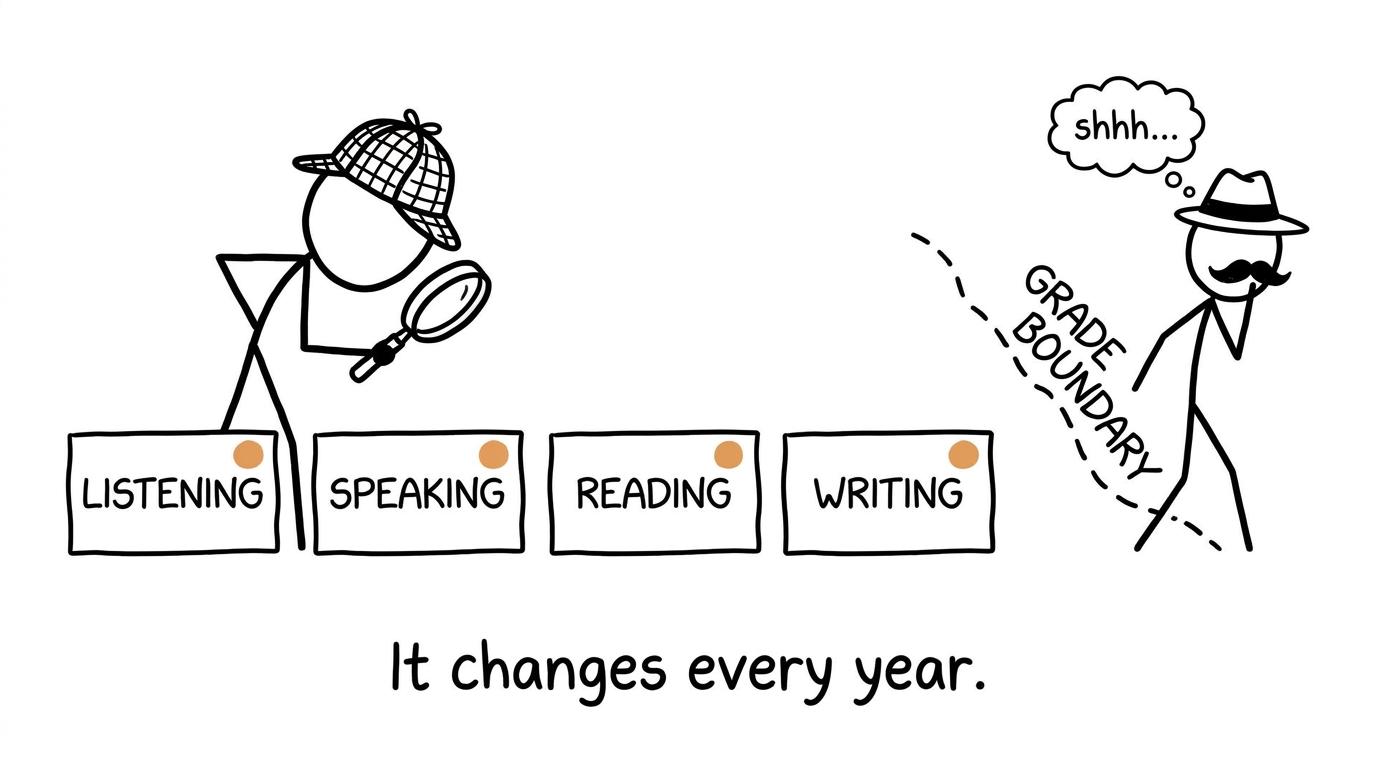 A grade boundary disguising itself while a student studies four assessment clues
What the cap means if you want a top grade
If your target is grade 666 or above, the practical conclusion is clear: you must be entered for Higher tier. A perfect Foundation performance would still be reported as no higher than grade 555.
That does not automatically mean Higher is the correct entry for every ambitious student. Ambition matters, but entry decisions should also consider current attainment across listening, speaking, reading and writing.
Higher tier offers access to the top grades, but its questions and tasks are targeted at grades 444 to 999. Students who miss the normal grade 444 threshold by a small permitted margin may receive grade 333 under the safety-net rule. Below that narrow range, the result is unclassified.
A sensible tier conversation should therefore consider:
- your target grade and any sixth-form entry requirements;
- performance across all four skills, not only your strongest one;
- results from timed assessments using the correct tier;
- teacher judgement about whether Higher demand is manageable;
- the amount of focused revision time still available.
Individual schools and colleges set their own entry requirements. If a future course asks for a particular Arabic grade, check the exact published requirement rather than assuming grade 555 will or will not be sufficient.
How to make a sound tier decision
Compare like with like
Use recent Foundation and Higher assessments completed under realistic conditions. Classroom confidence is useful, but timed evidence is more revealing. One unusually good or bad paper should not control the entire decision.
Look for consistency across the four skills
A student may be fluent in conversation but less secure in formal writing, or confident in reading while finding listening difficult. Because each component contributes equally after scaling, a large weakness cannot simply be ignored.
Track marks by skill and record why marks were lost. The useful categories are knowledge, comprehension, accuracy, task completion and timing.
Ask what your target requires
If your realistic target is grade 444 or 555, either tier can provide it. The question becomes which paper gives you the strongest chance of demonstrating that standard consistently.
If your target is at least grade 666, there is no route through Foundation. Higher entry becomes necessary, though it should still be supported by assessment evidence.
Set a decision date
Endless uncertainty wastes revision time. Agree with your teacher when the final evidence will be reviewed and what would justify changing tier. Until then, prepare for the tier you are currently most likely to take.
This evidence-led approach works in maths too. MathsGenie’s guide to building a GCSE maths revision timetable explains how to turn weak areas into a repeatable plan rather than relying on last-minute judgement.
Revise for marks, not merely for the cap
Once your tier is settled, the grade ceiling should move into the background. Your daily task is smaller: improve one skill, test it and correct the result.
A useful revision cycle is:
- identify one precise weakness;
- practise it in a short focused session;
- complete a timed task without support;
- mark it carefully using the relevant guidance;
- record one correction;
- test the same skill again later.
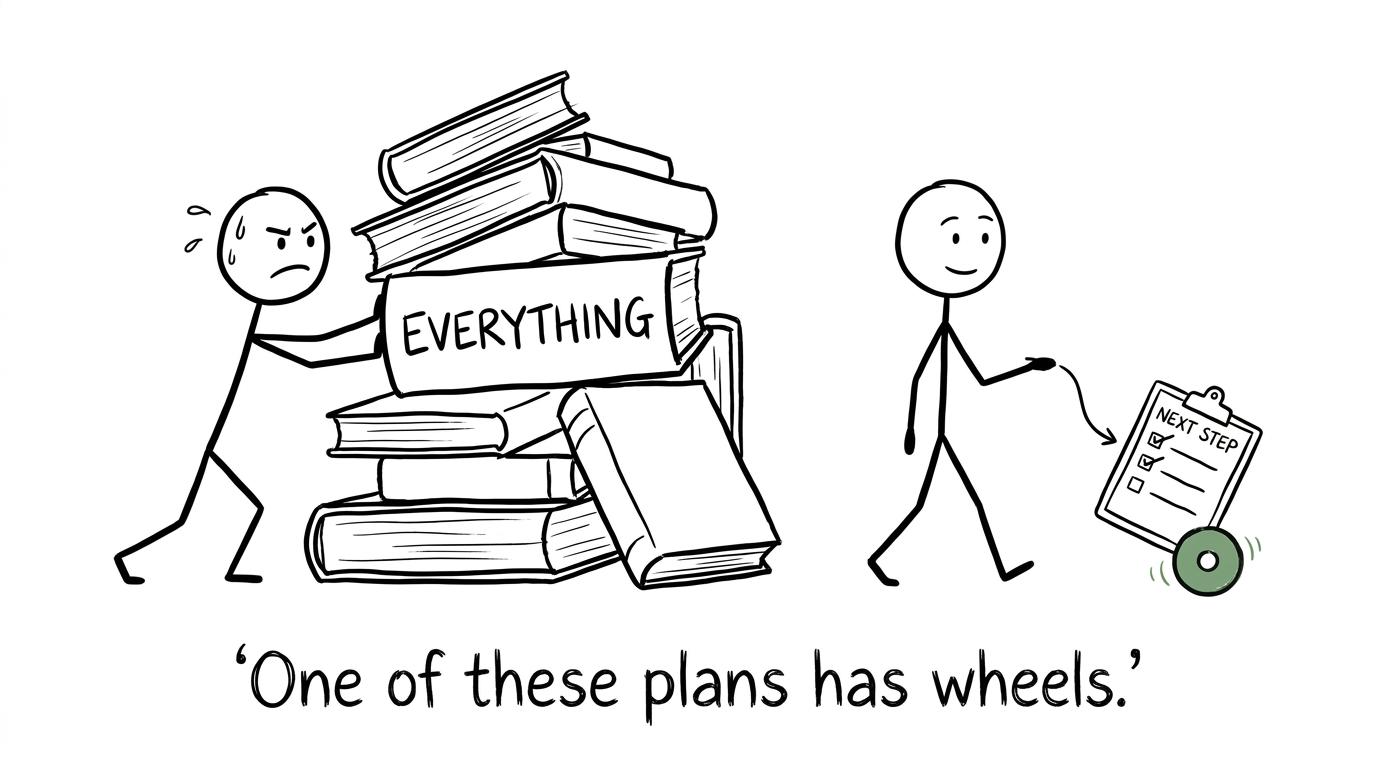 One student carrying an impossible revision pile while another uses a focused checklist
For students balancing Arabic with GCSE maths, keep the same structure across subjects. Use GCSE Maths revision lessons and practice to repair individual topics, then build exam stamina with Edexcel GCSE Maths past papers. Near the exam, Edexcel GCSE Maths predicted papers can provide fresh practice, but they should complement rather than replace official past papers.
A short, repeatable routine is usually more manageable than a heroic weekend. The one-month GCSE maths revision plan provides a practical model for diagnosis, topic repair, timed papers and review.
Common mistakes to avoid
Assuming a high Foundation mark can become grade 666
It cannot. The tier determines the available grade range. Extra marks can strengthen your chance of grade 555, but they cannot lift the qualification above the Foundation cap.
Treating an old boundary as a fixed target
Historical boundaries describe previous exam series. They do not announce the mark required this year. Use them for context, not certainty.
Choosing Higher only because it offers grade 999
Access to a grade is not the same as readiness to achieve it. Higher should be considered when your target requires it and your assessment evidence supports the greater demand.
Judging your tier from one language skill
Arabic GCSE combines listening, speaking, reading and writing. A tier decision based only on conversational fluency or one mock result can hide important weaknesses.
Confusing GCSE Arabic with International GCSE Arabic
Qualifications with similar names may have different assessment and tier arrangements. Confirm your awarding organisation, specification code and entry option with your school. This article concerns Pearson Edexcel GCSE Arabic 1AA01AA01AA0.
Letting tier anxiety consume revision time
The entry decision matters, but thinking about it repeatedly does not produce marks. Gather evidence, speak to your teacher, agree the route and return to purposeful practice.
The grade cap is a boundary, not a judgement
Foundation tier GCSE Arabic has a clear ceiling: grade 555. If you need grade 666 or above, discuss Higher tier with your teacher as early as possible. If grade 555 matches your target, Foundation remains a valid route to that result.
A tier does not measure your potential forever. It defines the assessment route you are taking now. What matters next is how deliberately you prepare for it.
For maths revision alongside Arabic, make MathsGenie your free revision base. Start with the GCSE Maths revision hub, use revision lessons and practice questions to repair gaps, then move through mini tests, past papers, predicted papers, mark schemes and video solutions. The final grade is awarded at the end, but it is built much earlier, one corrected mistake at a time.










