Drop GCSE English Literature Mid-Year? A Clear Guide
Drop GCSE English Literature mid-year? Learn when it may be sensible, what it affects and how to make an evidence-based decision with your school.
There is a particular kind of panic that arrives when every subject feels urgent. English Literature asks for quotations, analysis and whole-text knowledge. Maths needs regular practice. Science keeps growing. At that point, it is natural to wonder whether you should drop GCSE English Literature and use the time elsewhere.
The short answer is: possibly, but you cannot usually make that decision alone. There is no universal mid-year dropping process. Your school controls its curriculum, timetable and exam entries, and it may require students to continue Literature even where the separate GCSE qualification is not nationally compulsory. Speak to your English teacher, head of year, exams officer and parent or carer before changing anything.
Dropping can reduce your workload, but it can also remove a valuable GCSE, affect sixth-form options and leave you without Literature as a second route to demonstrating English attainment. The right decision depends on evidence, not simply how difficult this week feels.
Your decision checklist
Before asking to leave the course, establish the following:
- whether your school permits students to stop English Literature
- whether you have already been entered for the examination
- what supervised work would replace Literature lessons
- whether dropping it would genuinely improve your other subjects
- whether targeted support could solve the underlying problem
- whether your intended sixth form, college or course expects Literature
- whether stress, attendance, health or additional needs are affecting several subjects
- whether your parent or carer supports the request
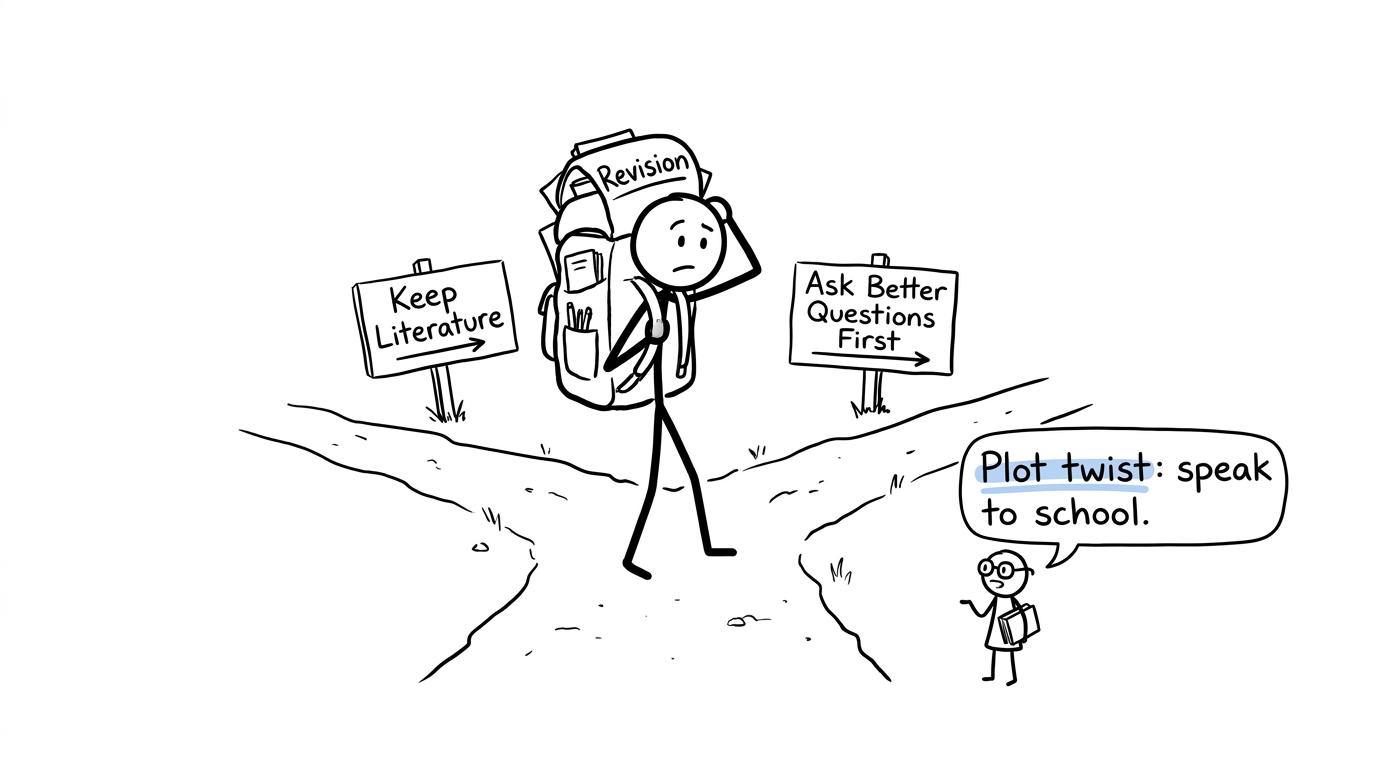 A student pauses at a revision crossroads before speaking to school
Can you actually drop GCSE English Literature?
In England, the Key Stage 444 English curriculum includes substantial literary study. However, studying English as part of the curriculum is not exactly the same as having an automatic entitlement to withdraw from, or a legal requirement to be entered for, a separate English Literature GCSE.
Most schools teach English Language and English Literature together and enter most students for both. Schools may also have curriculum, accountability and staffing reasons for keeping the normal programme intact. Under the Department for Education's Attainment 888 rules, the higher result from English Language or English Literature can fill the English slot and is double-weighted when the student has taken both qualifications. The lower result may also count elsewhere in the measure. These are school performance arrangements, not a promise that an individual student can demand either entry or withdrawal.
The practical answer therefore comes from your school. Policies may also differ between England, Wales and Northern Ireland, and between maintained schools, academies and independent schools. Ask for the decision and its consequences in writing rather than relying on something heard from another student.
Exam entries matter too. Awarding bodies such as AQA, Pearson Edexcel, OCR and Eduqas publish entry and amendment deadlines. JCQ advises centres to check each awarding body's current rules. A late withdrawal may produce no fee refund, although that is mainly an administrative issue for the centre. It does not mean you should sit an unsuitable examination solely because an entry fee has already been paid.
How to tell if you are genuinely in over your head
A difficult mock is not enough evidence. Nor is disliking poetry, forgetting quotations or feeling tired after a crowded week. Those experiences are common and potentially fixable.
Being genuinely overwhelmed usually appears as a sustained pattern. Look at several weeks of information:
- Your attendance is reasonable, you complete the work and accept support, but performance remains far below your realistic target.
- Literature consumes so much revision time that essential work in English Language, maths or science is repeatedly missed.
- You struggle across several Literature components rather than with one text or question type.
- Timed responses remain incomplete despite practising planning and pacing.
- Teachers agree that the gap is substantial and unlikely to close with available support.
- The workload is seriously affecting your wellbeing, sleep or ability to attend school.
- There is a documented medical, SEND or personal circumstance requiring a reduced programme.
The opposite pattern points towards intervention rather than withdrawal. If you understand texts in discussion but write slowly, timing may be the issue. If one poetry comparison is weak but your essays are otherwise secure, you have a specific gap. If every subject suddenly feels impossible, Literature may be where the pressure is visible rather than where it began.
Treat your work as evidence. Compare class assessments, mocks, attendance, completed essays and teacher feedback. The same principle improves maths revision: find your weakest GCSE topics from lost marks, then repair the precise skill rather than declaring the whole subject impossible.
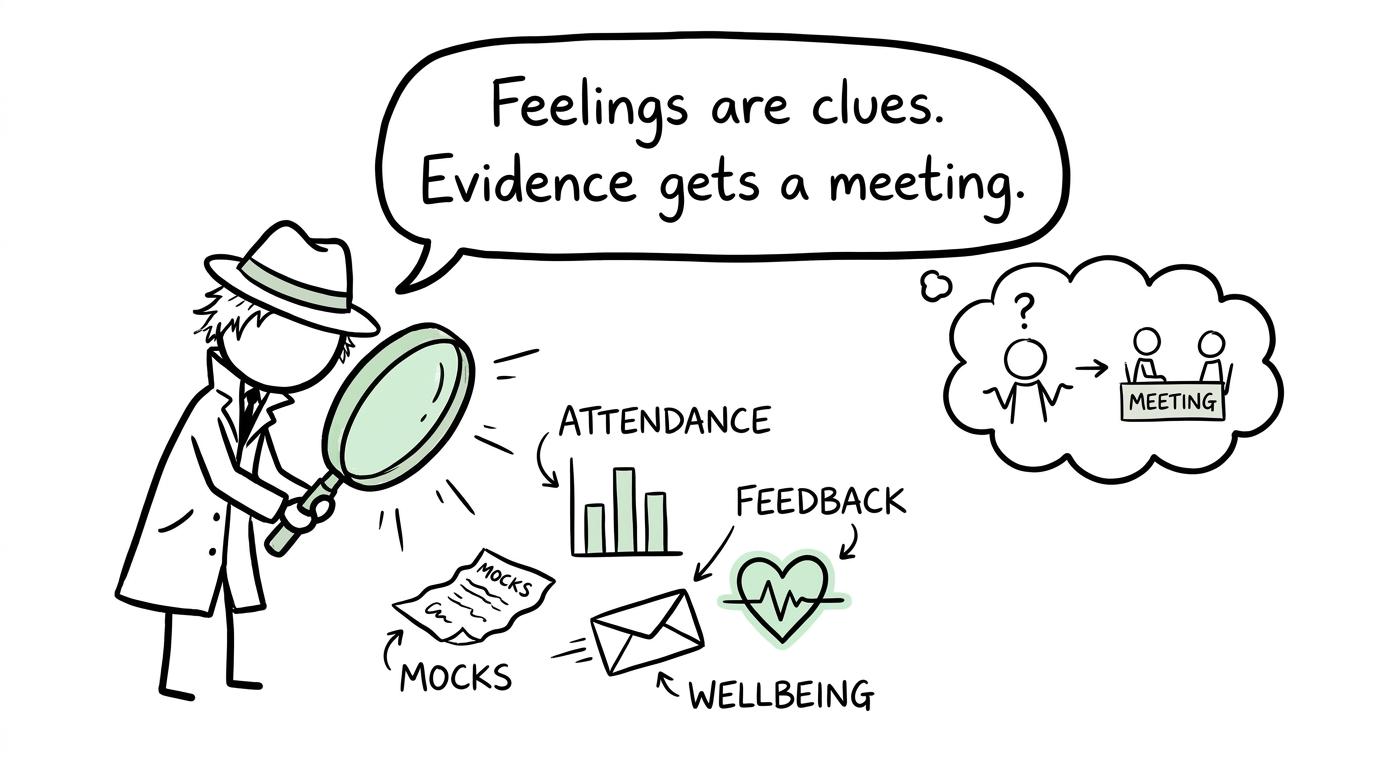 A student detective investigates mocks, feedback and wellbeing
What dropping English Literature does affect
You would normally receive one fewer GCSE
If you are withdrawn from the qualification and do not sit it, there will be no English Literature grade. That may reduce your total number of GCSE qualifications, which matters where a sixth form or college asks for a minimum number of passes.
Admissions policies vary considerably. Many providers emphasise English Language and maths, while courses such as A Level English Literature may specifically request a strong Literature grade or grades in both English GCSEs. Other essay-based courses may accept either English qualification. Never assume. Check the published requirements of the places and courses you are considering, then ask admissions staff how a withdrawal would be viewed.
It may narrow later choices
Dropping Literature does not automatically prevent you from taking A Levels or going to university. It may, however, close particular routes if a provider requires GCSE English Literature. This is especially relevant if you might later choose English Literature, combined English, drama or another writing-heavy course.
The difficult part is that decisions made under pressure tend to focus on today's workload. Admissions rules care about the qualification you hold afterwards. Keep both time horizons in view.
It changes your English safety net
Under the Department for Education's published 202520252025 202620262026 post-161616 funding guidance for England, a grade 444 or above in either GCSE English Language or GCSE English Literature at Key Stage 444 meets the English prior-attainment condition. Post-161616 rules can change, and individual courses may still insist on English Language, so check the guidance applying when you enrol.
This distinction matters. Literature is not simply a decorative extra: for some students it provides another opportunity to achieve a recognised English pass. Dropping it means relying more heavily on English Language for course entry requirements and any employer or provider that specifies Language.
What dropping English Literature does not affect automatically
Dropping Literature does not change your English Language grade. They are separate qualifications, even when taught by the same department.
It does not directly alter your GCSE maths tier, marks or grade. Your school should not move you between foundation and higher tier merely because you stop Literature. However, any promised benefit to maths depends on what happens to the released time. A free period without a plan can disappear remarkably quickly.
It also does not guarantee better grades elsewhere. Time only becomes useful when it is redirected deliberately. If the school provides supervised study, you might use it for a revision lesson, targeted questions and careful marking. The free MathsGenie GCSE maths revision hub organises lessons and practice by topic, while Edexcel GCSE maths mini tests offer shorter checks when a full paper is unnecessary.
Finally, withdrawal does not fix an underlying problem such as anxiety, poor sleep, low attendance, ineffective revision or unsupported additional needs. Those difficulties can simply move to the next subject unless they are addressed directly.
Try a rescue plan before making the decision
Unless wellbeing or professional advice requires an immediate change, ask your school for a short, defined support period before withdrawal is considered.
Start by reducing the task. Instead of trying to memorise everything, identify the assessed skill causing the greatest loss: textual references, analysis of language and structure, context, essay organisation or timing. The assessment objectives used by exam boards distinguish these skills, so teacher feedback should be more precise than “revise more”.
Then protect the rest of your timetable. Use separate, planned sessions for English and maths rather than allowing one difficult essay to consume the evening. MathsGenie's guide to revising GCSE maths efficiently explains how to learn, practise, mark and fix one area at a time.
For maths, establish a baseline using a paper matched to your board and tier. The AQA GCSE maths past papers include mark schemes and solutions, while Edexcel GCSE maths predicted papers provide fresh exam-style practice. Predicted papers should supplement, not replace, genuine past papers.
After the trial period, review the evidence with school. Did Literature become manageable? Did maths practice actually increase? Did wellbeing improve? A decision is stronger when it follows a controlled change rather than a bad afternoon.
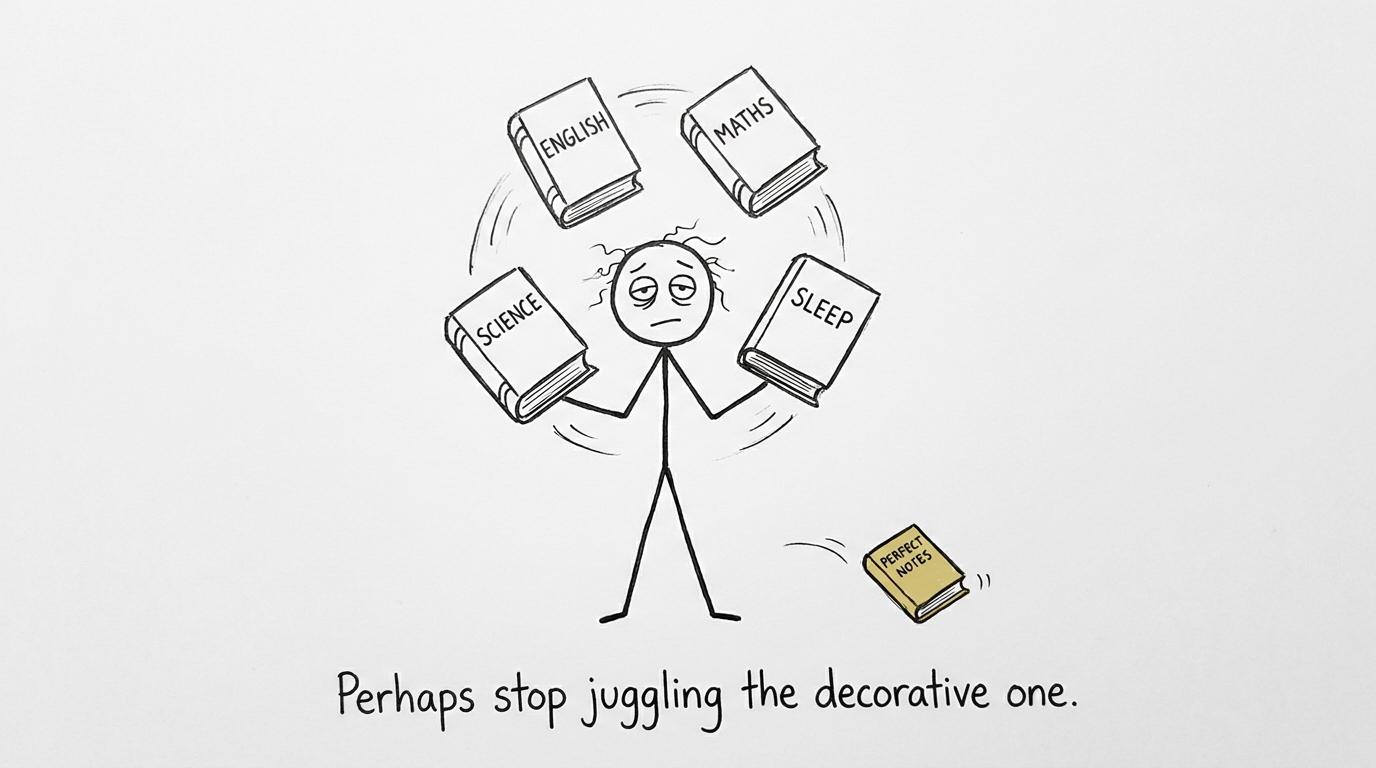 A student juggles core subjects, sleep and unnecessary perfect notes
How to request a mid-year change
Ask for a meeting rather than announcing that you have stopped. Bring a parent, carer or trusted adult if possible.
Explain:
- the pattern you have observed
- the support already attempted
- the effect on wellbeing and other core work
- your intended post-161616 route
- how you would use any released lesson and revision time
Ask the school what alternatives exist. These might include extra teaching, reduced homework, a different support group, adjusted internal targets, SEND support, supervised study or a temporary intervention plan. If withdrawal is agreed, confirm the exam-entry decision, timetable arrangements and post-161616 implications.
Build the released time into an actual routine. You could begin with short tests, progress to timed sections and later use full papers. The guide to when to start GCSE past papers helps you choose the right form of practice for each stage.
Common mistakes when considering withdrawal
Deciding from one mock result
One assessment can expose a gap, but it cannot show whether targeted support would close it. Use a pattern of marked work and teacher judgement.
Assuming English Language is the same qualification
Language and Literature are separate GCSEs. Keeping Language does not give you a Literature grade, while losing Literature may affect courses that name it explicitly.
Believing extra time automatically becomes extra marks
It does not. Write down exactly when and how the time will be used. In maths, complete a timed set, mark it and revisit the weak topic. Simply collecting papers is not revision; using past papers properly requires review.
Ignoring sixth-form requirements
A general entry page may say “English”, while a subject page asks specifically for English Literature. Check both and keep a copy of the current requirements.
Treating withdrawal as the only form of support
A narrower intervention may preserve the qualification while making the workload manageable. Ask about teaching support, access arrangements where appropriate, wellbeing help and timetable adjustments before assuming the GCSE itself must go.
Make the decision that protects your future options
Dropping GCSE English Literature can be reasonable in exceptional individual circumstances, particularly when sustained evidence shows that the course is harming wellbeing or preventing secure progress in essential subjects. But it is not an instant revision shortcut, and it should never happen through silent non-attendance.
Speak to your school, examine your evidence and check your intended destinations. If Literature is genuinely the problem, create a formal exit and replacement plan. If the real problem is an overloaded or unfocused revision routine, repair that first.
MathsGenie can make the maths side of that plan simpler. Start with free revision lessons and practice questions, test yourself using mini tests, then move to past papers and predicted papers with mark schemes and video solutions. A clear routine cannot make every decision easy, but it can ensure that the decision is based on what is actually happening, not merely on how heavy the bag feels today.