GCSE Russian Class Sets Matter: Do They Really?
GCSE Russian class sets matter less than exam tier and preparation. Learn what sets can change, what they cannot, and how to improve your final result.
A set change can feel like a prediction. Move up, and it seems as though somebody has quietly raised the ceiling on your grade. Move down, and it can feel as though the result has already been decided.
But GCSE Russian class sets matter far less directly than students often fear. Your class label does not appear on your certificate and does not determine the marks an examiner awards. What matters formally is the exam tier your centre enters you for, the content you have been taught and how well you perform across listening, speaking, reading and writing.
Your set can still affect the pace, difficulty and support you experience. So the honest answer is not simply "sets do not matter" or "effort fixes everything". A set shapes the route, but it does not write the result.
The short answer
Keep these distinctions clear:
- Your class set is an internal school arrangement.
- Your exam tier determines the range of grades available.
- Your examiners mark the work you submit, not the set you attended.
- A higher set may encounter harder material earlier, but attendance alone earns no marks.
- A lower set does not prevent strong progress, although you may need to request access to Higher-tier work if that matches your evidence and target.
- Effort matters most when it becomes regular, specific practice with feedback.
If you are also thinking about your maths set, the same distinction between classroom grouping and formal tier entry is worth understanding. The GCSE Maths topics by exam board and tier guide explains how Foundation and Higher papers differ in maths.
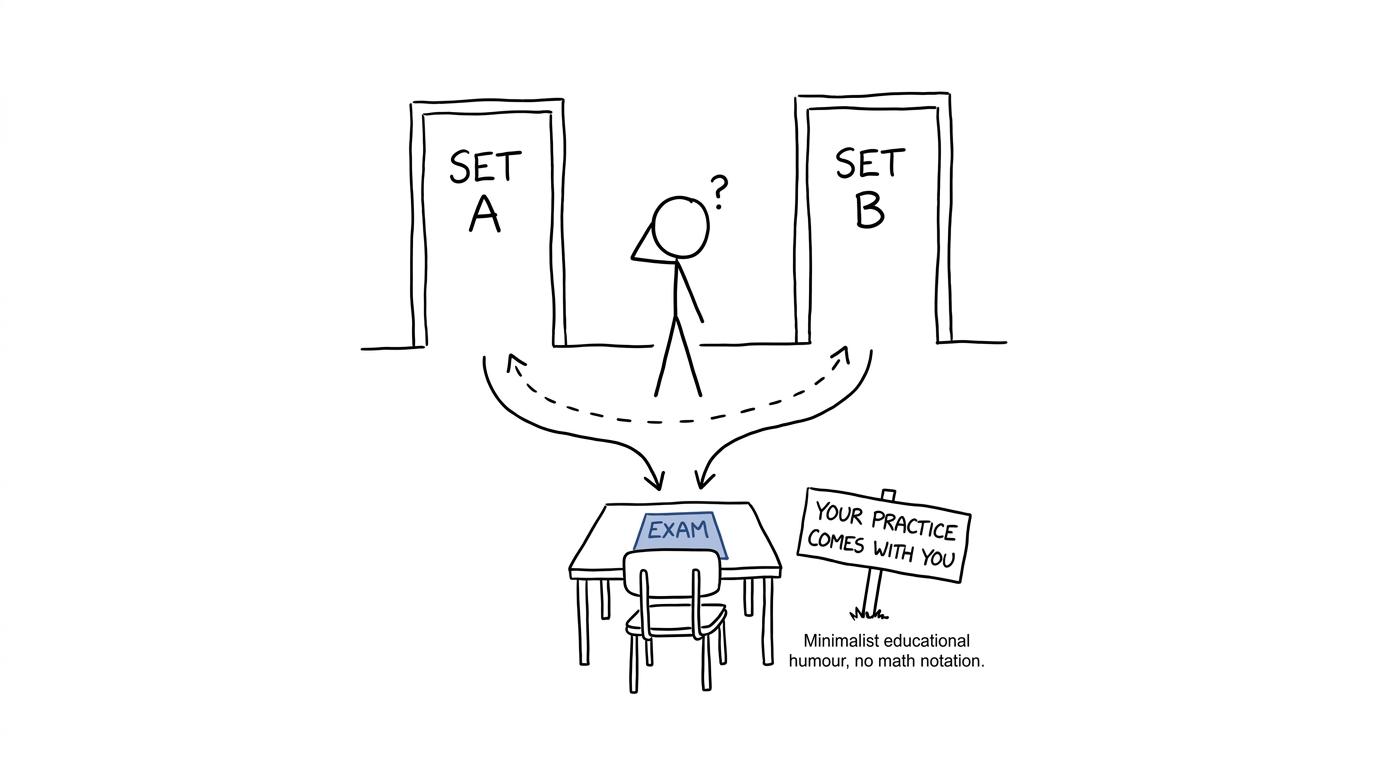 Two classroom sets leading towards the same examination desk
Class set and exam tier are not the same thing
Schools may organise Russian classes according to current attainment, timetable requirements, class size or the support students need. Those arrangements belong to the school. There is no examination rule saying that a student in a particular classroom must receive a particular grade.
Exam tier is different because it changes which grades can be awarded.
For the current Pearson Edexcel GCSE Russian specification, students complete four assessments:
- listening and understanding;
- speaking;
- reading and understanding;
- writing.
Each skill contributes 25%25\%25% of the qualification. Students must be entered for one tier across all four papers; they cannot take Foundation listening and Higher writing, for example.
Foundation tier makes grades 111 to 555 available. Higher tier normally makes grades 444 to 999 available, with a narrow grade 333 safety net for students who fall just below the grade 444 boundary. The centre must choose the tier before the speaking assessment.
That is the decision with formal consequences. A Foundation entry prevents access to grades 666 to 999, however strong the performance. A Higher entry provides access to those grades but carries a greater risk at the lower end because the grade 333 safety net is narrow.
A grade 444 or 555 represents the same standard on either tier, and the certificate does not display the tier taken. You can review how marks have translated into grades in previous series through the Edexcel GCSE Russian grade boundaries, although future boundaries cannot be known in advance.
When being in a higher set can help
A higher set may move more quickly through core vocabulary and grammar. It may spend more time on extended responses, spontaneous speaking, unfamiliar language and the more demanding questions found on Higher papers.
That can be useful. Students cannot practise material they are never shown, and a faster curriculum may create more time for exam preparation.
There may also be practical expectations. A teacher preparing most of a class for Higher tier is likely to set work aligned with Higher-tier demands. Students may regularly encounter longer reading passages, less predictable listening material and writing that requires a broader range of structures.
However, these are opportunities rather than automatic advantages. Merely sitting in the room does not create accurate grammar, quick vocabulary recall or confident speaking. A student who completes little independent practice can remain in a higher set without converting that placement into marks.
The useful question is therefore not, "Am I in the top set?" It is, "Am I regularly completing work at the level of the paper I intend to sit?"
When being in a lower set can matter
A lower set can provide more repetition, slower explanations and greater attention to essential language. For a student building confidence, that may be exactly the environment needed to make secure progress.
The possible disadvantage is not the label itself. It is restricted opportunity. If lessons focus mainly on Foundation-tier tasks, a student aiming above grade 555 may receive too little exposure to the vocabulary range, grammatical control and extended responses required for Higher.
That does not mean the student should immediately demand a set move. It means they should ask precise questions:
- Which tier am I currently expected to take?
- What assessment evidence supports that decision?
- Which Higher-tier skills have I not yet demonstrated securely?
- Can I attempt Higher material before the entry is finalised?
- When will the school review my progress again?
A calm conversation based on recent assessments is more useful than arguing that one set is inherently "better". Bring evidence: test results, completed writing, speaking feedback and performance on questions from the intended tier.
The same evidence-led approach is useful in maths. MathsGenie's GCSE Maths self-assessment resources help students identify specific gaps rather than treating a set label as a complete description of ability.
Does it simply come down to effort?
Effort matters, but the word is too vague on its own.
Re-reading vocabulary for an hour feels industrious. Testing yourself, checking errors and returning to forgotten words several days later is more demanding, and more informative. Repeating a comfortable speaking answer may build fluency, but responding to an unfamiliar follow-up question reveals whether you can manipulate the language independently.
Productive effort in GCSE Russian has four features:
- it covers all four assessed skills;
- it matches the correct tier;
- it produces feedback you can act upon;
- it revisits weaknesses rather than only repeating comfortable tasks.
Access also matters. Teaching quality, feedback, lesson time and opportunities to practise speaking can affect preparation. It would therefore be unfair to claim that every outcome is explained solely by how hard a student works. Yet your most controllable variable remains what you do repeatedly with the opportunities available.
That principle crosses subjects. MathsGenie's guide to self-studying GCSE Maths uses the same dependable cycle: learn, practise, mark, fix and revisit.
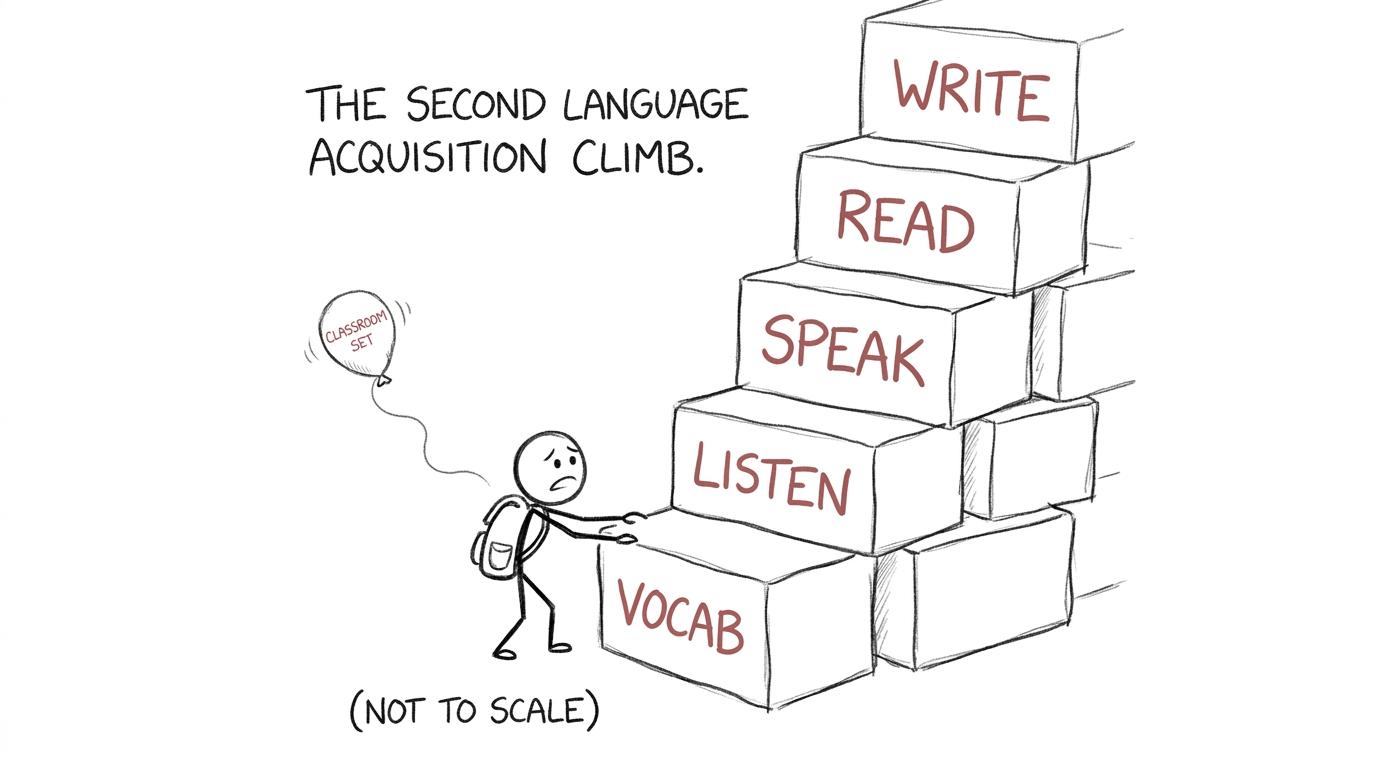 A student climbing the five revision skill steps while a set label drifts away
What actually drives your GCSE Russian result
Because listening, speaking, reading and writing each contribute 25%25\%25%, neglecting one skill creates a genuine weakness in the overall qualification. A student who enjoys reading cannot assume that strong comprehension will fully compensate for unprepared speaking.
Vocabulary recall
You need to recognise vocabulary in listening and reading, then retrieve it independently for speaking and writing. Recognition is easier than production, so revision should include both directions rather than only looking at Russian words and thinking, "I know that."
Grammar and accuracy
Secure control of common structures helps you communicate meaning clearly. Higher-tier candidates also need enough range and flexibility to deal with less predictable material. Accuracy should support communication rather than become a reason to avoid ambitious answers altogether.
Listening under pressure
Listening is partly a language skill and partly an exam skill. You must identify key details while the recording continues, recover after missing a phrase and avoid letting one unknown word distract you from the wider message.
Spontaneous speaking
A memorised answer can provide a foundation, but speaking assessment also rewards effective interaction. Practise changing tense, giving reasons, expanding an answer and responding when the exact question was not rehearsed.
Exam-specific practice
Past questions reveal how familiar content is transformed into unfamiliar tasks. Use the specification and official assessment materials for Russian, then mark carefully against the relevant criteria. Do not judge progress only by whether an answer "sounds good".
Maths students can build the same habit with GCSE Maths revision resources, where revision lessons lead into exam questions, papers and solutions for Edexcel, AQA, OCR and Eduqas.
A practical plan if you are worried about your set
Begin by finding out your current tier and target grade. Do not rely on rumours about what your set "usually" takes.
Next, collect evidence across all four Russian skills. One good vocabulary test is not enough. Look for patterns over several assessments and ask your teacher what separates your current performance from the next grade range.
Then build a weekly routine with distinct tasks:
- one vocabulary retrieval session;
- one focused grammar and writing session;
- one listening session with error review;
- one reading or translation session;
- one short speaking practice.
Record errors by type. "Russian is difficult" gives you nothing to practise. "I confuse past-tense verb forms" or "I miss negative words in listening" gives you a next action.
Finally, request another tier-level assessment after a sensible period of targeted work. The goal is not to win an argument about your set. It is to produce better evidence.
For your maths preparation, you can organise the same process with a realistic GCSE Maths revision timetable, then use Edexcel GCSE Maths mini tests to check whether individual skills are becoming secure.
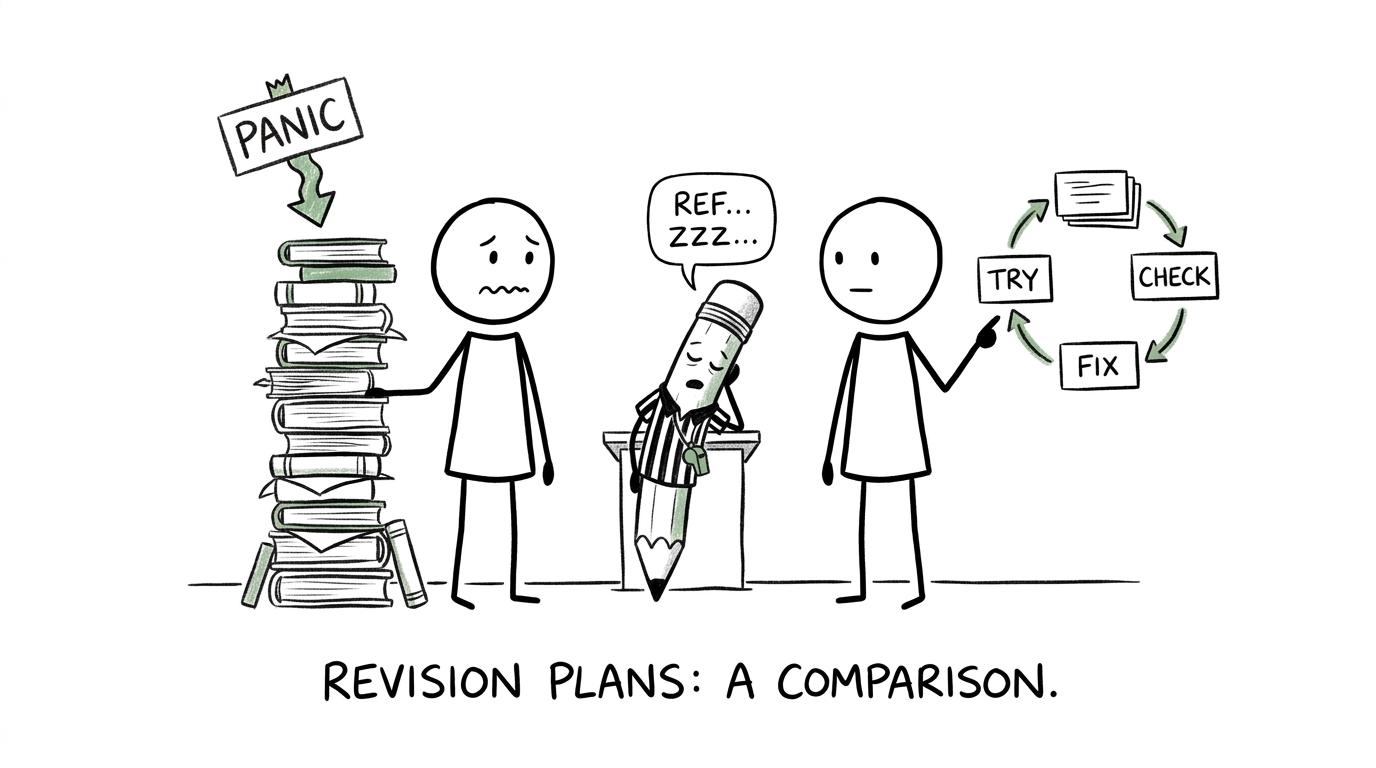 Two revision strategies compete while a pencil referees
Common mistakes when thinking about class sets
Treating a set as a permanent judgement
Sets usually reflect evidence and school organisation at a particular moment. They are not a measurement of everything you might achieve by the examination.
Confusing a higher set with Higher-tier entry
Never assume the capital letter does not matter. Confirm whether you are entered for Foundation or Higher and make sure your revision materials match.
Wanting Higher tier only for status
Higher tier is necessary for grades above 555, but it is not automatically the safest entry for every student. Tier decisions should follow consistent assessment evidence and the grade range you are realistically working towards.
Ignoring one of the four skills
The qualification is evenly balanced. Spending nearly all your time on writing while avoiding listening or speaking leaves a major part of the assessment exposed.
Measuring effort by time alone
Hours are inputs, not evidence of learning. Completed questions, corrected mistakes, stronger recall and improved assessment performance provide better information.
Comparing yourself with another set
Different classes may cover material in a different order. Compare your work with the specification, assessment criteria and your previous performance instead.
Your set is a starting position, not a final grade
So, does your class or set genuinely change your GCSE Russian outcome? It can influence teaching pace, challenge and access to tier-specific practice. But the set name itself earns nothing and caps nothing. The formal grade range comes from your exam tier; the eventual result comes from your performance across all four assessed skills.
Find out your tier, ask for the evidence behind it and make your practice specific. If you want a higher entry, build a body of work that shows you are ready for it.
And when maths revision is competing for the same limited evenings, let MathsGenie remove the guesswork. Start with free revision lessons and practice questions, use mark schemes and video solutions to repair mistakes, then build exam confidence with past papers, mini tests and Edexcel GCSE Maths predicted papers. A class label may shape the timetable. Consistent, well-directed practice is what changes the work you can produce when the paper arrives.