The diagram below illustrates the long-run equilibrium of a firm operating in a perfectly competitive market.
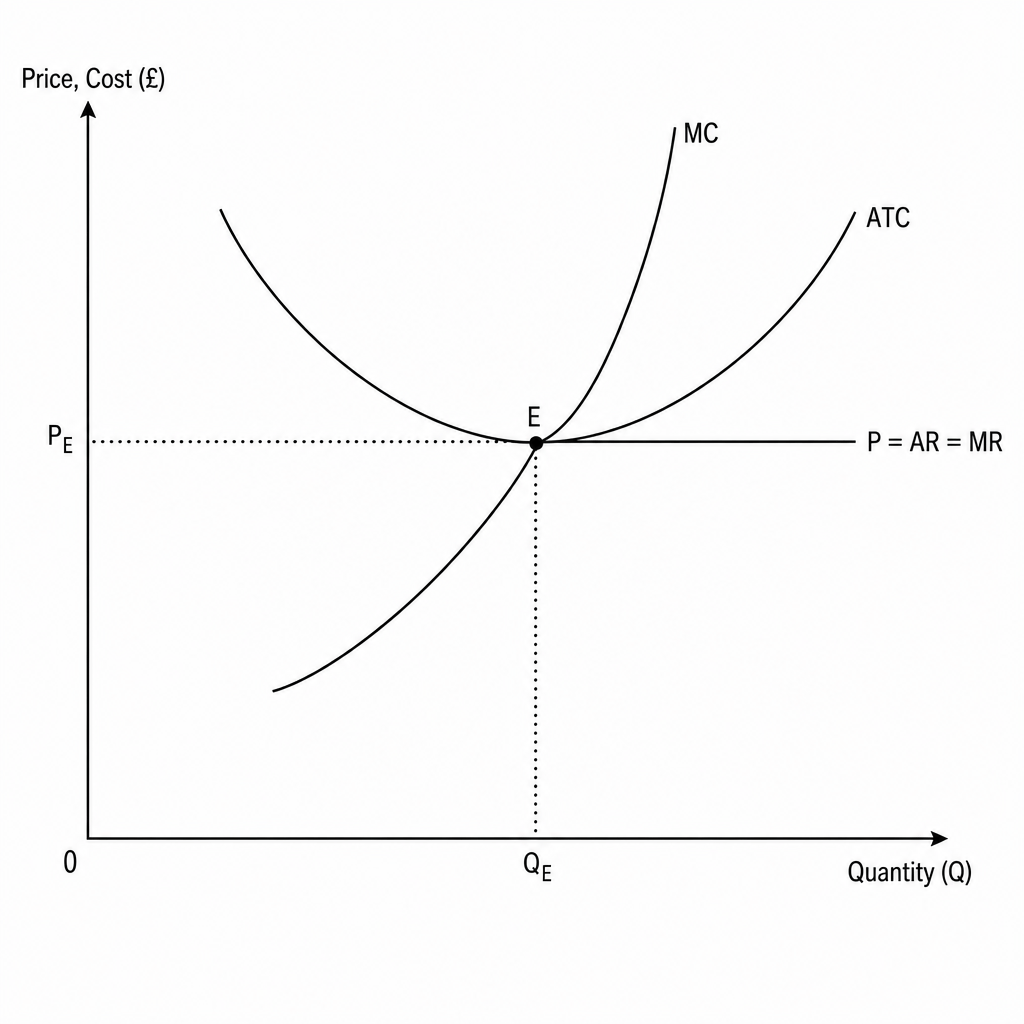
Which of the following statements correctly evaluates the economic efficiency achieved by this firm at the equilibrium point EEE?
The firm achieves allocative efficiency because PE=MCP_E = MCPE=MC, productive efficiency because output is at the minimum of the ATCATCATC curve, but fails to achieve dynamic efficiency due to the absence of supernormal profits in the long run.
The firm achieves dynamic efficiency due to perfect information and free entry, but fails to achieve productive efficiency because the minimum point of ATCATCATC can only be reached in the short run.
The firm achieves allocative efficiency because PE=MCP_E = MCPE=MC and dynamic efficiency due to normal profits being reinvested, but fails to achieve productive efficiency because of organizational slack (X-inefficiency).
The firm achieves productive efficiency because it operates at the minimum of the ATCATCATC curve, but fails to achieve allocative efficiency because price-taking firms must set price above marginal cost to cover fixed overheads.

