Question 11
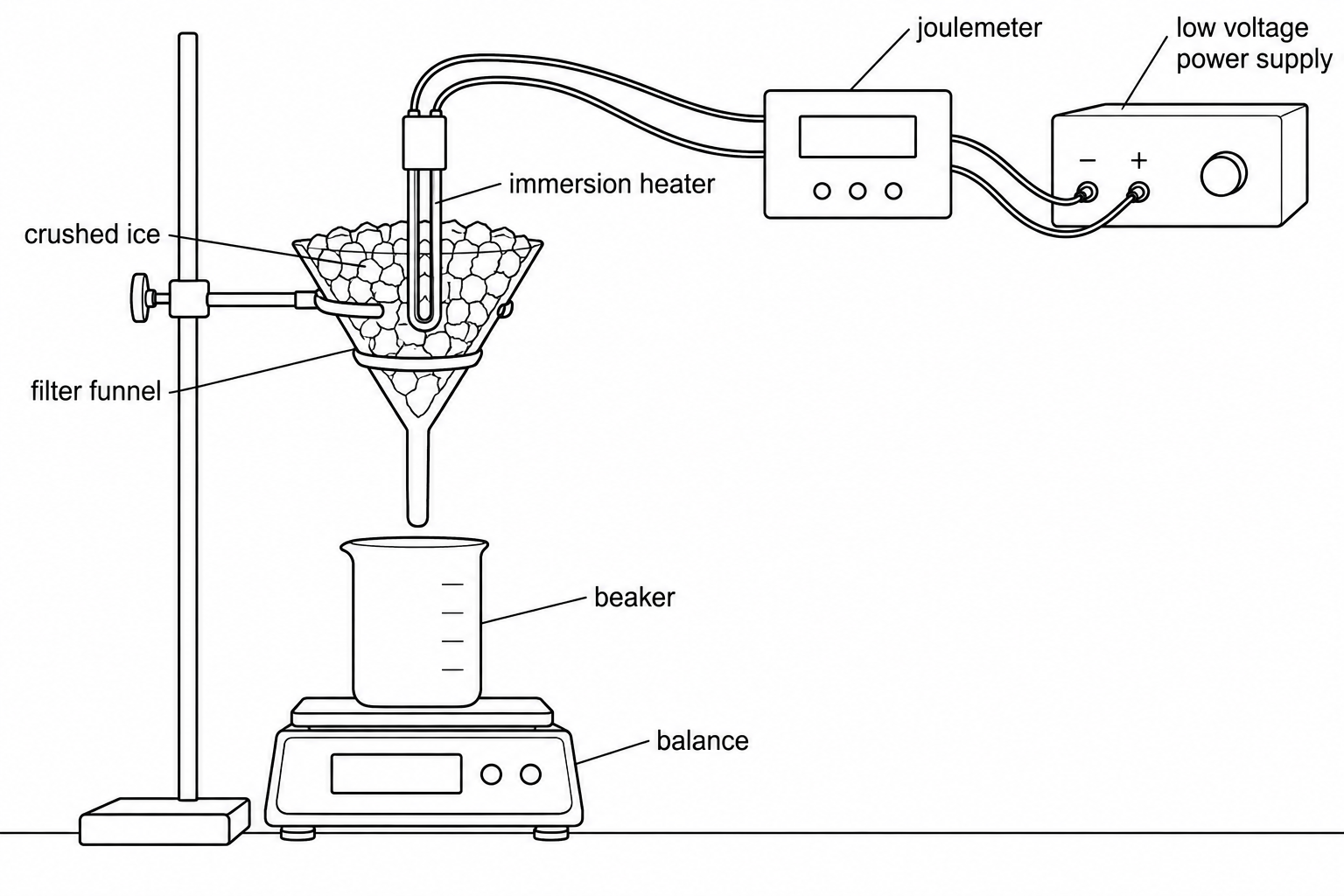
HA student determines the specific latent heat of fusion of ice using the apparatus shown in the figure.
Figure: The apparatus used to determine the specific latent heat of fusion of ice
a.[2]
Describe the difference between the specific heat capacity of a substance and its specific latent heat.
b.[3]
Some of the ice in the funnel melts because of energy transferred to it from the warm room.
Explain the effect that this has on the value the student obtains for the specific latent heat of fusion of ice.
3.2 Internal energy and energy transfers Questions
40 exam-style questions on AQA GCSE Physics 3.2 Internal energy and energy transfers, covering 3.2.1 Internal energy, 3.2.2 Temperature changes in a system and specific heat capacity, and 3.2.3 Changes of state and specific latent heat. Each one has a worked solution and a mark scheme showing where the marks go.