Question 11
HA hot air balloon has a resultant vertical force of 240 N acting upwards on it and a resultant horizontal force of 200 N acting on it to the east.
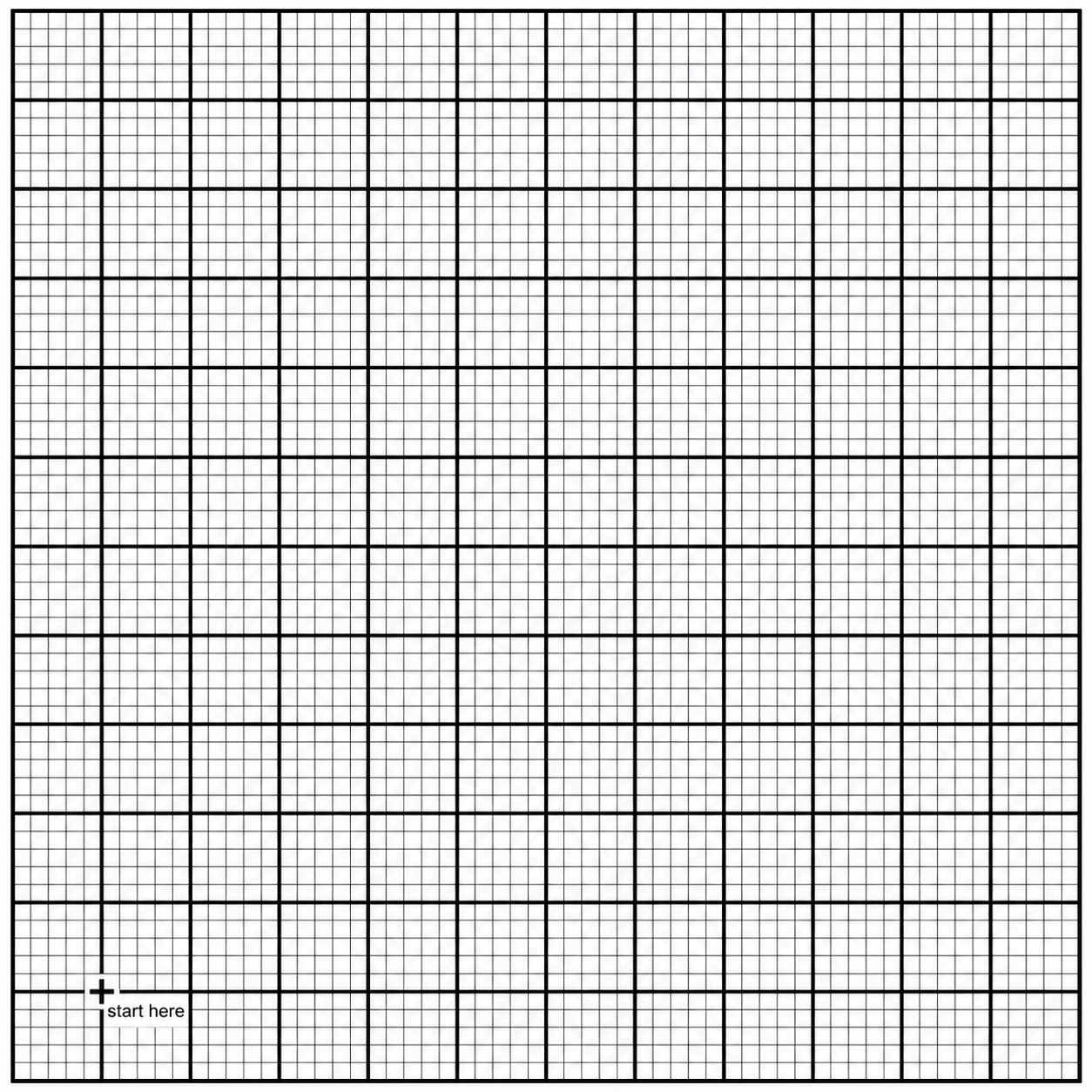
Figure: Grid for drawing a scale vector diagram of the two forces acting on a hot air balloon
a.[4]
Draw a scale vector diagram on the grid in Figure to determine the resultant of these two forces. Give the magnitude of the resultant force and the angle between the resultant force and the vertical.
b.[2]
Explain why the resultant of these two forces is not 440 N.
c.[1]
A student says that the resultant force could be found without drawing a diagram if the two forces acted along the same straight line. Give the reason why the student is correct.
5.1 Forces and their interactions Questions
40 exam-style questions on AQA GCSE Physics 5.1 Forces and their interactions, covering 5.1.1 Scalar and vector quantities, 5.1.2 Contact and non-contact forces, 5.1.3 Gravity, and 5.1.4 Resultant forces. Each one has a worked solution and a mark scheme showing where the marks go.