Question 1
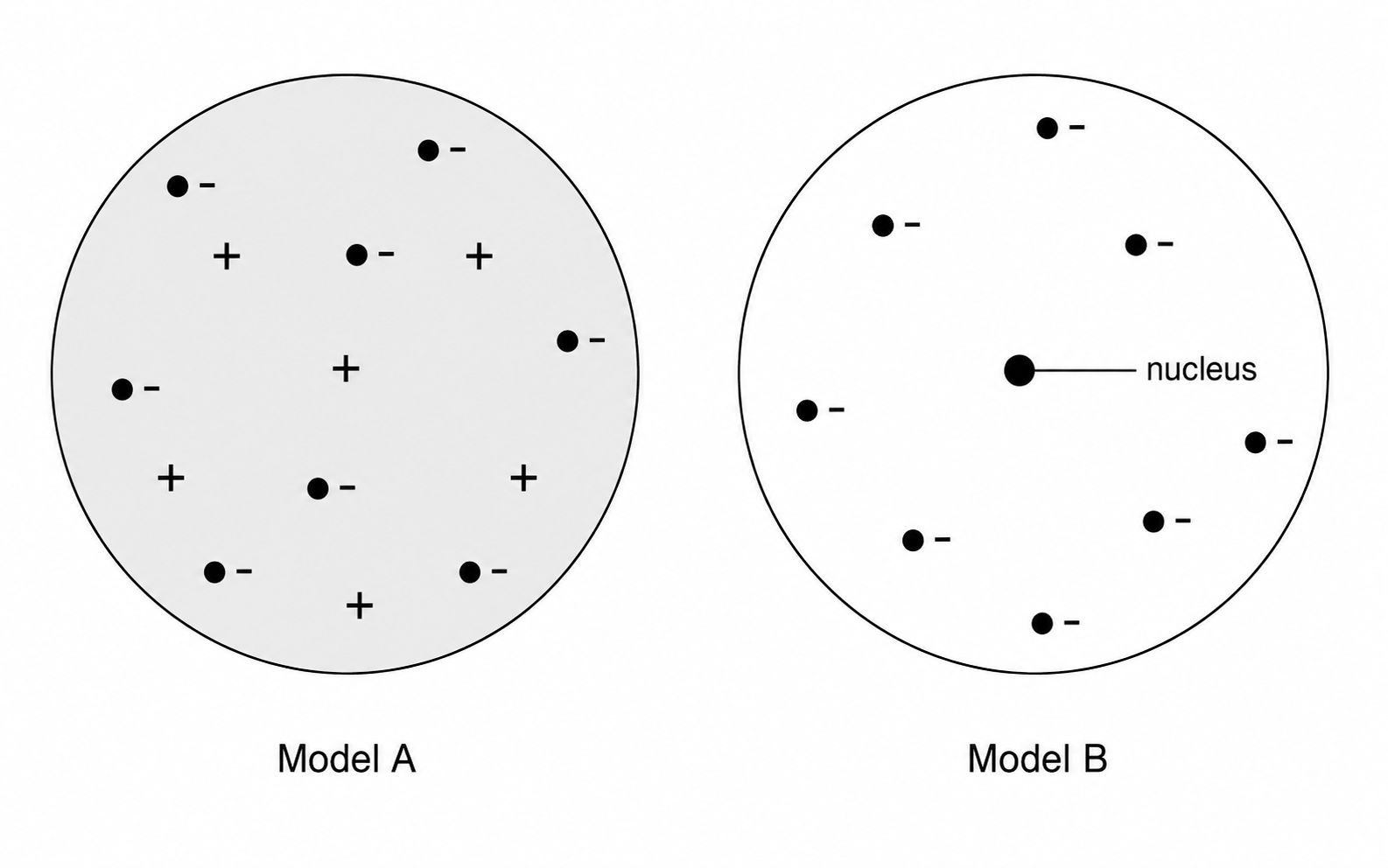
F38%The figure shows two models of the atom, model A and model B.
Figure: Two models of the atom
a.[1]
Give the name of model A.
b.[1]
Give one difference between model A and model B.
c.[2]
Model B replaced model A. Explain why scientists changed the model of the atom.
d.[1]
Name the scientist who adapted model B by suggesting that electrons orbit the nucleus at specific distances.
1.1 A simple model of the atom, symbols, relative atomic mass, electronic charge and isotopes Questions
40 exam-style questions on AQA GCSE Chemistry 1.1 A simple model of the atom, symbols, relative atomic mass, electronic charge and isotopes, covering 1.1.1a Atoms, elements and compounds, 1.1.1b Half equations and ionic equations, 1.1.2 Mixtures, 1.1.3 The development of the model of the atom (common content with physics), 1.1.4 Relative electrical charges of subatomic particles, 1.1.5 Size and mass of atoms, 1.1.6 Relative atomic mass, and 1.1.7 Electronic structure. Each one has a worked solution and a mark scheme showing where the marks go.