Higher Tier GCSE German for Sixth Form: Is It Needed?
Higher tier GCSE German sixth form choices explained: learn when Higher is required, whether Foundation grade 5 is enough, and what to check before entry.
The higher tier GCSE German sixth form question often appears when several decisions collide at once. You may be balancing German with GCSE maths revision, wondering whether Foundation offers a safer grade, and worrying that one tier decision could quietly close a door.
The short answer is reassuring: Higher tier GCSE German is not universally required to enter sixth form. However, if you want to take A Level German, many sixth forms ask for GCSE German at grade 666 or above. Because Foundation tier normally has a maximum grade of 555, a Foundation entry may not meet that particular requirement. Other providers accept grade 555, consider students individually, or offer different language pathways.
The important detail is not simply the word “Higher”. It is the published entry requirement of the sixth form you hope to attend.
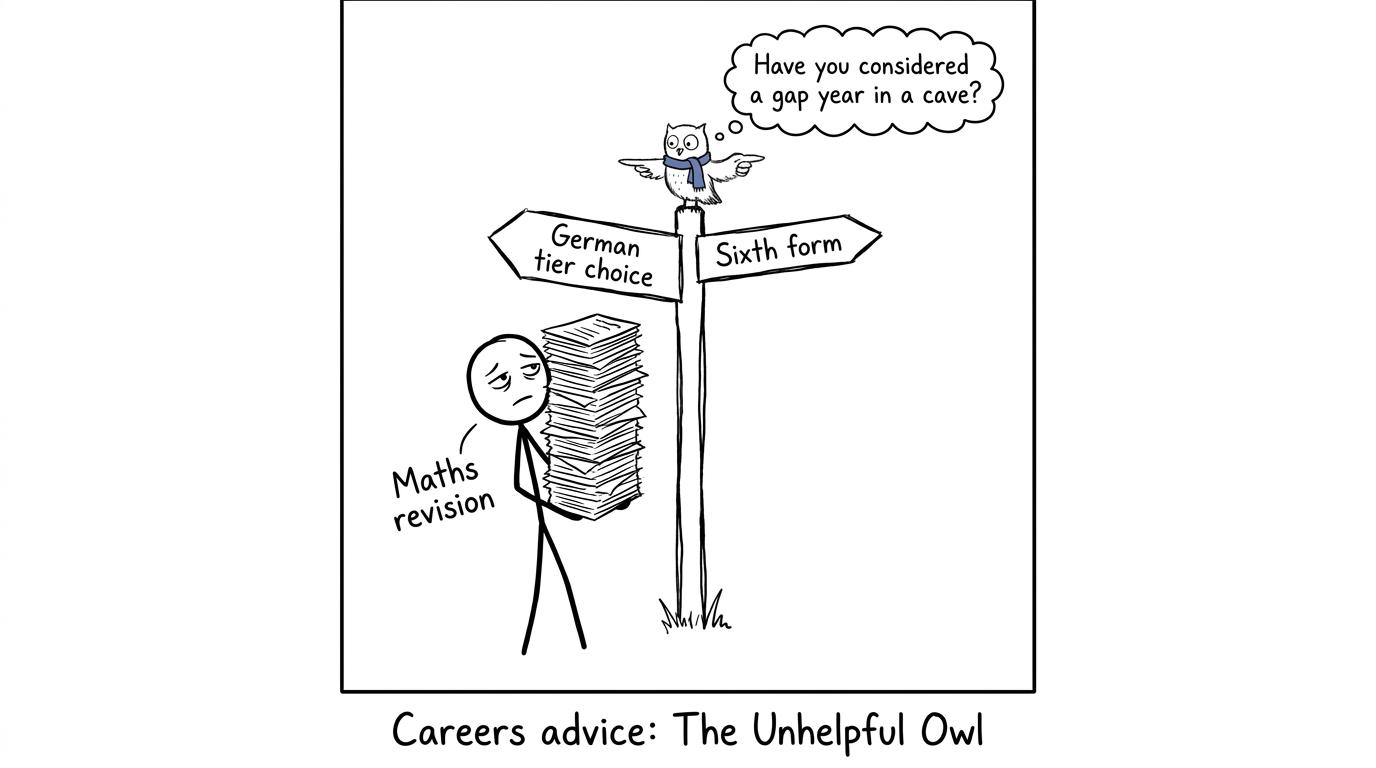 A student navigating German tier choices, sixth form and maths revision
The decision at a glance
Before changing tier or worrying about sixth-form admission, check the following:
- Are you asking about general entry to sixth form or entry to A Level German?
- What GCSE German grade does your preferred provider require?
- Is that requirement described as essential, recommended or subject to discussion?
- What is the highest grade available on your GCSE tier?
- Does the sixth form expect particular grades in GCSE maths and English?
- When is its application deadline, and can entry requirements change before enrolment?
- What does your German teacher recommend based on evidence from all four language skills?
This distinction matters. General sixth-form admission and admission to an individual A Level course are related, but they are not the same decision.
Is Higher tier GCSE German necessary for sixth form?
Usually, no. Sixth forms set their own admissions policies, so there is no single national rule saying that every applicant must have taken Higher tier German.
A provider might ask for a collection of GCSE passes at grades 999 to 444 or 999 to 555, alongside specified grades in English and maths. Under that kind of general policy, the tier taken in German may be irrelevant as long as you secure the required grades.
The position changes if you intend to study German after GCSE. An A Level German course may ask for grade 666 in GCSE German. Some providers set the threshold at grade 555 or grade 777, while others consider borderline applications after speaking to the languages department. These are institutional decisions rather than universal rules imposed by AQA, Pearson Edexcel or Eduqas.
Exam boards publish qualification specifications and assessment arrangements. Individual schools and colleges decide whom they admit to their courses.
Can a strong Foundation grade be enough?
Yes, in some circumstances. A strong Foundation grade can be enough when:
- the sixth form’s overall admission criteria are met;
- you do not plan to take A Level German;
- the German course requires grade 555 rather than grade 666;
- the languages department considers applicants individually; or
- the provider offers an alternative language course with different requirements.
Under current tiered GCSE German arrangements, Foundation tier normally makes grades 555 to 111 available, while Higher tier normally makes grades 999 to 444 available. The tiers overlap at grades 444 and 555.
That creates a firm practical boundary: if a sixth form requires grade 666 for A Level German, a Foundation grade 555 cannot meet the stated threshold, however strong the underlying performance was. If it requires grade 555, Foundation can potentially be sufficient.
Do not assume that “strong Foundation” automatically leads to an exception. Ask the provider directly and request confirmation in writing where possible.
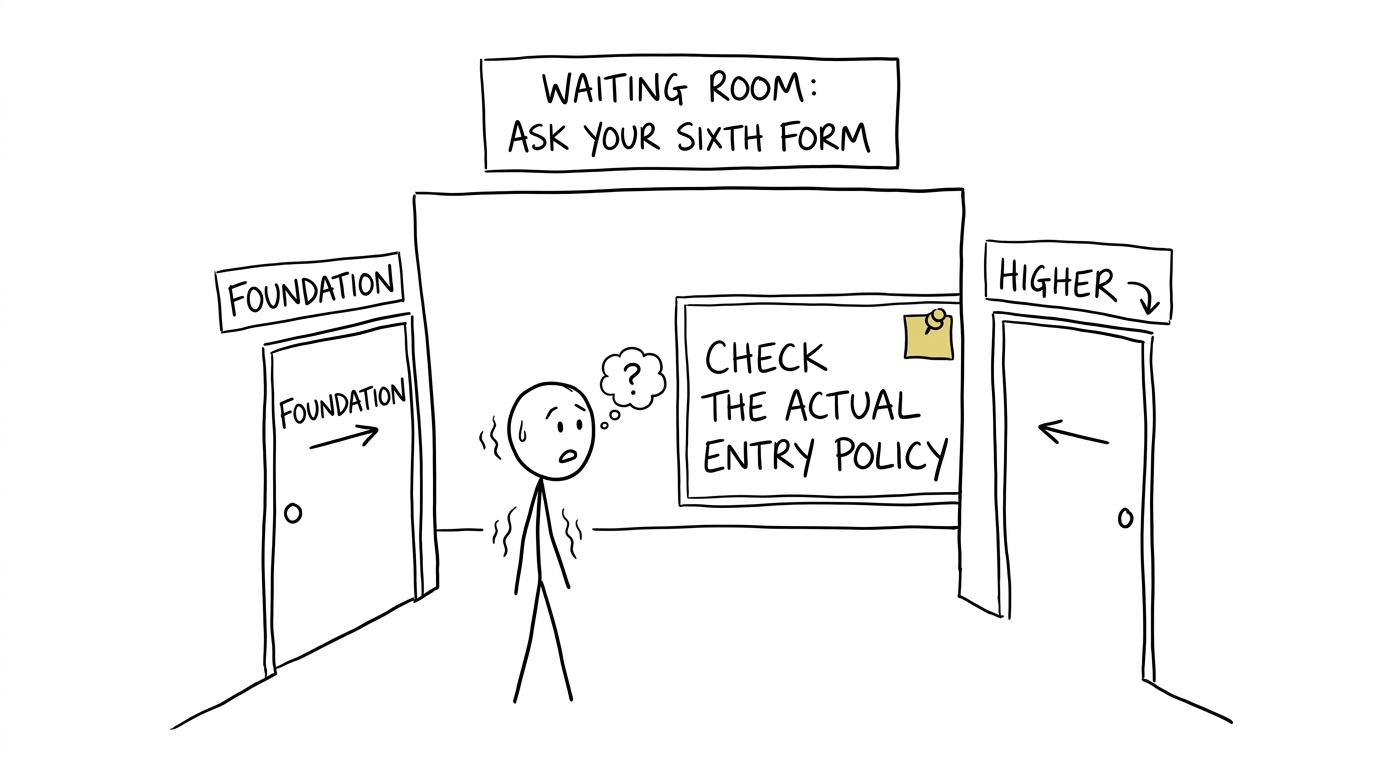 Foundation and Higher doors leading to a reminder to check the real entry policy
Why A Level German courses may prefer a higher grade
A Level German develops considerably beyond GCSE. Students are expected to understand extended spoken and written material, communicate ideas with increasing precision, use grammar independently and engage with cultural or social themes. The course may also involve literary texts or films, depending on the specification.
A GCSE grade requirement is therefore used as an indicator of readiness. It is not a judgement about your intelligence or long-term potential. It tells the department whether your present language knowledge is likely to support the pace of its course.
Higher tier also exposes students to assessment demands associated with the upper GCSE grades. That experience can make the transition more manageable, but the tier label by itself does not guarantee readiness. A student’s listening, speaking, reading, writing, vocabulary and grammatical control all matter.
The most useful question is not, “Which tier sounds more impressive?” It is, “Which entry gives me a realistic route to the grade my next course requires?”
What to check with each sixth form
Policies vary, and a sentence on a course page can hide important detail. Contact admissions or the head of languages and ask precise questions:
- Is grade 666 in GCSE German an absolute requirement for A Level German?
- Would a Foundation grade 555 be considered?
- Is there an internal assessment or transition task?
- Can strong performance in other subjects support a borderline application?
- Are decisions based on achieved grades rather than predicted grades?
- What happens if the GCSE result is one grade below the published threshold?
You should also check the policy for the year in which you will enrol. Specifications and admissions arrangements can change. Students sitting the redesigned GCSE German qualifications from summer 202620262026 onwards should make sure they are reading current information rather than an old prospectus or an archived course page.
How this decision connects with GCSE maths
German tiering does not alter your GCSE maths tier or maths grade directly. Yet the two decisions share something important: both are about choosing an assessment route that preserves realistic opportunities.
For many sixth forms, GCSE maths is part of the general entry criteria even when the intended A Levels are languages or humanities. A student concentrating entirely on the German question can overlook a maths requirement that applies to every applicant.
Start by writing down the grades you need in each subject. Then separate them into three groups:
- essential for general sixth-form entry;
- essential for your chosen A Levels;
- desirable but not compulsory.
That simple hierarchy stops every subject from feeling equally urgent. It also turns revision into a plan rather than a reaction.
MathsGenie’s GCSE maths revision resources organise topics by grade and include videos, practice questions and answers. If a sixth form requires a particular maths grade, begin with the topics just below and around that target before stretching further.
Weaknesses in core skills can quietly affect several topics. Revisiting fractions revision and ratio revision, for example, can strengthen the foundations needed elsewhere in the GCSE course. Higher-tier students can then move towards material such as quadratic equations when it fits their revision plan.
Build a revision plan around the grades you need
A sensible plan protects both ambition and capacity. It should include German vocabulary and skills practice, but also regular maths sessions rather than leaving maths to the final weeks.
Use short topic checks to identify what needs attention. Once you have repaired gaps, move to timed exam practice using GCSE maths past papers. Past papers reveal a different kind of weakness: not just what you know, but whether you can recognise and apply it under exam conditions.
Closer to the exams, MathsGenie predicted papers can provide additional practice in a realistic paper format. They should complement specification coverage and past papers, not replace them.
Keep the schedule sustainable. A plan that assigns every free minute to revision often collapses after a few days. A smaller plan that you follow consistently is more valuable.
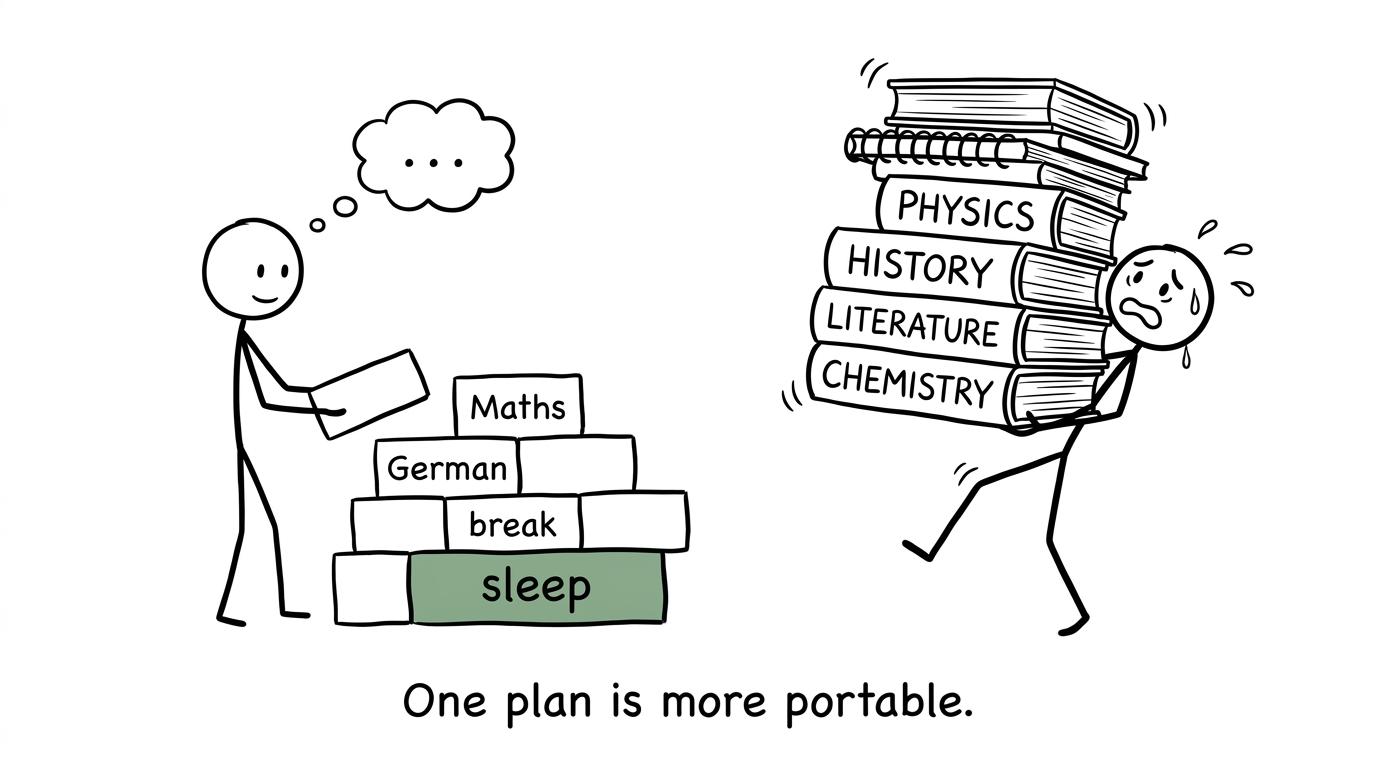 A calm revision timetable proving easier to carry than every textbook at once
Should you ask to move to Higher tier German?
If A Level German is a serious goal and your preferred sixth forms require grade 666 or above, discuss Higher tier with your German teacher as early as possible. Your teacher can judge whether your recent assessments support the move and which language skills need improvement.
Higher tier should not be chosen solely because it keeps a theoretical grade available. The upper grades are only useful when the assessment is appropriate for your current performance and you can prepare effectively across the course.
Equally, Foundation should not be treated as failure. If it offers the most reliable route to a grade needed for general sixth-form admission, it may be the sensible choice. The consequence is narrower only where a later course asks for a grade above the Foundation ceiling.
A good decision considers three things together: your intended sixth form, its exact requirements and your teacher’s evidence-based recommendation.
Common mistakes to avoid
Confusing sixth-form entry with A Level German entry
A sixth form may admit you generally but not allow you to start German without the subject-specific grade. Check both sets of criteria.
Assuming every provider uses the same grade threshold
One sixth form may require grade 666, while another accepts grade 555. Never make a tier decision from a friend’s prospectus or another school’s policy.
Believing a Foundation grade can exceed the tier maximum
Excellent performance on Foundation tier does not produce grade 666. If that grade is required, ask about Higher tier or alternative routes before entries are finalised.
Ignoring maths and English requirements
Students can focus on their chosen A Levels and miss the general GCSE conditions. Keep your maths preparation active through topic-based GCSE revision, practice questions and mark schemes.
Treating predicted grades as guaranteed results
Predicted grades help with planning and applications, but final admission may depend on achieved results. Prepare for the required grade rather than relying on the prediction.
Choosing a tier without speaking to teachers
Tier decisions should be based on current assessment evidence, not pride, fear or guesswork. Ask what your results show and what improvement would make Higher tier realistic.
Make the next decision concrete
The uncertainty around higher tier GCSE German and sixth form becomes manageable once you replace assumptions with written requirements. Find the current prospectus for every provider on your shortlist. Record its general entry criteria, its A Level German requirement and the admissions contact. Then discuss the result with your German teacher.
At the same time, protect the grades that support your wider application. MathsGenie gives you free revision lessons, video solutions, practice questions, past papers, predicted papers and mark schemes for GCSE maths. If A Level maths is part of your longer-term plan, you can also explore the A Level maths revision resources.
The right tier is not the one with the grandest label. It is the one that matches your present evidence while keeping open the opportunities you genuinely want. Check the rule, understand the grade boundary created by Foundation tier, and build a revision plan that gives every essential subject regular attention.