GCSE Portuguese Exam Time of Day: Does It Matter?
GCSE Portuguese exam time of day can affect alertness, but it does not decide your grade. Learn how to prepare well for morning and afternoon papers.
The same Portuguese question can feel completely different at 9 o’clock in the morning and after lunch. In one session, your mind may seem quiet and precise. In another, familiar vocabulary briefly refuses to appear.
So, does the GCSE Portuguese exam time of day affect performance? Potentially, yes. Alertness, sleep, routine and your natural body clock can influence how you feel during an exam. However, research does not show that every student performs better in the afternoon, and there is no evidence that the session alone determines your grade.
The practical answer is reassuring: you usually cannot choose the session, but you can prepare your body and exam routine for it.
The short answer
Here is what matters most:
- Some teenagers feel less alert early in the morning because adolescent sleep patterns tend to shift later.
- Research has found associations between exam performance, chronotype and time of day, although results vary between studies and settings.
- An afternoon paper is not automatically easier or more favourable.
- The exam board sets the official timetable, while your school or college tells you when to arrive and where to go.
- Speaking assessments may follow a different arrangement from written papers, so check every component separately.
- Sleep, preparation, food, travel and familiarity with timed conditions are more controllable than the timetable.
Think of timing as one condition around your performance, not the author of it.
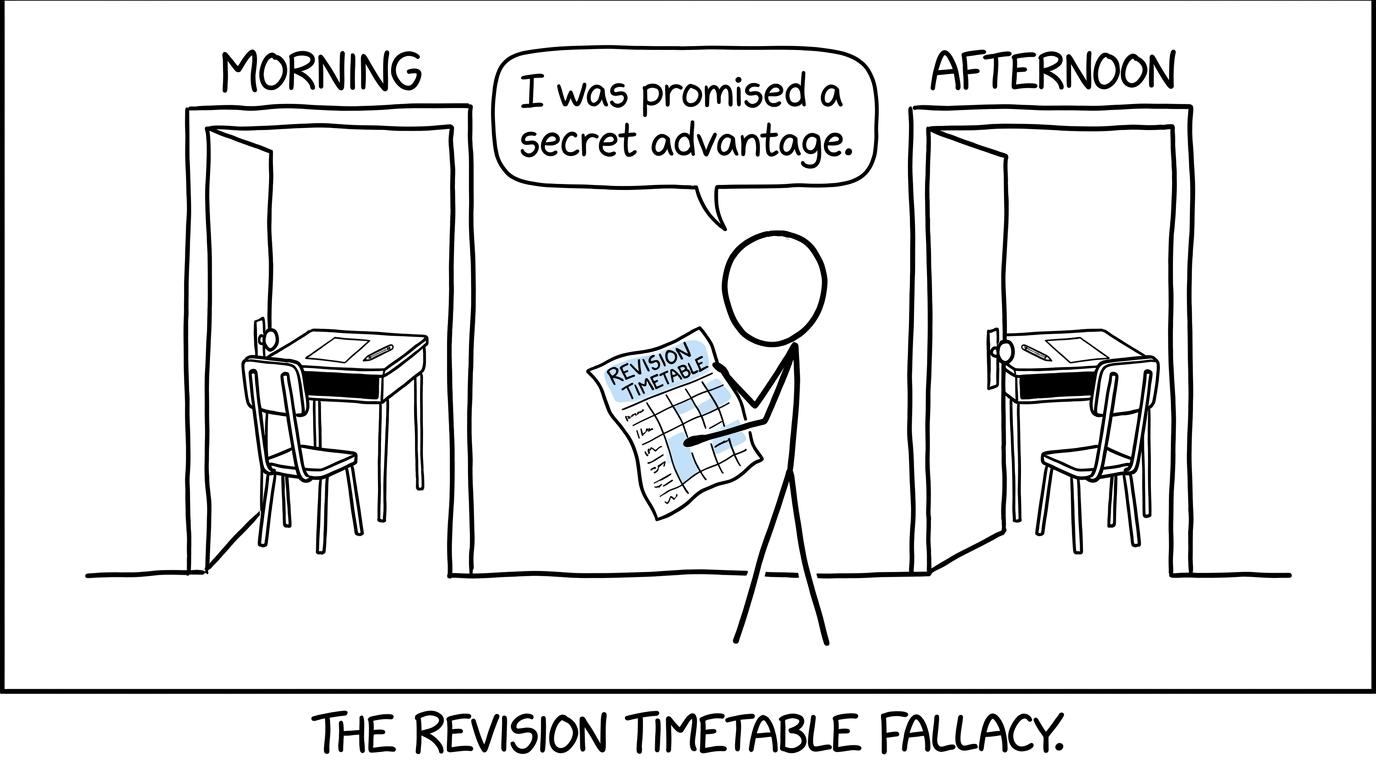 A student discovers that morning and afternoon lead to the same exam desk
Can morning versus afternoon affect GCSE performance?
Human concentration is not perfectly constant. Alertness changes through the day, influenced by sleep pressure, circadian rhythm, meals, light exposure and habit. Your preferred pattern is sometimes described as your chronotype: broadly, whether you naturally feel sharper earlier or later.
Studies involving secondary-age students have found that later chronotypes can be disadvantaged during early sessions compared with morning types. In some research, that difference became smaller during the afternoon. Other studies have found stronger performance around mid-morning or early afternoon, rather than a simple rule that “later is better”.
That distinction matters. The evidence suggests an interaction between the person and the time, not a universal winning session.
It is also important not to overstate the findings. Research on Dutch school examinations, classroom quizzes or assessments in other countries is useful, but it does not prove that an individual sitting a UK GCSE Portuguese paper will gain or lose a particular number of marks. Subject knowledge, question difficulty, marking and preparation remain central.
Why a morning Portuguese exam may feel harder
A morning paper can expose weaknesses in routine. If you normally wake late at weekends, skip breakfast or begin thinking seriously only after registration, an early examination may feel abrupt.
Portuguese also demands rapid switching between skills. In listening, you must process unfamiliar speech without pausing the recording whenever you wish. In reading, you must distinguish detail from plausible distractors. In writing, you need vocabulary, grammar and organisation available under time pressure.
Feeling sleepy does not erase that knowledge, but it can make retrieval feel slower. Anxiety can then amplify the problem: one forgotten word becomes “I cannot remember anything”, even when the rest of your understanding is intact.
How to prepare for a morning paper
Practise the routine before exam day:
- Wake at the time you will need to wake during the examination period.
- Eat a familiar breakfast rather than experimenting with food or excessive caffeine.
- Allow generous travel time.
- Do a brief language warm-up, such as reviewing familiar vocabulary or reading a short passage.
- Avoid a frantic mock paper immediately before leaving home.
- Follow your school’s instructions about arrival time and permitted equipment.
A warm-up should activate knowledge, not test your self-worth. Ten calm minutes can be more useful than discovering three new weaknesses at the school gate.
Is an afternoon Portuguese exam better?
An afternoon session may suit students who become more alert later. You have time to wake fully, eat and travel without an early rush. That does not make the session automatically advantageous.
The extra hours can become a trap. Students sometimes spend the entire morning cramming, checking group chats and repeatedly imagining difficult questions. By the time the paper begins, they are mentally tired.
Lunch can matter too. Skipping it may leave you distracted by hunger, while an unusually heavy meal may make you feel sluggish. The safest choice is generally a normal meal you already know suits you, with enough time to settle before the exam.
How to use the morning before an afternoon paper
Keep the day structured:
- Get up at a normal examination-period time rather than sleeping until midday.
- Complete one short, familiar review session.
- Stop intensive revision well before leaving.
- Eat and drink normally.
- Take a short walk or use another calm way to become alert.
- Arrive according to your centre’s instructions.
The aim is not to spend every available minute revising. It is to arrive with usable attention.
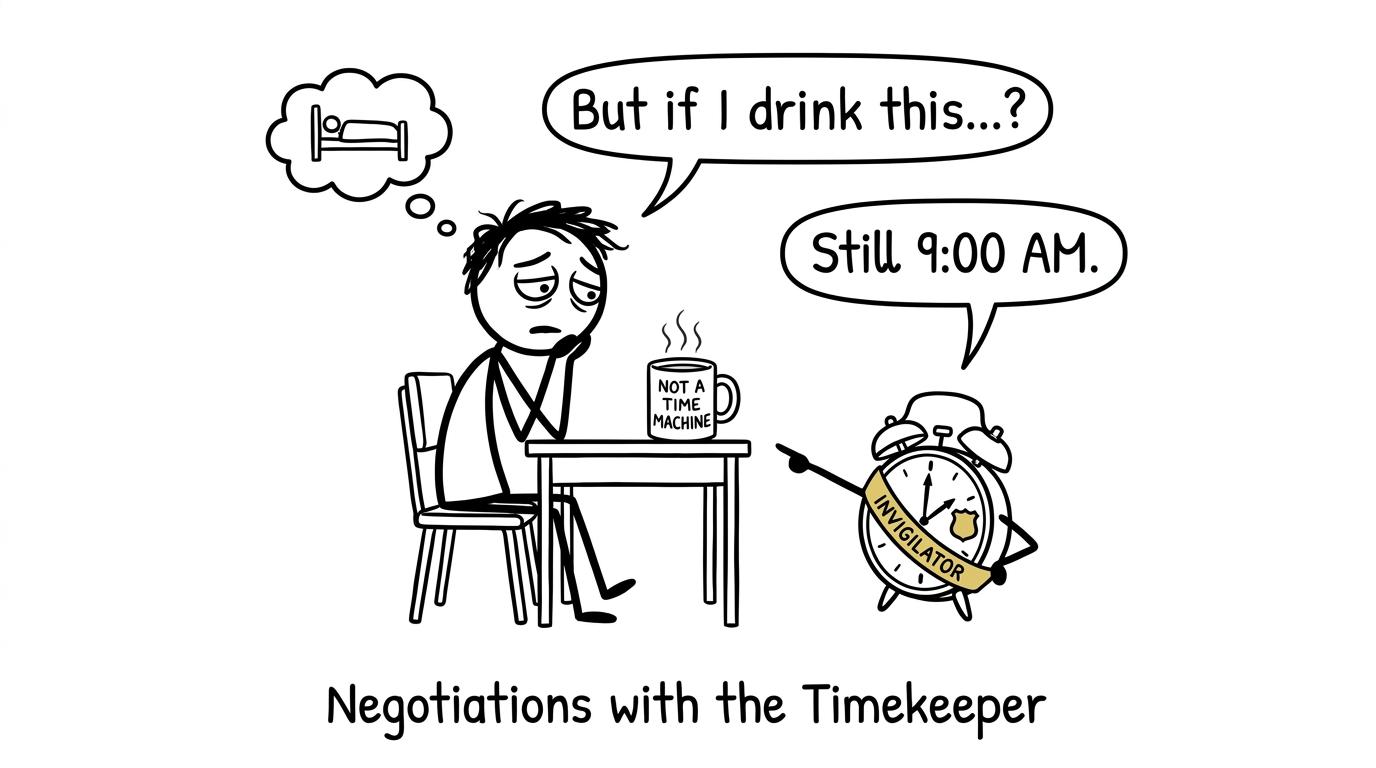 An alarm clock unsuccessfully attempts to become a time machine
You cannot normally choose the exam session
GCSE timetables coordinate examinations across many schools and colleges. A paper designated for a morning or afternoon session is not normally moved simply because a student prefers another time.
Your centre controls the practical arrangements within the applicable examination rules. Exact arrival instructions can therefore differ from the broad session shown on a timetable. Always use the current information issued by your school or college rather than relying on a screenshot, an old timetable or a friend at another centre.
If two examinations clash, speak to your exams officer. Centres have formal procedures for timetable clashes and supervision. Do not assume that you can attend a different session independently.
Students with approved access arrangements should likewise confirm the arrangements with their centre. Extra time may affect when a component finishes, but it does not mean you should alter your arrival time without instructions.
Check each Portuguese component separately
GCSE Portuguese is not one single event. Depending on the current specification, assessment includes listening, speaking, reading and writing. Speaking tests are commonly arranged by the centre during an assessment window, while externally timetabled components appear in designated sessions.
That means “my Portuguese exam is in the afternoon” may only describe one paper. Create a component checklist containing:
- the date;
- the designated session;
- your required arrival time;
- the room or meeting point;
- the component being assessed;
- permitted equipment;
- any instructions supplied by your centre.
Use the final exam-board timetable and your centre’s personalised timetable. Specifications and timetables can change between examination series, so do not use dates from an older cohort.
Train at the time you will perform
Once your timetable is confirmed, complete some timed practice in the relevant part of the day. This is not because every revision session must match the examination hour. It is simply a rehearsal.
If the paper is in the morning, occasionally practise reading or listening after breakfast. If it is in the afternoon, try a timed task after lunch and notice which meal and break routine leaves you comfortable. Keep the conditions sensible and repeatable.
Maths students can apply the same idea across the GCSE timetable. MathsGenie’s Edexcel GCSE Maths mini tests are short enough to test a morning or afternoon routine without exhausting you. For broader planning, the guide to the best order for learning GCSE Maths topics helps separate long-term learning from final exam rehearsal.
The valuable question after practice is not merely “What mark did I get?” Ask:
- Was I alert when I began?
- Did hunger, tiredness or noise distract me?
- Did I rush because the task felt unfamiliar?
- What should stay the same next time?
This turns timing from a worry into information.
Protect the whole examination period
A Portuguese paper rarely exists in isolation. It may sit between maths, science, English or another language examination. The larger risk is often not whether one paper begins in the morning or afternoon, but whether several days of late-night revision accumulate into fatigue.
A revision planner can help you distribute work before the examination series begins. For maths, use MathsGenie’s free revision resources to combine lessons, practice questions, mini tests and papers instead of attempting everything the night before.
If an exam is close, follow a restrained plan. The GCSE Maths night-before checklist explains how to prioritise useful practice, pack equipment and stop revision at a sensible time. The principles transfer well to Portuguese: review known material, prepare what you need and protect sleep.
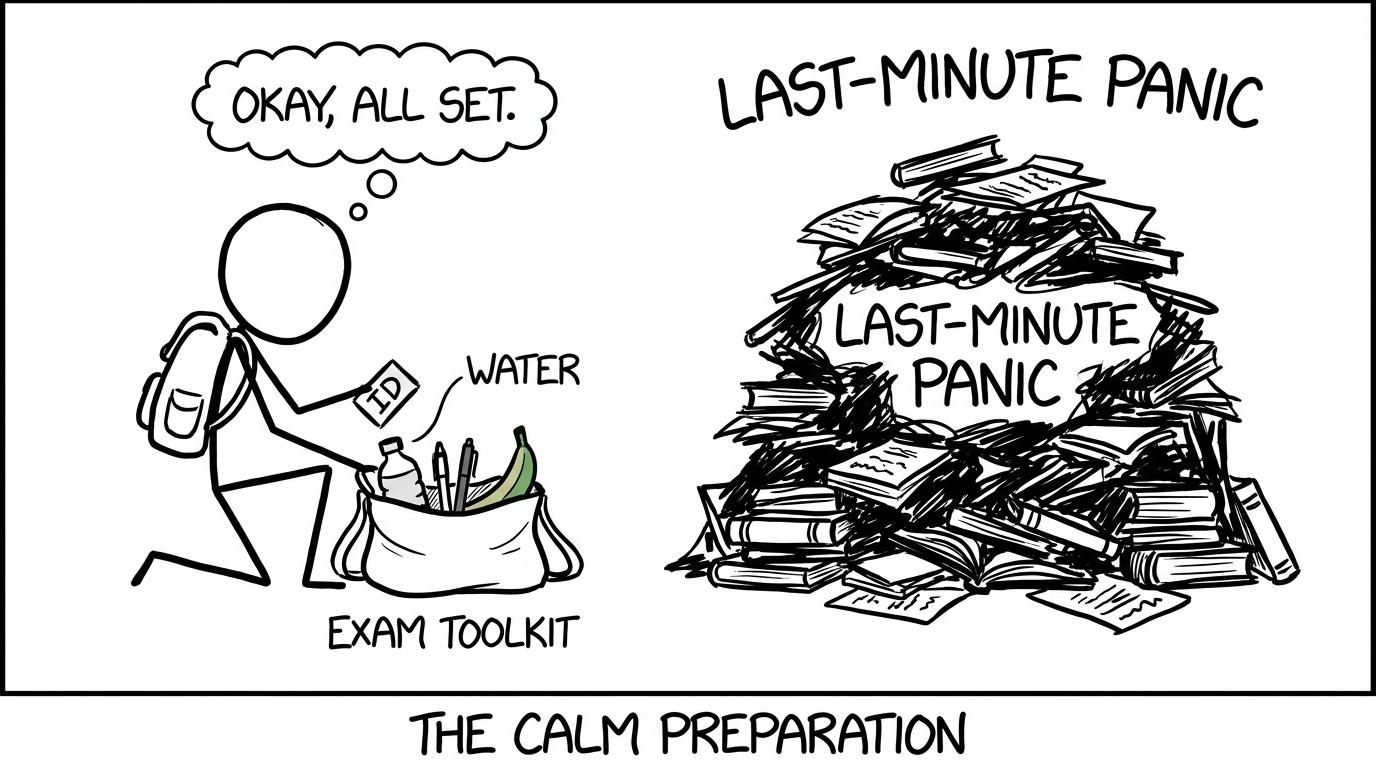 A student packs useful exam equipment while leaving last-minute panic behind
Common mistakes around exam timing
Assuming afternoon always means better performance
Some students prefer afternoons, but performance depends on chronotype, sleep, routine and the demands of the task. Treat the afternoon as a different routine, not a guaranteed advantage.
Staying awake later before a morning exam
An extra hour of tired revision may be less valuable than arriving able to concentrate. The night before should consolidate preparation, not attempt to replace it.
Cramming throughout an afternoon-exam morning
Unlimited revision can increase fatigue and anxiety. Set a stopping time and leave space for food, travel and mental recovery.
Trusting an unofficial timetable
Exam dates and sessions are time-sensitive. Confirm the current series, qualification and component using your personalised timetable and instructions from your centre.
Ignoring the rest of the GCSE timetable
One late night can affect more than one subject. Plan Portuguese alongside maths and your other examinations. The article on how to revise Edexcel GCSE Maths efficiently offers a practical cycle of topic review, exam questions, marking and retesting.
Believing the clock decides the result
Timing can influence how alert you feel, but it does not replace knowledge or technique. Avoid turning a morning session into an explanation for failure before the paper has even begun.
Make the timetable ordinary
An examination time feels powerful when it remains unfamiliar. Rehearse the wake-up time. Test your breakfast or lunch routine. Complete a few timed tasks in the correct session. Then let the clock become background information.
The broader lesson applies directly to maths revision. Learn with clear revision lessons, practise individual skills, mark mistakes honestly and then use timed papers to rehearse performance. MathsGenie brings those stages together through free practice questions, mark schemes, video solutions, mini tests, past papers and predicted papers.
Start at MathsGenie’s GCSE and A Level maths revision hub, build a realistic plan and use the resources that match your tier and exam board. You may not control whether an exam is in the morning or afternoon. You can control how familiar, rested and prepared you feel when it begins.