

GCSE English Literature Study Group That Works
GCSE English Literature study group advice: build a focused routine with clear roles, active recall, essay practice and accountability that lasts.

The easiest part of creating a GCSE English Literature study group is starting the group chat. The difficult part is turning that chat into regular, useful revision.
A group that works needs four things from the beginning: a small membership, a fixed meeting time, one clear task for each session and individual work from everyone. Without that structure, discussion drifts. With it, the group becomes a place to test quotations, challenge interpretations and practise building arguments under pressure.
The principle matters beyond English. If you are balancing Literature with GCSE maths, science and other subjects, every revision session needs to produce evidence of progress rather than merely feeling productive.
The study group checklist
Before inviting anyone, agree on the following:
- Keep the group small enough for everyone to contribute, roughly three to five students is a sensible starting point.
- Confirm that everyone studies the same texts and exam board specification.
- Meet at the same time and place each week.
- Set one text, theme, character or exam skill before each meeting.
- Ask everyone to prepare independently.
- Use closed-book recall before opening notes.
- Finish with a timed individual task.
- Record one action for every member before leaving.
Collaborative learning does not become effective simply because several students share a table. Evidence reviewed by the Education Endowment Foundation suggests that small groups with a shared outcome tend to be more promising, but tasks must be carefully designed and everybody needs to articulate their thinking.
That is the real difference between a study group and a social gathering with textbooks nearby.
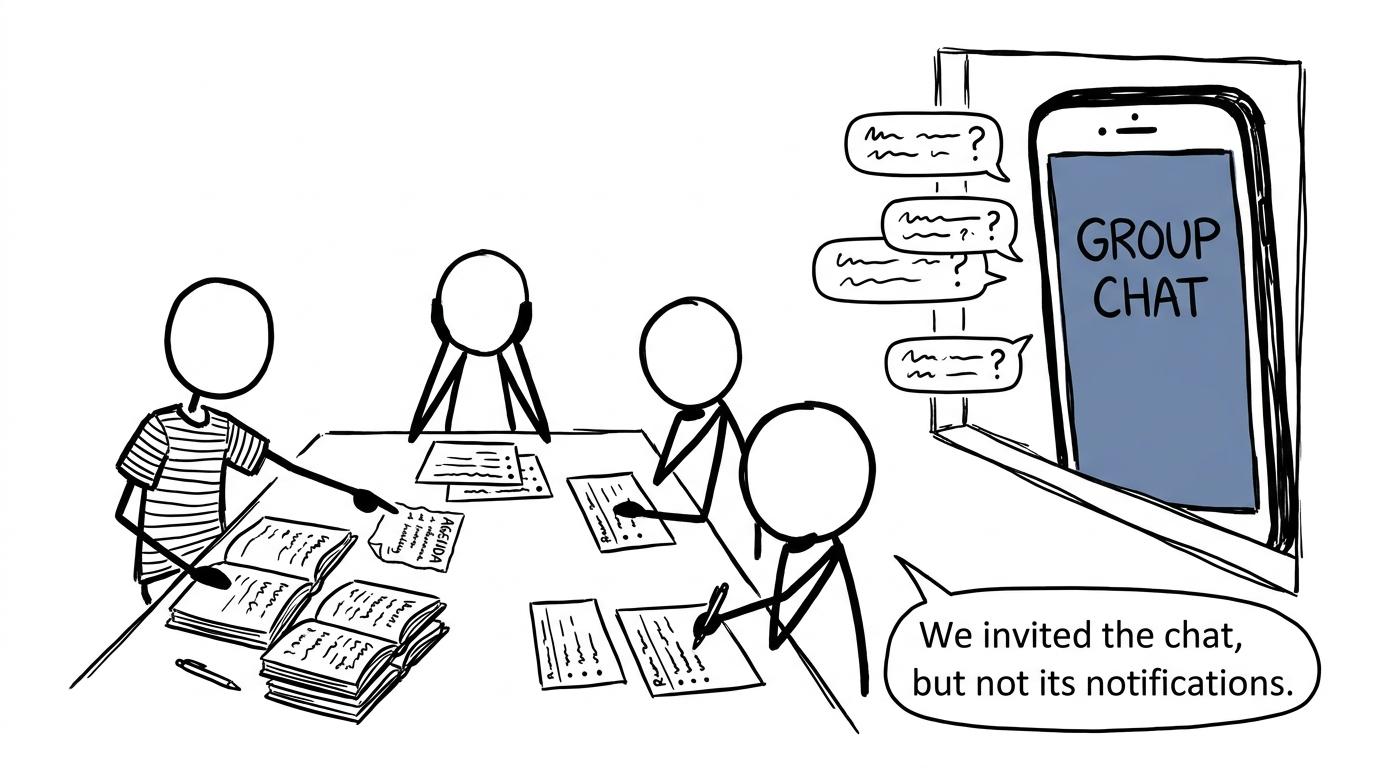 A focused study group keeps its group chat outside the session
Choose people for reliability, not just friendship
Your closest friends may form an excellent group. They may also form a wonderful conversation that happens to contain a copy of Macbeth. Friendship is not the problem; unclear expectations are.
Choose students who will:
- arrive when they said they would;
- complete a short preparation task;
- disagree respectfully;
- admit when they do not know something;
- allow everyone time to speak;
- stay focused for the agreed period.
Avoid building a large group because more people appear to mean more knowledge. As membership grows, it becomes easier to hide, harder to arrange meetings and more likely that one confident person will dominate.
You also do not need a collection of students with identical target grades. Different perspectives can improve literary discussion. What matters is a shared willingness to prepare and contribute.
Confirm the exam board and set texts
Before planning content, check whether your school follows AQA, Edexcel, OCR or Eduqas and write down the exact texts you study. Do not assume that a friend in another class has the same anthology, question structure or assessment emphasis.
The Department for Education requires GCSE English Literature courses to include substantial whole texts, including Shakespeare, a nineteenth-century novel, poetry and British fiction or drama from the twentieth century onwards. Students must also respond to unseen material. However, exam boards organise these requirements differently.
Assessment objectives are a more reliable foundation for your meetings. Across GCSE English Literature specifications, students are expected to:
- understand texts and support interpretations with references;
- analyse writers' use of language, form and structure;
- understand relationships between texts and their contexts;
- write clearly and accurately where that objective is assessed.
Question formats, paper timings and where particular objectives receive marks can vary. Use the current specification, sample materials and advice from your teacher rather than somebody else's revision timetable.
Unlike GCSE maths, English Literature is not divided into foundation and higher tier. Your group should therefore organise revision by texts and assessed skills, not tiers.
Create a meeting that is difficult to avoid
A vague promise to meet “sometime this weekend” is not a plan. Fix the day, start time, finish time and location. Put it in everyone's calendar and decide how absence will be handled.
Aim for a session long enough to complete meaningful work but short enough to sustain concentration. Around an hour can work well when the agenda is prepared in advance. The exact length matters less than consistency.
Use one messaging channel only for practical information:
- confirming attendance;
- sharing the session topic;
- posting preparation tasks;
- uploading the final action list.
Keep general conversation elsewhere. Muting notifications during the meeting is not unfriendly; it protects the reason the group exists.
If a wider GCSE timetable is becoming crowded, use the free MathsGenie revision planner to protect time for maths alongside your English meetings. A group should support your revision plan, not quietly consume all of it.
Give every session a visible outcome
“Revise poetry” is too broad. “Recall evidence for conflict, compare two poems and plan one response” creates an outcome that can be checked.
A productive session can follow this rhythm:
Open with independent retrieval
Everyone answers the same short prompts without notes. These might ask for quotations, moments from the plot, contextual connections or features of a character's development.
All members should write before anyone answers aloud. If one student immediately supplies every quotation, the others may recognise the material without retrieving it themselves. Recognition feels smooth, but the exam requires each student to produce ideas independently.
Research on retrieval practice broadly supports bringing information to mind rather than relying only on repeated reading. Feedback remains important: after attempting recall, check the text, class materials or a teacher-approved source and correct inaccuracies.
Discuss interpretations, not just facts
Once everyone has attempted retrieval, compare answers. Ask questions such as:
- Which interpretation best addresses the question?
- What alternative reading could a reader reasonably offer?
- Which word or structural choice supports that interpretation?
- Is the contextual point genuinely illuminating the text?
- What evidence might challenge the argument?
Good literary discussion is not a competition to invent the most complicated interpretation. It is a search for claims that are relevant, supportable and explained clearly.
End with individual writing
Discussion can create the illusion that everyone could write the argument. Test that assumption.
Finish with an individual thesis, paragraph plan, comparative outline or timed paragraph. Do not compose one shared response while a single person types. Each member needs to turn the conversation into their own writing.
This same movement from collaboration to independent performance works in maths. A friend can explain an algebra method, but you only know whether it has stuck when you answer a fresh question alone. The GCSE Maths revision hub provides free revision lessons and practice questions for that independent follow-up.
 A literary argument moves from claim to evidence and analysis
Use rotating roles without creating bureaucracy
Roles stop one student from becoming the permanent teacher while everyone else watches. Rotate them each meeting:
- Chair: keeps the discussion on the agreed question.
- Timekeeper: protects each part of the agenda.
- Questioner: asks for evidence and challenges unsupported claims.
- Checker: verifies quotations and details after retrieval.
- Recorder: writes the final actions, not pages of meeting minutes.
In a smaller group, one person can hold two roles. Roles should make the meeting lighter, not turn it into a committee.
The chair is not automatically the strongest student. Giving different people responsibility helps prevent one interpretation from becoming the group's default answer.
Build meetings around exam skills
Each session should combine knowledge of the text with something students must do in the examination. Useful formats include:
- closed-book quotation retrieval followed by checking;
- theme mapping across the whole text;
- character development through key moments;
- comparison of anthology poems;
- collaborative annotation followed by individual analysis;
- unseen poetry discussion followed by a timed response;
- planning several possible arguments for one question;
- reviewing anonymised writing against a mark scheme.
Do not spend every meeting making resources. A beautiful quotation poster may be useful, but the examination rewards reading, analysis, comparison and clear writing. At some point, pens must meet blank paper.
Apply the same test across subjects: does this activity resemble a skill I must perform? For maths, GCSE mini tests and GCSE past papers provide a clearer measure than rereading a revision guide together.
Make feedback specific and safe
Peer feedback works best when it is narrow. Asking, “Is this good?” usually produces politeness rather than improvement.
Instead, ask each reader to identify:
- the central argument they understood;
- the strongest supporting reference;
- where analysis became descriptive;
- one place requiring closer attention to language, form or structure;
- one practical revision action.
Use the relevant exam board's assessment materials and your teacher's guidance. Mark schemes are valuable, but students should not pretend to make definitive grade judgements from one paragraph.
For maths revision, the feedback cycle can be even more immediate: attempt, mark, diagnose and retry. MathsGenie's guide to using GCSE past papers properly explains how to turn lost marks into targeted practice rather than simply recording a score.
Track actions between meetings
The most important part of a study group often happens after everyone leaves.
End by recording one small, observable action per person. For example, a student might verify several quotations, complete an essay plan or revise one weak poetry comparison. Begin the next meeting by checking whether those actions happened.
Keep the record simple:
| Member | Action before next meeting | Completed? |
|---|---|---|
| Student A | Verify selected quotations against the text | Yes or no |
| Student B | Prepare an alternative interpretation | Yes or no |
| Student C | Complete a timed paragraph | Yes or no |
The purpose is accountability, not embarrassment. If actions are repeatedly unfinished, reduce their size or reconsider whether the meeting time is realistic.
Maths can use the same system. Schedule a targeted lesson, a short question set or one paper section through the GCSE maths revision timetable guide, then bring mistakes to the next independent revision block.
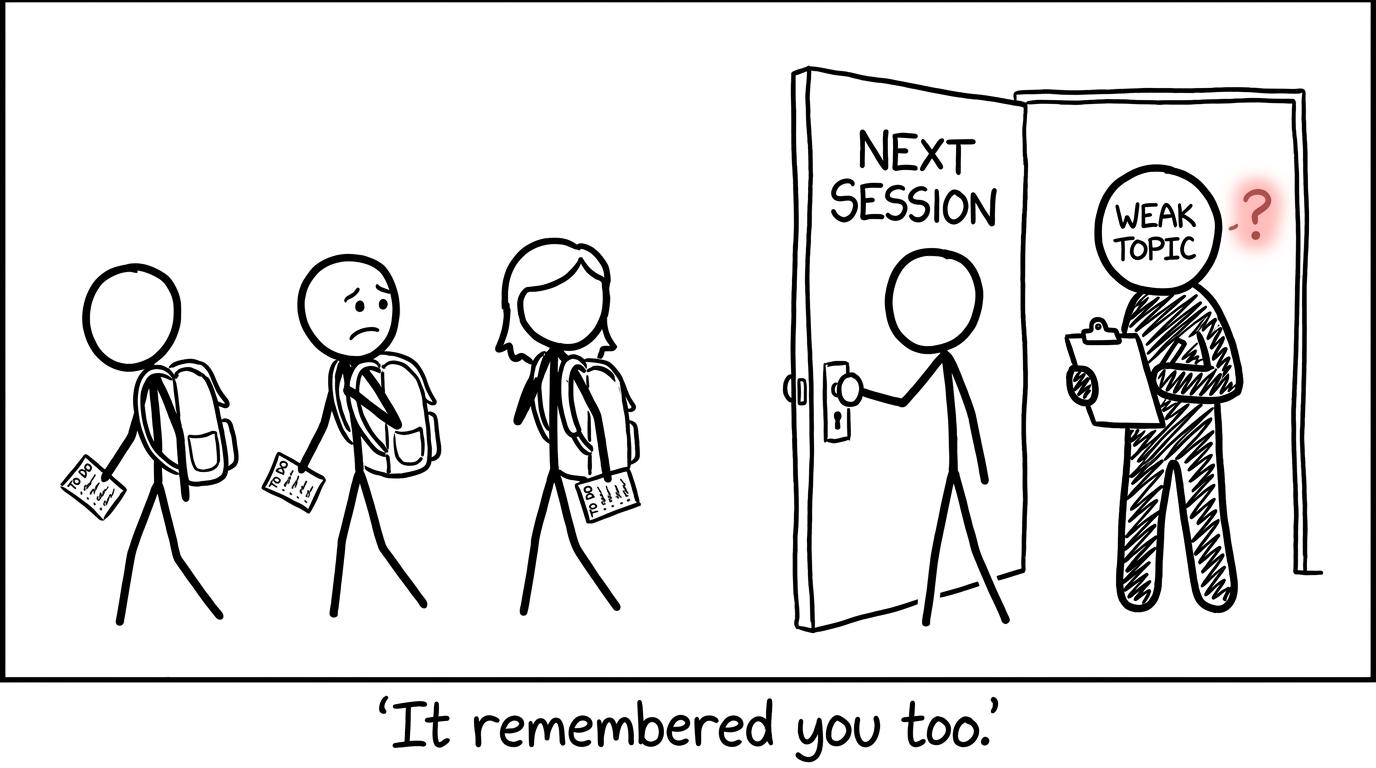 The weak topic waits patiently for the next revision session
Common study group mistakes
Arriving without preparation
If nobody has reread the relevant section, attempted recall or considered the question, the meeting begins from zero. Set a task small enough that everybody can genuinely complete it.
Letting one person do all the thinking
An articulate student can make a session feel successful while others remain passive. Require silent written thinking before open discussion and finish with individual work.
Memorising inaccurate quotations
Group confidence does not make a quotation correct. Retrieve first, then verify wording against the text or trusted school materials. Never collectively guess and place the result onto flashcards.
Treating context as decoration
Lists of historical facts do not automatically improve analysis. Use context only where it helps explain the text, the writer's choices or a credible interpretation.
Debating without writing
Conversation develops ideas, but essays are assessed in writing. Every meeting should produce an individual written outcome.
Allowing English to displace every other subject
One enthusiastic group can absorb an entire evening. Set a finish time and protect the rest of your timetable. When maths needs attention, use predicted GCSE maths papers for fresh timed practice and return to topic lessons for anything that causes difficulty.
Turn the group chat into a revision system
A GCSE English Literature study group works when it reduces avoidance. The next meeting is already booked. The text is already chosen. Everyone knows what to prepare, what will happen and what they must produce before leaving.
Keep the group small. Retrieve before discussing. Check before memorising. Write before declaring the session successful.
Then carry that discipline into maths. Open MathsGenie's free GCSE Maths revision resources, choose your exam board and use revision lessons, practice questions, mini tests, past papers, predicted papers, mark schemes and video solutions to turn each weakness into a clear next action. A useful group creates momentum, but your independent practice is where that momentum becomes exam performance.










