An acyl chloride, CH3CH2COCl\text{CH}_3\text{CH}_2\text{COCl}CH3CH2COCl (propanoyl chloride), is a key intermediate in the synthesis of various pharmaceutical agents. It reacts with benzene in the presence of an anhydrous AlCl3\text{AlCl}_3AlCl3 catalyst via an electrophilic substitution reaction.
Give an equation for the reaction of CH3CH2COCl\text{CH}_3\text{CH}_2\text{COCl}CH3CH2COCl with AlCl3\text{AlCl}_3AlCl3 to form the active electrophile. Outline a mechanism for the reaction of this electrophile with benzene to form the aromatic ketone product.
The ketone product from part 1 can be converted into the alcohol shown in the figure below:
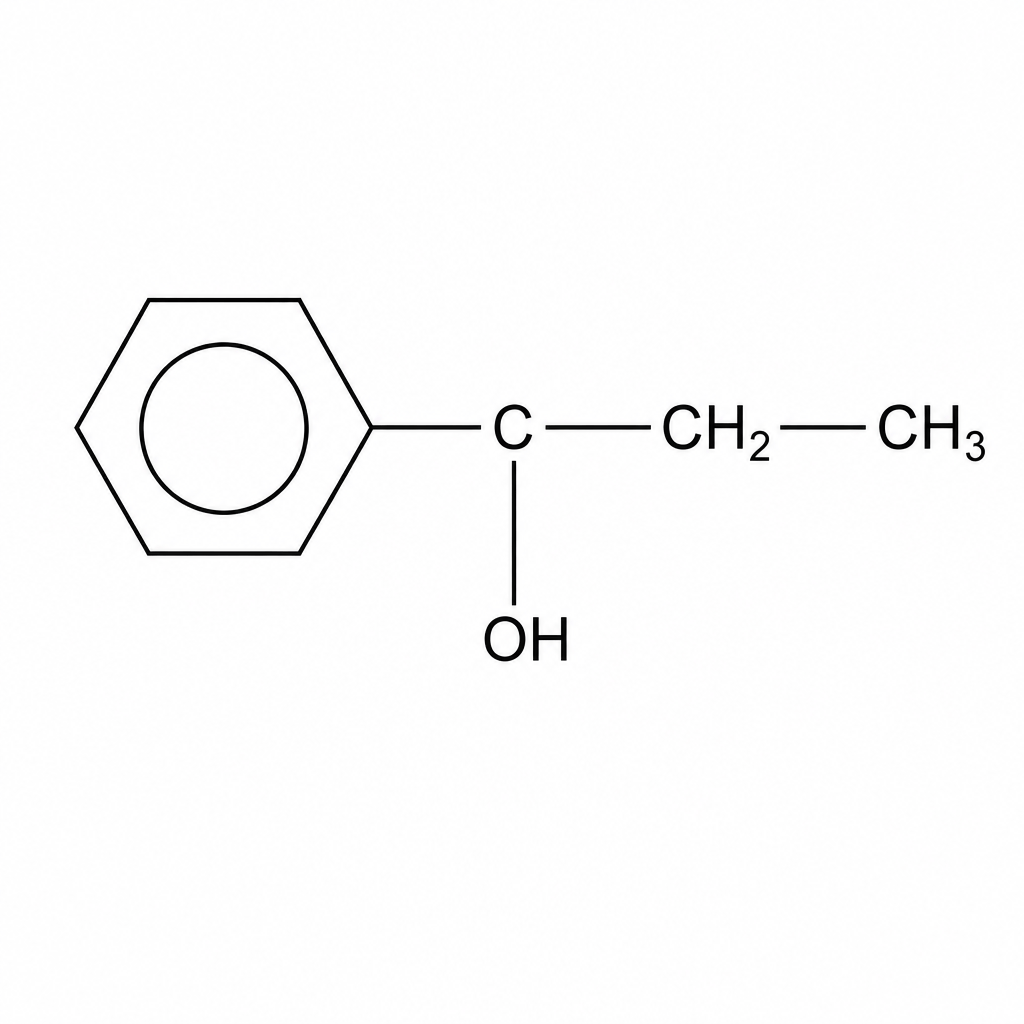
Give the IUPAC name of this alcohol. Give a suitable reagent needed for this conversion and name the mechanism of the reaction.
This alcohol reacts with ethanoyl chloride (CH3COCl\text{CH}_3\text{COCl}CH3COCl) to form an ester.
Describe what would be observed during this reaction. Name the mechanism for the formation of the ester, and draw its structure.