The diagram illustrates two different pathways, Pathway A and Pathway B, used to introduce therapeutic genes into human cells to treat a genetic disorder.
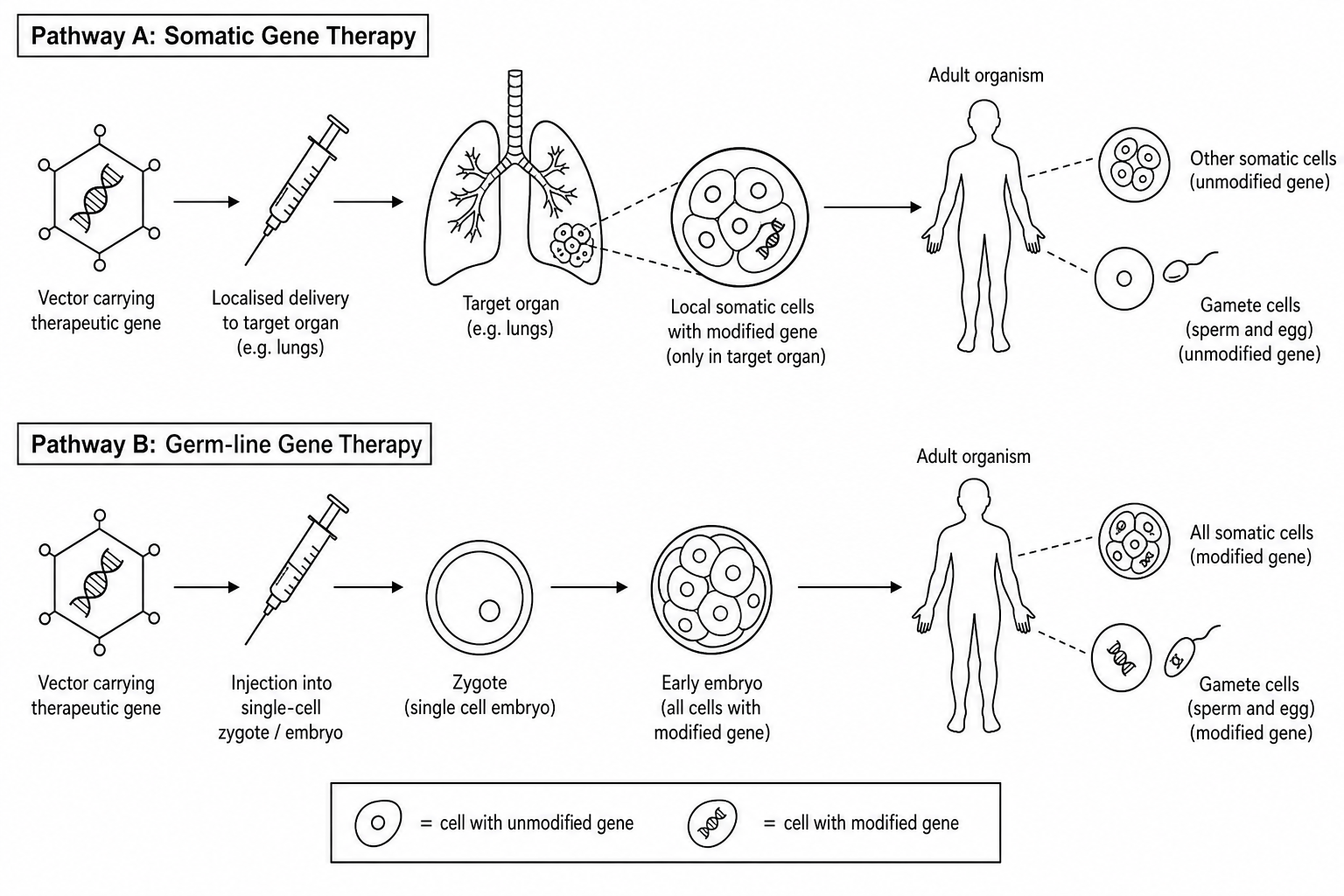
Which of the following statements correctly evaluates the genetic and clinical implications of these two gene therapy pathways?
In Pathway A, the introduced therapeutic gene replicates via meiosis to replace defective alleles in other tissues of the adult body.
In Pathway B, modifying the single-cell zygote ensures that all subsequent cells produced by mitosis, including gametes, carry the therapeutic gene.
Pathway A produces a permanent cure for lung diseases because the rapid mitotic division of mature epithelial cells preserves the transgene indefinitely.
Pathway B is the standard clinical method for treating human genetic disorders as it eliminates the risk of off-target somatic mutations.

