The diagram shows a simplified representation of the fluid mosaic model of a cell surface membrane.
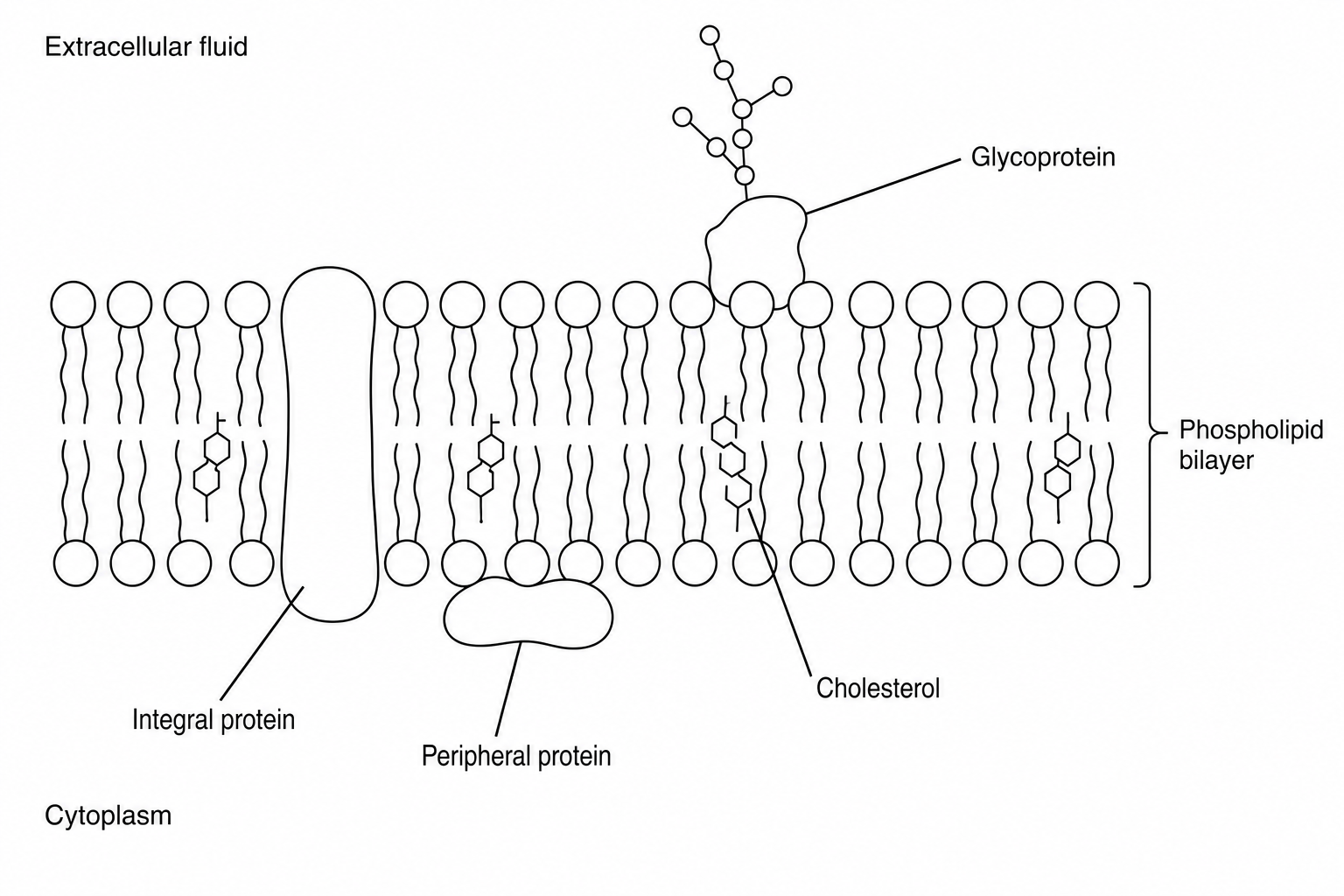
Which statement correctly explains how the structure and properties of these components contribute to membrane function?
The carbohydrate chains of glycoproteins and glycolipids project exclusively from the cytosolic face of the membrane to initiate intracellular cascade reactions.
Cholesterol decreases membrane stability at high temperatures by increasing the movement of fatty acid tails, making the membrane more fluid.
Integral (intrinsic) proteins are anchored within the bilayer primarily by hydrophobic interactions between their non-polar amino acid side chains and the fatty acid tails of phospholipids.
Peripheral (extrinsic) proteins span the entire phospholipid bilayer and act as channel proteins for the facilitated diffusion of large polar molecules.