An enzyme extracted from a marine bacterium operates optimally at pH 6.0\text{pH } 6.0pH 6.0. When the pH\text{pH}pH of the reaction medium is increased to pH 8.5\text{pH } 8.5pH 8.5, the rate of reaction drops by 75%. However, when the pH\text{pH}pH is subsequently returned to pH 6.0\text{pH } 6.0pH 6.0, the rate of reaction fully recovers to its original value.
The diagram below shows the molecular interactions at the active site under both conditions.
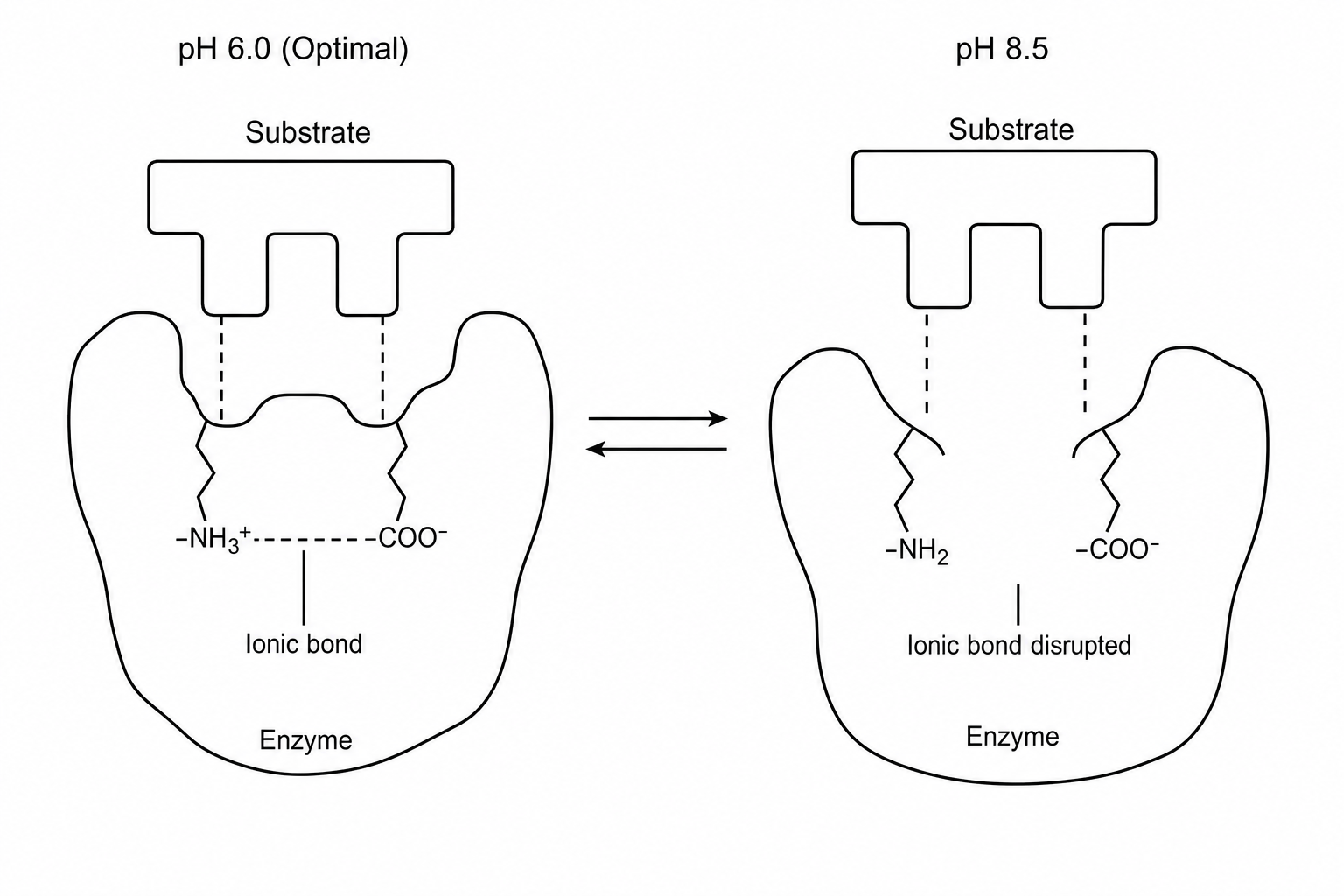
Which statement best explains these observations?
Increasing the pH to 8.5 breaks covalent disulfide bridges, changing the tertiary structure of the active site; these covalent bonds then spontaneously reform when the pH is returned to 6.0.
Increasing the pH to 8.5 alters the ionization of specific amino acid R-groups, disrupting ionic bonds maintaining the active site structure; returning to pH 6.0 restores the original charges and allows these bonds to reform.
The enzyme is completely denatured at pH 8.5, but a high substrate concentration at pH 6.0 acts to cooperatively restore the active site's original complementary shape.
At pH 8.5, the substrate molecules are deprotonated and repel the active site, whereas returning to pH 6.0 alters the active site's primary structure to accommodate the substrate.