An exoplanetary system contains a central star and two orbiting celestial bodies: a planet and a comet.
Name the force that acts as the centripetal force keeping both the planet and the comet in their orbits around the star.
The schematic diagram below shows the orbits of these two celestial bodies around their star.
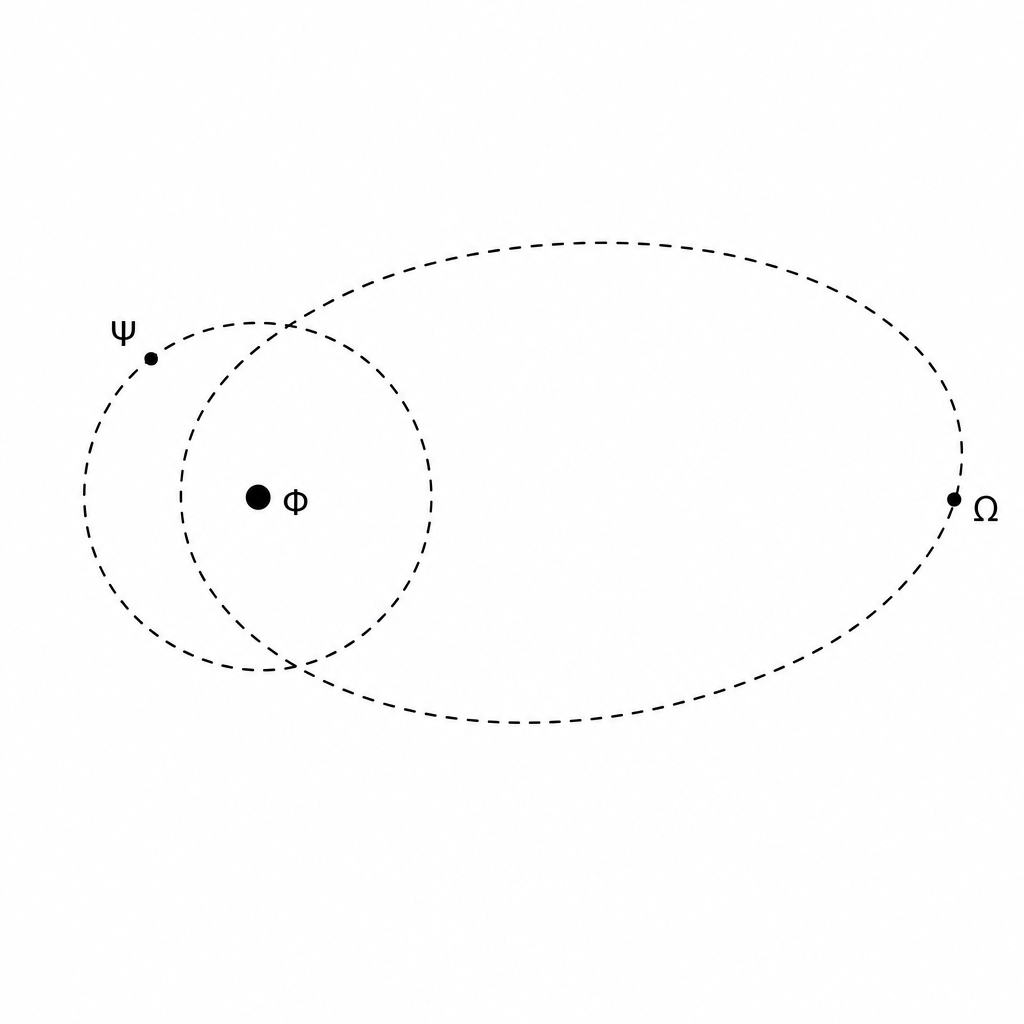
Identify which Greek symbol (Φ\PhiΦ, Ψ\PsiΨ, or Ω\OmegaΩ) represents:
Explain why it is physically possible for the planet and the comet to collide at some point in the future.

