This information was taken from an analytical specification sheet for a plant-derived skincare oil.
| Component analysis | (per 10 g sample) |
|---|---|
| Moisture & Volatiles | 0.5 g |
| Additives | 0.5 g |
| Hydrocarbon compounds | 9.0 g |
| saturated (alkanes) | 2.5 g |
| unsaturated (alkenes) | 6.5 g |
(i) Which class of hydrocarbon contains a double carbon-to-carbon (C=C\text{C}=\text{C}C=C) bond?
(ii) The colour of bromine water is orange. State the final colour of the mixture after bromine water is shaken with:
(iii) What type of reaction takes place when bromine reacts with a compound containing a C=C\text{C}=\text{C}C=C bond?
A quality control laboratory had to flag several production batches of a bio-derived industrial solvent because they were suspected of containing a banned toxic plasticiser, Contaminant K.
The thin-layer chromatogram (TLC) below shows how the components in the standard solvent and the tested batches were separated and identified.
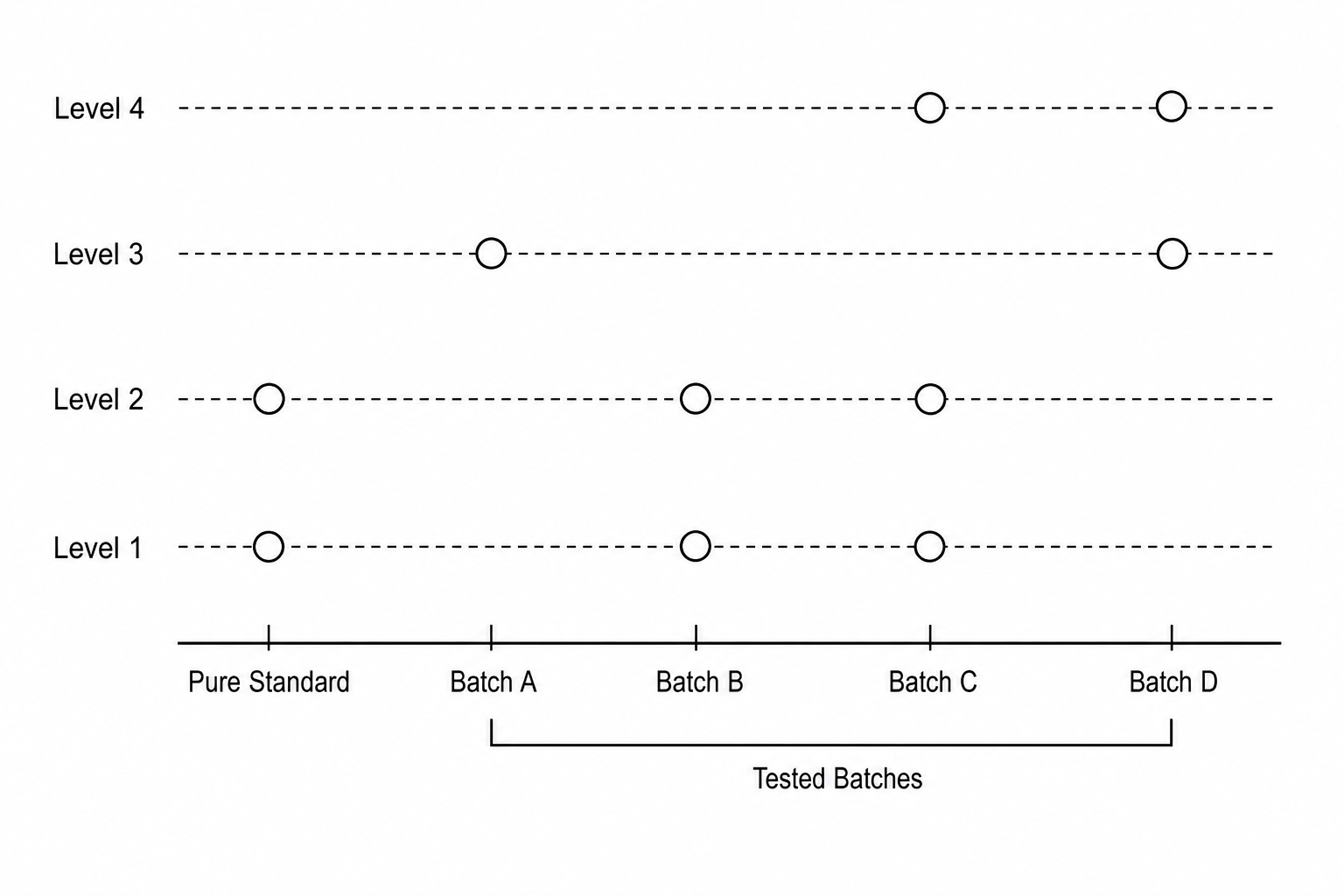
(i) Which one of the tested batches, Batch A, Batch B, Batch C, or Batch D, is made up of only one compound?
(ii) Identify the tested batches that may contain the banned Contaminant K.
(iii) Explain how the chromatogram shows that the five samples are different from each other.

