The diagram shows a food chain in a desert ecosystem.
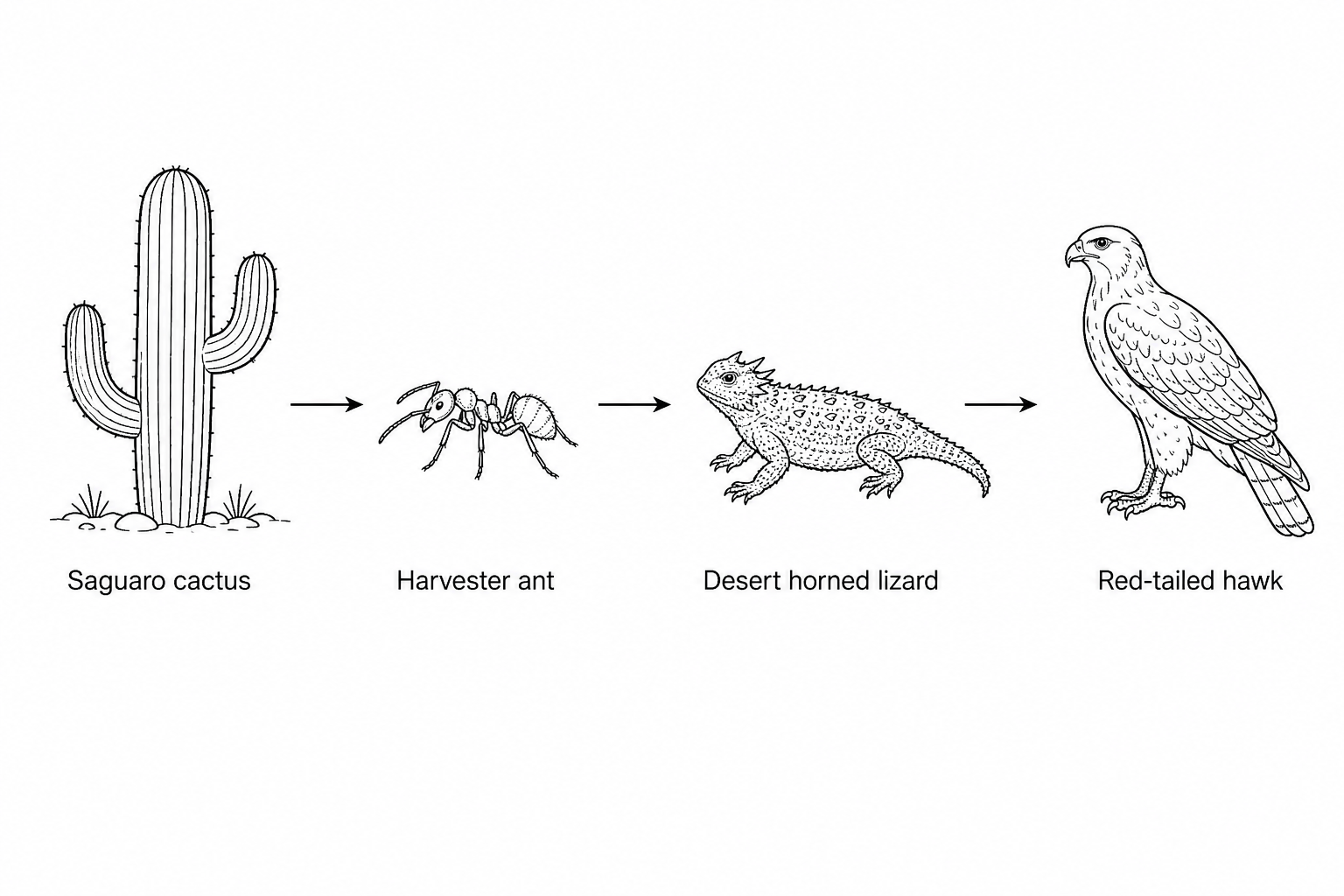
How many consumers are shown in this food chain?
What term describes the trophic level of the red-tailed hawk?
Light is an abiotic (non-living) factor that affects the growth of the saguaro cactus. Explain the role of light in helping the growth of the saguaro cactus.
Scientists measured the average (mean) daily increase in mass of cacti in a square metre of land in two different regions of a desert. They also measured the daily light energy available in a square centimetre of each of the two regions.
The table shows their results.
| Region of desert | Average daily increase in mass in g | Daily light energy available in J |
|---|---|---|
| Sonoran Desert | 72 | 2400 |
| Mojave Desert | 28 | 1500 |
The scientists expected that the same light energy would produce the same average daily increase in mass of cacti in each region. However, the results show that the average daily increase in mass of cacti produced in the Mojave Desert was less than they expected. Calculate the average daily increase in mass the scientists expected to be produced in the Mojave Desert.
Name two other abiotic factors that could limit the growth of cacti.
Give three reasons why not all of the energy available in the saguaro cactus is transferred to the red-tailed hawk.

