Question 2
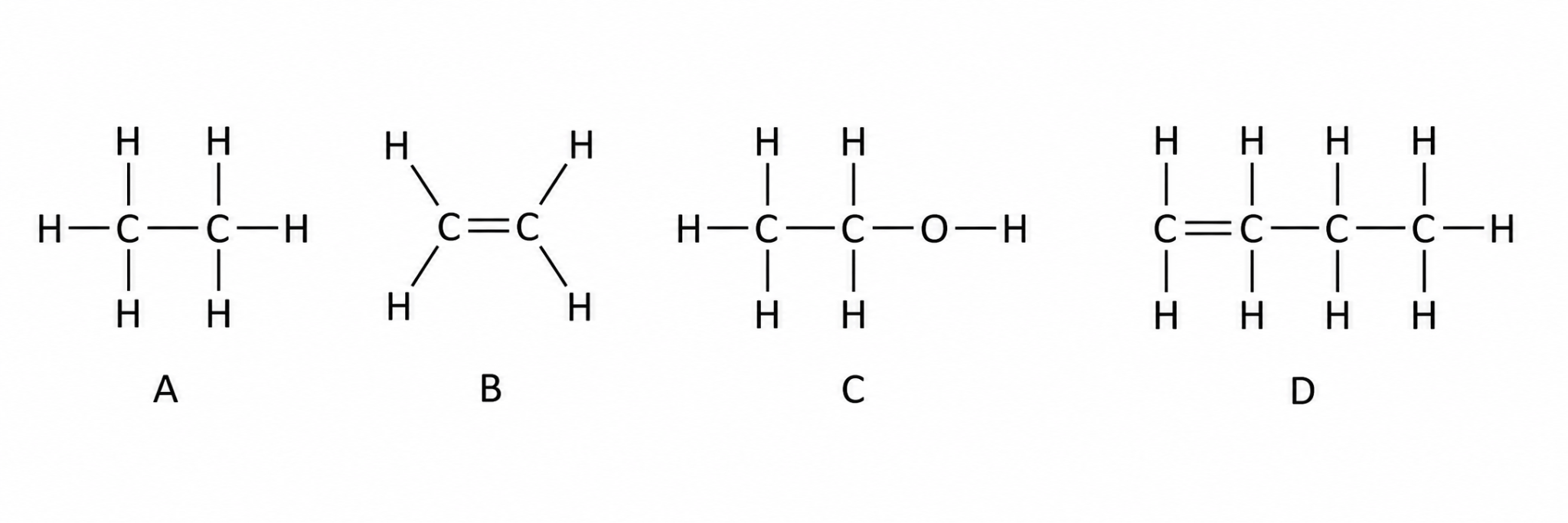
FThe figure shows the displayed structural formulae of four compounds, A, B, C and D.
Figure: The displayed structural formulae of four compounds
a.[1]
Give the two letters of the compounds that can be used as monomers in addition polymerisation.
b.[2]
Explain your answer to part a).
c.[1]
Name the polymer produced from compound B.
7.3 Synthetic and naturally occurring polymers Questions
40 exam-style questions on AQA GCSE Chemistry 7.3 Synthetic and naturally occurring polymers, covering 7.3.1 Addition polymerisation, 7.3.2 Condensation polymerisation, 7.3.3 Amino acids, and 7.3.4 DNA (deoxyribonucleic acid) and other naturally occurring polymers. Each one has a worked solution and a mark scheme showing where the marks go.