What customer needs are
Definition
Customer needs: the things a customer wants from a product or service before they will buy it, covering price, quality, choice and convenience.
Satisfying customer needs: designing and selling a product that meets those needs better than the alternatives already on offer.
- Customers judge a purchase against four needs, and identifying which of them your own customers care about most is where every marketing decision starts.
- Price: the price has to fit the customer's budget and feel fair for what they get, which is how Aldi wins shoppers on the weekly grocery bill.
- Quality: the product must work, last and do what was promised, which is what lets Dyson charge several times the price of a supermarket vacuum cleaner.
- Choice: customers want sizes, flavours or options that suit them, so Nando's offers a range of heat levels from lemon and herb to extra hot rather than one sauce.
- Convenience: the product must be easy to find, buy and use, which is why Greggs opens beside stations and Deliveroo brings the meal to the door.
- Different customers rank those four differently, so a business works out whose needs it is trying to satisfy before it decides how to satisfy them.
Note
How a business actually finds out what its customers need, from questionnaires to government reports, is covered in the market research articles.
Providing a product or service that customers will buy
- A product only sells if it does something customers want, so the need has to be identified before the product is designed.
- Warburtons sells wraps, thins and bagels alongside standard loaves because customers said they wanted bread that suited lunchboxes and quick meals.
- A business that skips this step is guessing, and a product built on a guess can reach the shelf with no customers waiting for it.
Example
- Greggs launched its vegan sausage roll after repeated customer requests for a meat-free option, and it sold well enough to become a permanent line.
- The need came first and the product second, which is the order the whole marketing process follows.
Increasing sales
- The closer a product matches what customers want, the more of them choose it instead of a rival's, so sales volume rises.
- Satisfied customers also come back and recommend the business, so each need met well brings repeat custom rather than one sale.
- Because the product already does what those customers wanted, the business can sell more of it without discounting, so the extra volume adds to revenue instead of being given away in price cuts.
Selecting the correct marketing mix
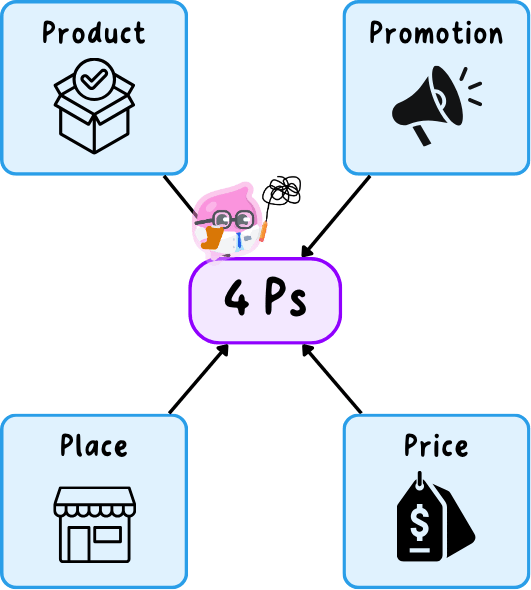
- Knowing the customer tells the business how to set each part of its marketing, because all four parts have to point at the same group of people.
- Product: the features, quality and range are built around what those customers said they wanted.
- Price: the price is set at a level those customers are willing and able to pay.
- Promotion: the advertising goes where those customers will see it, which for Gymshark means fitness creators on social media rather than television.
- Place: the product is sold where those customers already shop, in store, online or both.
Example
Gymshark's customers are young, price-aware and shop on their phones, so it sells through its own app and website and promotes through fitness creators, and every part of the mix follows from that one fact about the customer.
Avoiding costly mistakes
- Developing a product costs money long before any of it is sold, covering design, machinery, stock, staff training and promotion.
- If the business only discovers after launch that nobody wanted the product, that spending is wasted, the unsold stock ties up cash and withdrawing the line damages the brand with retailers.
Common Mistake
- Do not write that identifying needs guarantees success, because customers change their minds and rivals respond.
- Do not assume every customer wants the cheapest option, because many pay more for quality, choice or convenience.
Being competitive
- Rivals are chasing the same customers, so the business that understands their needs best takes the sale.
- Meeting a need that rivals ignore gives customers a reason to switch, which is how Monzo took current-account customers from the big banks by offering instant spending notifications and easy budgeting on a phone.
- Needs also move, as they did when customers left DVDs for streaming and HMV lost the sales it had relied on, so staying competitive means checking needs continuously rather than once.
Exam technique
- The usual wording is explain one benefit to a business of identifying customer needs, so name the need first and then the effect on the business.
- Build a chain instead of a list: the need is identified, the product matches it, customers buy, sales rise and the business stays ahead of rivals.
- The mistake to avoid is describing what the business sells, when the question asks why knowing the customer changes what it sells.
Self review
- Name the four needs a customer judges a purchase against.
- Why does identifying a need come before designing the product?
- How does satisfying customer needs increase sales?
- Give one way knowing the customer changes the promotion a business chooses.
- Why is a failed product launch so expensive for a business?
