The pedigree chart below shows the inheritance of a rare genetic condition in three generations of a family.
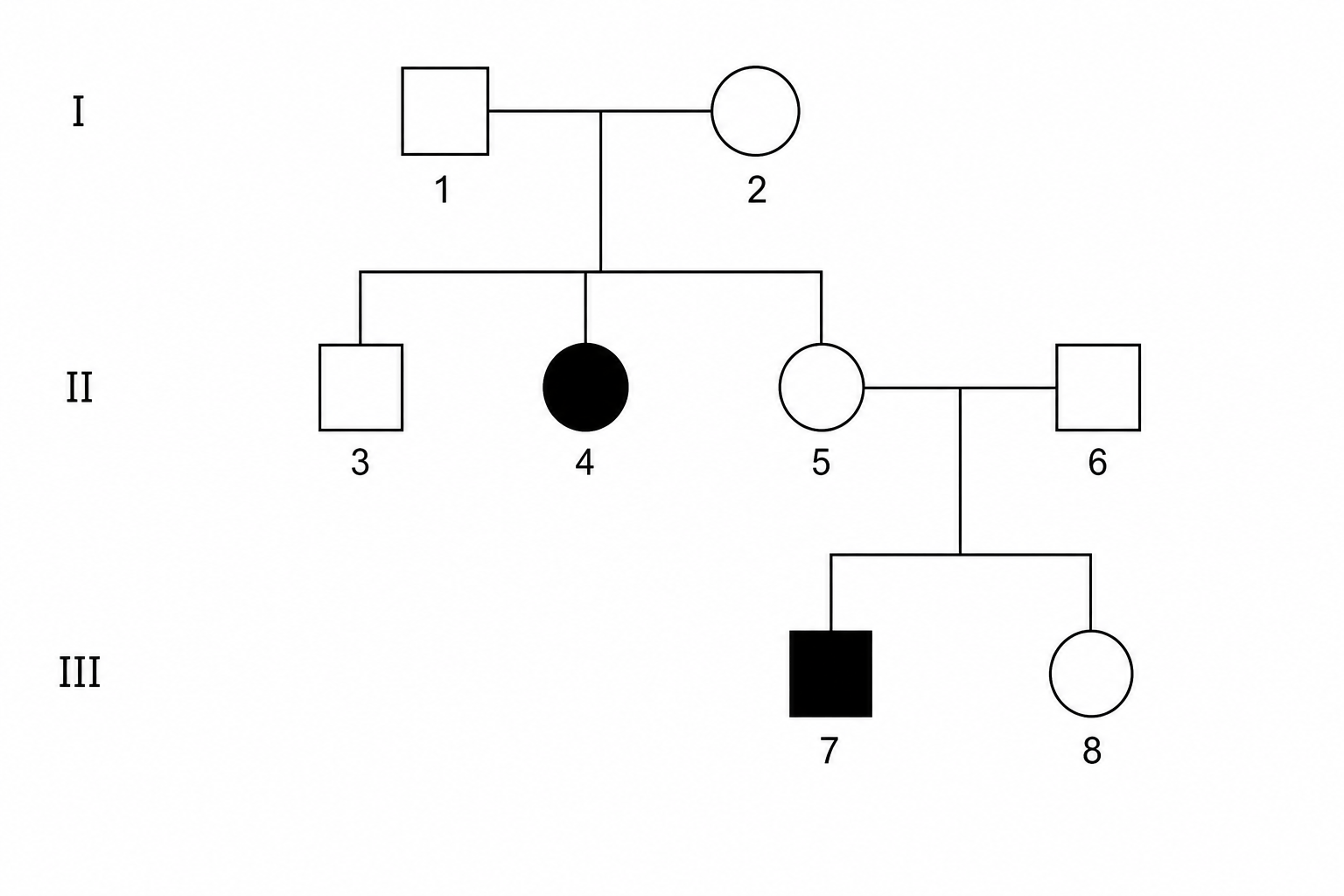
Which of the following correctly explains the evidence from this chart regarding whether the allele for the condition is dominant or recessive, and whether it is sex-linked or autosomal?
The allele is recessive because unaffected parents 5 and 6 have an affected child (7). It is sex-linked because males (7) are much more likely to be affected by recessive conditions than females.
The allele is recessive because unaffected parents 1 and 2 have an affected child (4). It is autosomal because if it were sex-linked recessive, the affected male (7) would have to inherit his affected X chromosome from his father (6), who would therefore also be affected.
The allele is recessive because unaffected parents 1 and 2 have an affected child (4). It is autosomal because if it were sex-linked recessive, the affected female (4) would have to inherit an affected X chromosome from her father (1), who would therefore also be affected.
The allele is dominant because unaffected parents 1 and 2 have an affected child (4). It is autosomal because the condition affects both males and females in equal proportions across the three generations.

