

Wrong Tier GCSE Biology: What Happens Next?
Wrong tier GCSE Biology? Learn how it affects available grades, whether your school can change the entry before the exam, and exactly who to contact now.
There is a particular kind of exam worry that begins with one small detail on a timetable. You see the word “Foundation” when you expected “Higher”, or discover that your school has entered you for Higher when your recent assessments suggest Foundation would be more suitable.
If you think you have been entered for the wrong tier GCSE Biology exam, tell your biology teacher, head of science or exams officer immediately. Your school or college is responsible for making examination entries and may be able to amend the tier before the exam. You cannot normally change the entry yourself, and waiting makes the problem harder to resolve.
Do not assume that a surprising tier must be an administrative error. Schools use assessment evidence and professional judgement when choosing tiers. But you are entitled to ask what has been entered, why the decision was made and whether it can still be reviewed.
What to do if you think your Biology tier is wrong
Use this checklist rather than trying to solve everything alone:
- Check whether you take separate GCSE Biology or Combined Science.
- Check the exact tier shown on your statement of entry or candidate timetable.
- Ask your biology teacher which tier they recommended.
- Contact the exams officer if the paperwork does not match that recommendation.
- Ask whether the entry can still be amended and whether any internal deadline applies.
- Request written confirmation of the final decision.
- Continue revising while the school investigates.
The most useful first question is simple: “Can you please confirm my current tier and check whether it matches the department’s recommendation?”
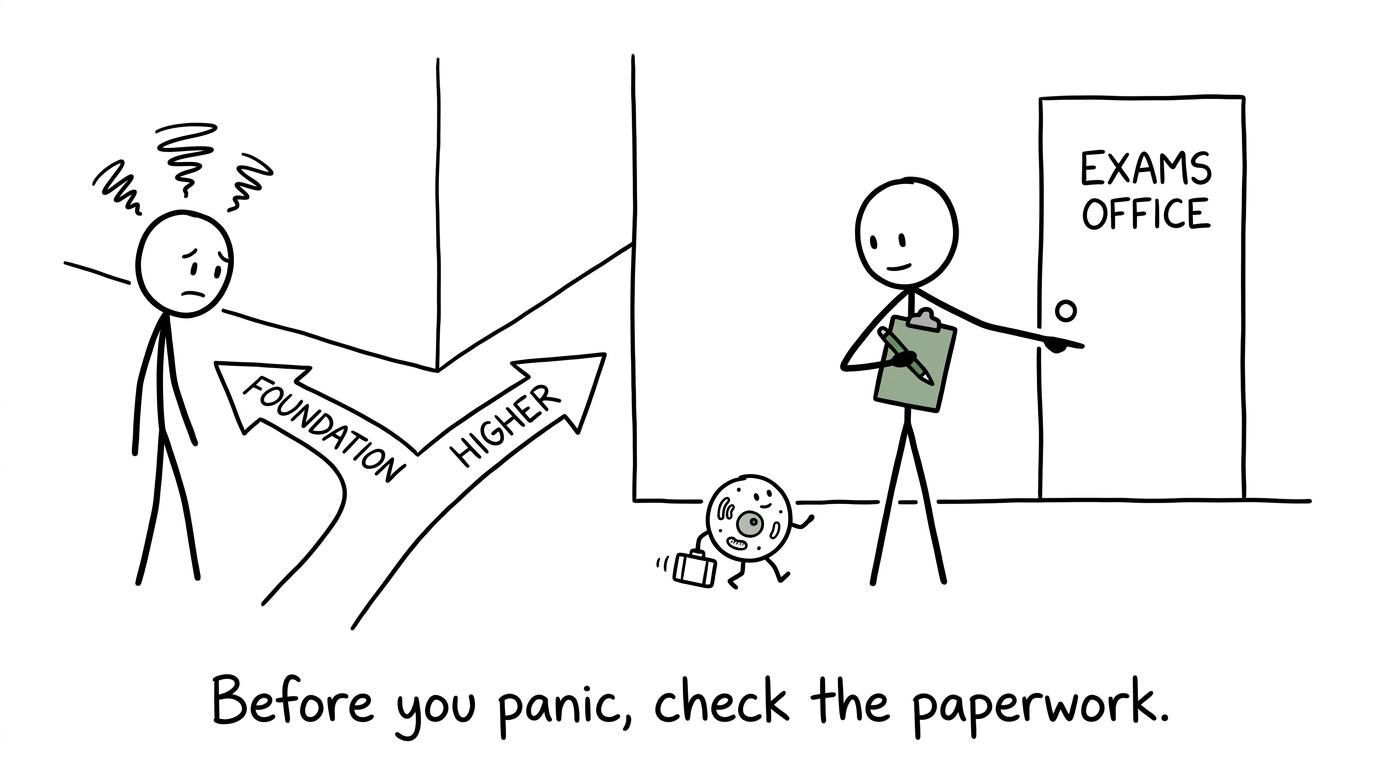 A student checks the paperwork before panicking about Foundation and Higher tiers
How tiering works in GCSE Biology
For the main GCSE Biology specifications used in England, including AQA, Pearson Edexcel and OCR, students are normally entered for either foundation or higher tier. Eduqas qualifications may also use tiered papers, but you should always check the current specification for your exact qualification.
Foundation tier is designed to assess the content needed for grades 111 to 555. Higher tier provides access to grades 444 to 999, although examination boards generally include a limited grade 333 safety net for higher-tier candidates who fall narrowly below the grade 444 boundary. That protection should not be treated as a guaranteed grade.
A candidate whose performance falls below the minimum level required for an available higher-tier grade can receive an unclassified result. In practical terms, this means that an unsuitable Higher entry can carry more risk than students sometimes realise.
A Foundation entry creates a different problem. Even if you perform extremely well, the highest available grade is normally grade 555. The paper does not become a grade 666, 777, 888 or 999 result because you achieved a very high raw mark.
You must also distinguish separate Biology from Combined Science. Combined Science produces paired grades, such as 555-555 or 777-666, and its tiering arrangements and boundaries apply across the combined qualification. Look at the qualification title and entry code rather than relying on the word “Biology” on a lesson timetable.
What happens if you are entered for Foundation by mistake?
If you sit Foundation papers, your result is limited to the grades available on that tier. This matters most when you need a grade above 555 for a sixth-form course, college programme or future subject choice.
Before the exam, the school may be able to correct an incorrect entry. The exams officer will need to check the examination board’s entry system, amendment arrangements and relevant deadlines. Changes made after standard entry deadlines may involve additional administration or fees for the centre, but that does not mean you should stay silent.
Your job is not to negotiate directly with AQA, Edexcel, OCR or Eduqas. Examination boards work through approved centres, so your school or college must handle the amendment.
Ask for clarity on three separate points:
- What tier are you currently entered for?
- What tier did the science department intend to select?
- Has the exams officer confirmed that any required amendment has been submitted?
Verbal reassurance can be forgotten in a busy exam season. A polite email creates a clear record without turning the conversation into a confrontation.
What happens if you are entered for Higher by mistake?
A Higher entry gives access to the top grades, but access is not the same as suitability. Higher papers contain more demanding content and questions, and a student performing below the tier’s lower grading range may not receive a numbered grade.
That does not automatically mean Foundation is the better choice. Tier decisions should reflect several pieces of evidence: recent assessments, topic knowledge, consistency, teacher judgement and the grade required for your next step. One difficult mock paper should not be treated as the entire story.
If you believe Higher is inappropriate, ask your teacher to explain the evidence behind the decision. The useful conversation is not “Which paper feels less frightening?” It is “On which tier am I most likely to achieve the best secure outcome available to me?”
That distinction matters in maths too. Foundation and Higher GCSE Mathematics have different grade ranges, so students using MathsGenie’s GCSE maths revision resources should always practise material appropriate to their confirmed tier.
Can your GCSE Biology tier be changed before the exam?
Often, yes, provided the school acts in time and the examination board permits the amendment. The exact process and any charges depend on the board, examination series and date of the request.
A school’s internal deadline may be earlier than the board’s final amendment arrangements. Schools need time to check entries, order the correct papers, organise rooms and ensure candidates receive the right materials. That is why “ask today” is better advice than trying to calculate how long you can safely wait.
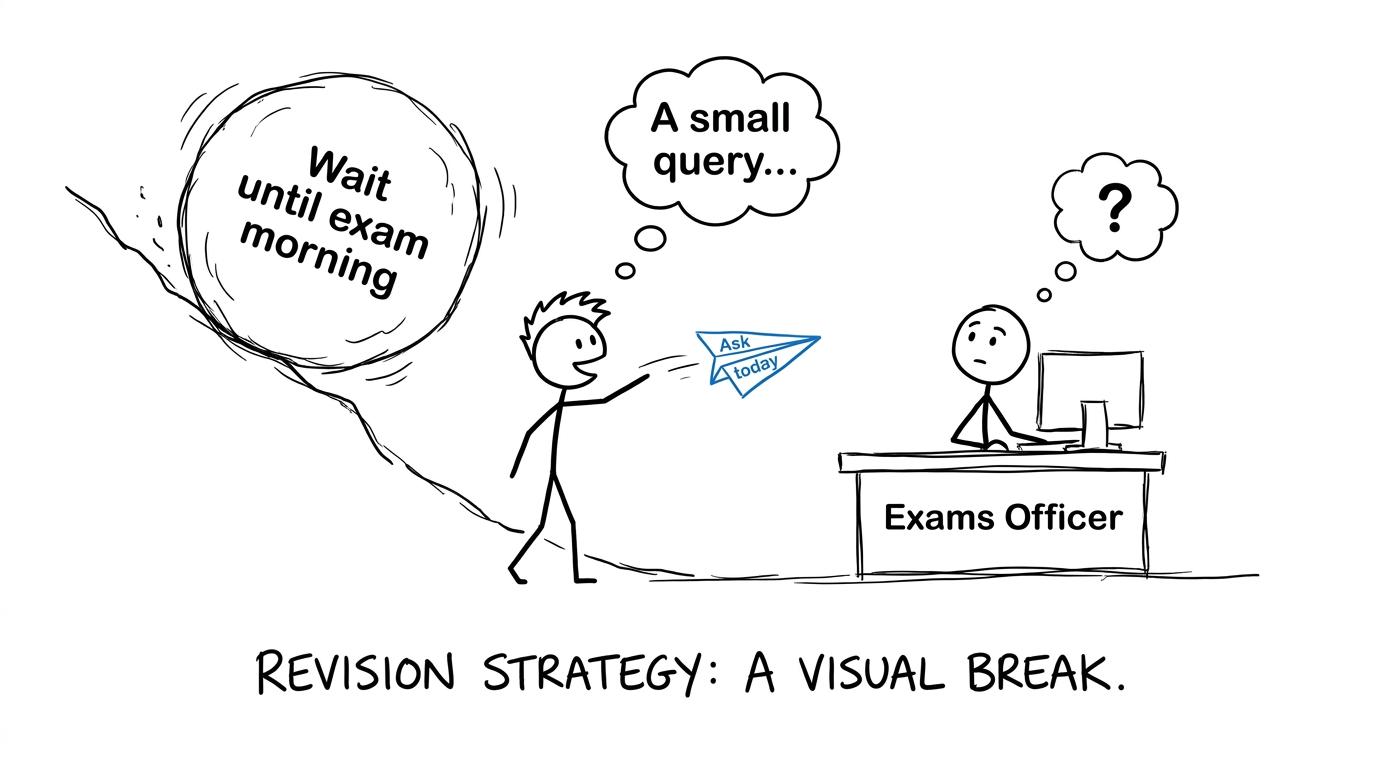 A small request sent today is easier than a large exam-morning problem
Who should you contact?
Start with your biology teacher because they can confirm the department’s recommendation. If the issue concerns the official entry, include the exams officer. Your head of science, form tutor or head of year can help if you do not know whom to approach.
A parent or carer can support the request, particularly if earlier messages have not received a response. However, the aim should be a factual check rather than an accusation. Many apparent errors are misunderstandings about Combined Science, provisional timetables or entry codes.
What if the school believes the tier is correct?
Ask how the decision was reached and whether it can be reviewed using your latest evidence. Schools decide examination entries, so a student’s preference does not automatically determine the outcome. A calm request for the criteria used is more productive than demanding a change without discussing the academic risk.
If the decision remains unchanged, ask for revision guidance matched to that tier. Knowing the final position allows you to stop spending energy on uncertainty and start preparing for the paper you will actually sit.
What if you notice the problem on exam day?
Tell an invigilator immediately, preferably before opening or beginning the paper. Do not exchange papers with another candidate, leave the room without permission or decide for yourself that the paper must be wrong.
The invigilator can contact the exams officer and check your official entry. If there has been a centre error, the school must follow the examination board’s instructions. A correction or grading remedy is not automatic, so raising the issue before you start is important.
Check the front of every question paper carefully. Biology qualifications normally contain more than one paper, and candidates are generally required to take the same tier across the relevant components. If one paper appears to show a different tier, alert the invigilator rather than assuming it will be corrected later.
Keep revising while the entry is checked
An entry query can consume more attention than it deserves. Once you have reported it, return to the work you can control.
Revise the content common to both tiers and practise the mathematical skills used in science, including percentages, ratios, averages, graphs, standard form and rearranging equations. These skills can produce valuable marks in Biology and are also central to GCSE Mathematics.
MathsGenie provides free revision lessons, videos and practice questions organised by topic and grade. You can also use GCSE maths past papers to practise working under timed conditions and compare your answers with mark schemes and video solutions.
Closer to the examination series, GCSE maths predicted papers can add fresh practice after you have completed the available past papers. Predicted papers are practice resources rather than forecasts of the exact examination, so use them alongside the specification and past-paper questions.
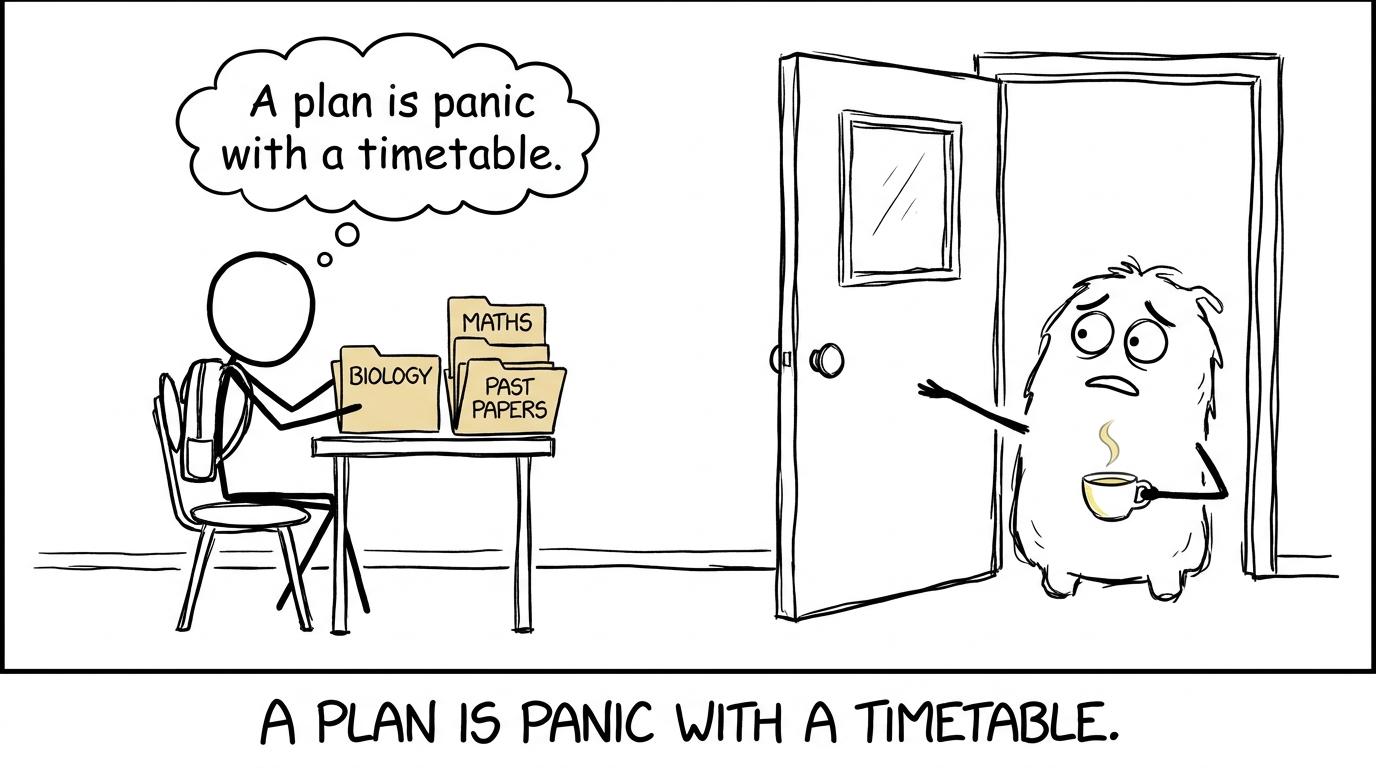 A student turns exam panic into an organised revision plan
Common mistakes when dealing with the wrong tier
Waiting until the examination
Students sometimes avoid asking because they worry about being difficult. A short question now is easier for everyone than an unexpected paper on exam morning.
Confusing a class group with an examination entry
Being taught in a particular set does not, by itself, prove which tier has been entered. Check your official entry information with the school.
Assuming Higher is always better
Higher provides access to grades above 555, but it also has a higher lower-grade threshold. The best tier is the one that offers a realistic route to the grade you need.
Assuming Foundation is an automatic failure
Foundation tier offers valid GCSE grades up to grade 555. For some students, it provides the most secure route to the result required for their next step.
Contacting the examination board yourself
Your school or college is the registered centre and must manage the entry. Contact your teacher and exams officer rather than expecting the board to alter an individual entry directly.
Stopping revision until someone replies
The administrative decision and your preparation are separate problems. Report the concern, keep a written record and continue revising shared content and core skills.
Turn uncertainty into a clear next action
Being entered for the wrong tier can affect the grades available to you, but a suspected error before the exam is not a reason to panic. Confirm the qualification, ask the science department what it recommended and have the exams officer check the official entry as soon as possible.
Then return to revision. Small, repeated sessions are more useful than repeatedly checking the same timetable. Build a plan using MathsGenie’s topic lessons, practice questions, mini tests, mark schemes and video solutions. Use the GCSE past-paper collection and predicted papers when you are ready for full-paper practice.
And if you are already thinking beyond GCSE, MathsGenie also offers free A Level maths revision and A Level maths past papers. The qualification may change, but the habit remains the same: check what is required, make a realistic plan and practise the right material consistently.











