

Percentages GCSE Maths Resit: Aim for a Grade 4
Percentages GCSE maths resit revision for a grade 4: learn clear methods, try two worked examples, avoid common mistakes and build targeted practice papers.
A percentage question can feel familiar right up until you have to decide what to do first. Multiply? Divide? Find the difference? For percentages GCSE maths resit revision, the key is recognising what the question gives you and what it wants back. Learn that distinction, and the calculations become much more manageable.
If you are returning to GCSE maths alongside college, work or an apprenticeship, your revision time matters. This guide focuses on percentage skills that support a grade 444 target, with two exam-style worked examples and the mistakes that can lose marks.
Your percentage revision checklist
Build confidence with these skills:
- Finding a percentage of an amount.
- Increasing or decreasing an amount by a percentage.
- Expressing one amount as a percentage of another.
- Calculating percentage change.
- Finding an original amount after a percentage change.
These skills belong together, but they answer different questions. Before calculating, write a short label such as “find the new price” or “find the original price”. That small pause helps you choose the right method.
Percentages alone cannot guarantee a grade 444. They are, however, a useful part of your wider GCSE maths resit revision because they connect number skills with financial problems and interpreting information.
Understand what the percentage refers to
A percentage means a number of parts out of a hundred:
p%=p100p\% = \frac{p}{100}p%=100pTo find a percentage of an amount, use:
percentage amount=p100×whole amount\text{percentage amount} = \frac{p}{100} \times \text{whole amount}percentage amount=100p×whole amountWithout a calculator, you can build the percentage from manageable pieces. Find 10%10\%10% by dividing by 101010, find 5%5\%5% by halving that, and find 1%1\%1% by dividing the whole amount by 100100100.
With a calculator, converting the percentage to a decimal often gives a shorter route. MathsGenie’s percentages revision guide can help you refresh both approaches.
The question to keep asking is: a percentage of which amount? That amount is your whole, or base. Choosing the wrong base can make a neat calculation produce the wrong answer.
Use multipliers for increases and decreases
When a question asks for an amount after a percentage change, a multiplier combines the change and the original amount in one calculation.
For an increase of p%p\%p%:
multiplier=1+p100\text{multiplier} = 1 + \frac{p}{100}multiplier=1+100pFor a decrease of p%p\%p%:
multiplier=1−p100\text{multiplier} = 1 - \frac{p}{100}multiplier=1−100pThen:
new amount=original amount×multiplier\text{new amount} = \text{original amount} \times \text{multiplier}new amount=original amount×multiplierThe 111 represents the whole original amount. Keeping that meaning in mind helps prevent the common mistake of calculating only the increase or discount.
Worked example: an increase in cost
An annual travel pass costs £240240240. Its price increases by 15%15\%15%. Calculate the new price.
The question asks for the price after the increase. The percentage remaining is:
100%+15%=115%100\% + 15\% = 115\%100%+15%=115%Convert this to a multiplier:
115÷100=1.15115 \div 100 = 1.15115÷100=1.15Multiply the original price:
240×1.15=276240 \times 1.15 = 276240×1.15=276The new price is £276276276.
Check the direction: an increase must give a price greater than £240240240. If you had calculated only 15%15\%15% of the price, you would have found the increase rather than the final cost.
Practise identifying increases and decreases with MathsGenie’s percentage change revision resources.
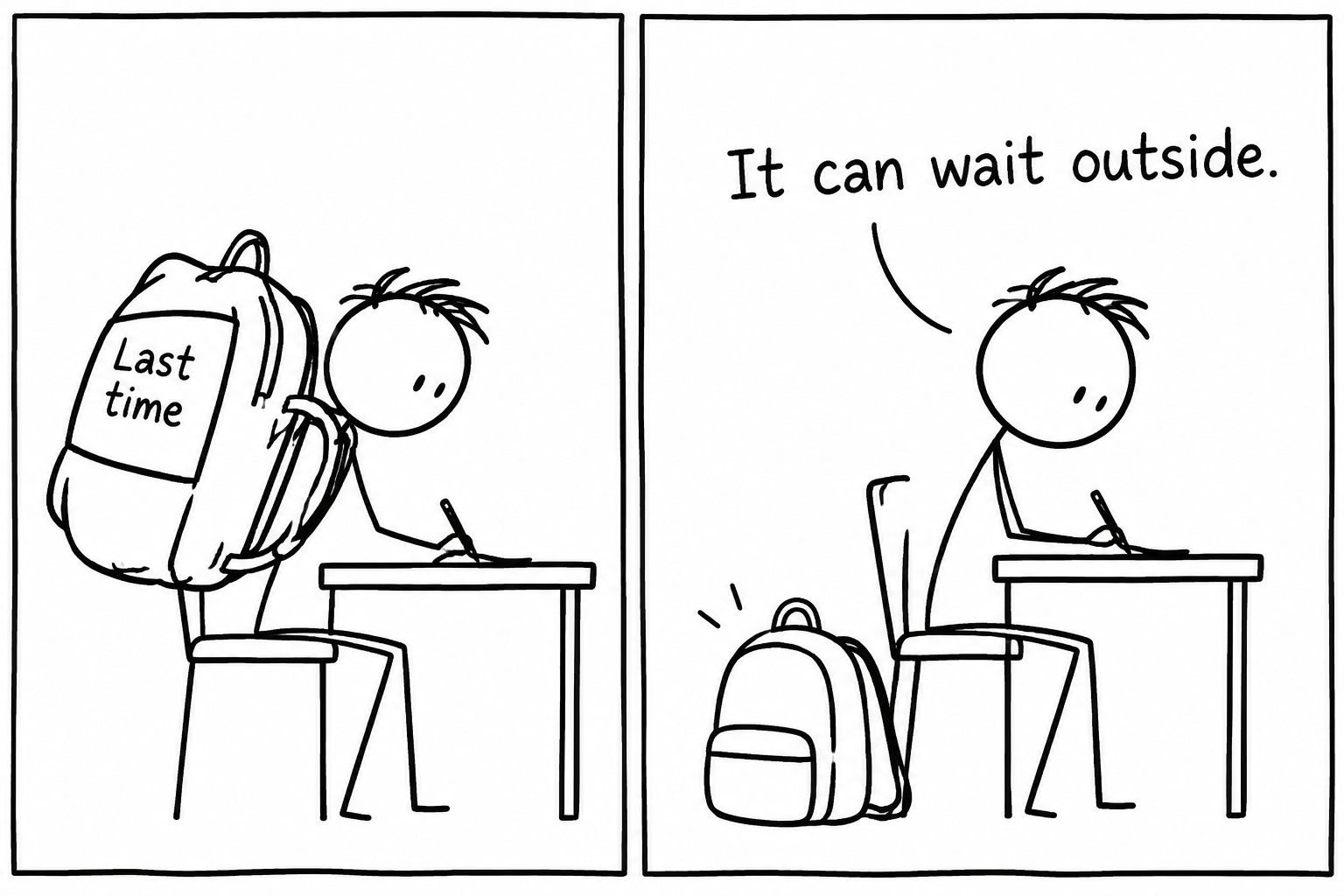 A stick-figure student puts down a backpack labelled Last time before returning calmly to revision.
Separate percentage change from percentage amounts
Some questions give you two amounts and ask what percentage has changed. Here, you need to compare the difference with the original amount:
percentage change=size of changeoriginal amount×100%\text{percentage change} = \frac{\text{size of change}}{\text{original amount}} \times 100\%percentage change=original amountsize of change×100%Find the difference first, then divide by the starting value. State whether the result is an increase or a decrease.
A different question might ask you to express one quantity as a percentage of another:
percentage=partwhole×100%\text{percentage} = \frac{\text{part}}{\text{whole}} \times 100\%percentage=wholepart×100%The calculations look similar, so read the wording carefully. “What percentage of…” asks about a proportion. “What percentage increase…” asks about a change.
Use the percentage change revision guide if choosing the denominator is your main sticking point.
Reverse percentages: work back to the original
Reverse percentage questions give you the amount after a change. Your job is to recover the starting amount.
The relationship is still:
original amount×multiplier=new amount\text{original amount} \times \text{multiplier} = \text{new amount}original amount×multiplier=new amountUndo the multiplication by dividing:
original amount=new amountmultiplier\text{original amount} = \frac{\text{new amount}}{\text{multiplier}}original amount=multipliernew amountOriginal-value problems are included in GCSE percentage content, including foundation tier. A revision website’s topic grade label is a guide to organisation, rather than a reason to ignore the skill when targeting a grade 444.
Worked example: a price before a sale
A jacket costs £686868 after a 20%20\%20% reduction. Calculate its original price.
After the reduction, the jacket costs:
100%−20%=80%100\% - 20\% = 80\%100%−20%=80%So £686868 represents 80%80\%80% of the original price. The multiplier is 0.80.80.8.
Divide to recover the original:
68÷0.8=8568 \div 0.8 = 8568÷0.8=85The original price was £858585.
Check by applying the reduction:
85×0.8=6885 \times 0.8 = 6885×0.8=68Adding 20%20\%20% to £686868 would not undo the discount because it would calculate the percentage from a different base. For more practice, use MathsGenie’s reverse percentages resources.
Common mistakes that cost marks
Stopping at the percentage amount. Underline whether the question wants the discount, the increase or the final amount.
Dividing by the new amount in percentage change. Label the starting value before substituting into the formula.
Multiplying in a reverse percentage question. Ask whether you are moving forwards from the original or backwards from the changed amount.
Rounding too early. Keep calculator accuracy during the working, then round the final answer as instructed. Write money consistently, using two decimal places when needed.
Writing only an answer. Show your multiplier, division or percentage calculation. Clear working makes your method available for assessment, even if an arithmetic slip follows.
Turn revision into targeted practice
After reading a solution, close it and try the question again on blank paper. Then attempt a different question with the same structure. This checks whether you can choose the method independently.
Use MathsGenie’s Edexcel GCSE maths question bank to practise, checking that your resources match your exam board. Mark your work and record the specific error: wrong base, wrong multiplier or wrong direction.
Your next session can then address something concrete. Start with the skill that caused difficulty, then mix question types so the wording has to guide you.
When you are ready, build a targeted practice paper in Mock Exam Builder. Focus your practice on percentages, review the working you missed, and return to MathsGenie’s free revision resources for the explanation you need next.















