

How to Use OCR GCSE Maths Past Papers Properly
GCSE revision guide: use OCR GCSE Maths past papers properly with timed methods, mark schemes, topic fixing, and YesGenie tools to raise grades.
The moment OCR past papers stop feeling “random”
Somewhere in every GCSE revision season, there’s a familiar moment: you open an OCR GCSE Maths past paper, start confidently… and then hit a question that feels like it’s written in a different language. You tell yourself you’ll “do more papers”, but the next one produces the same result: the same gaps, the same silly slips, the same panic when the clock starts to matter.
Using OCR past papers properly isn’t about brute force. It’s about turning each GCSE paper into a feedback loop: attempt, diagnose, rebuild, repeat. That’s how marks start to stick.
Visual break:
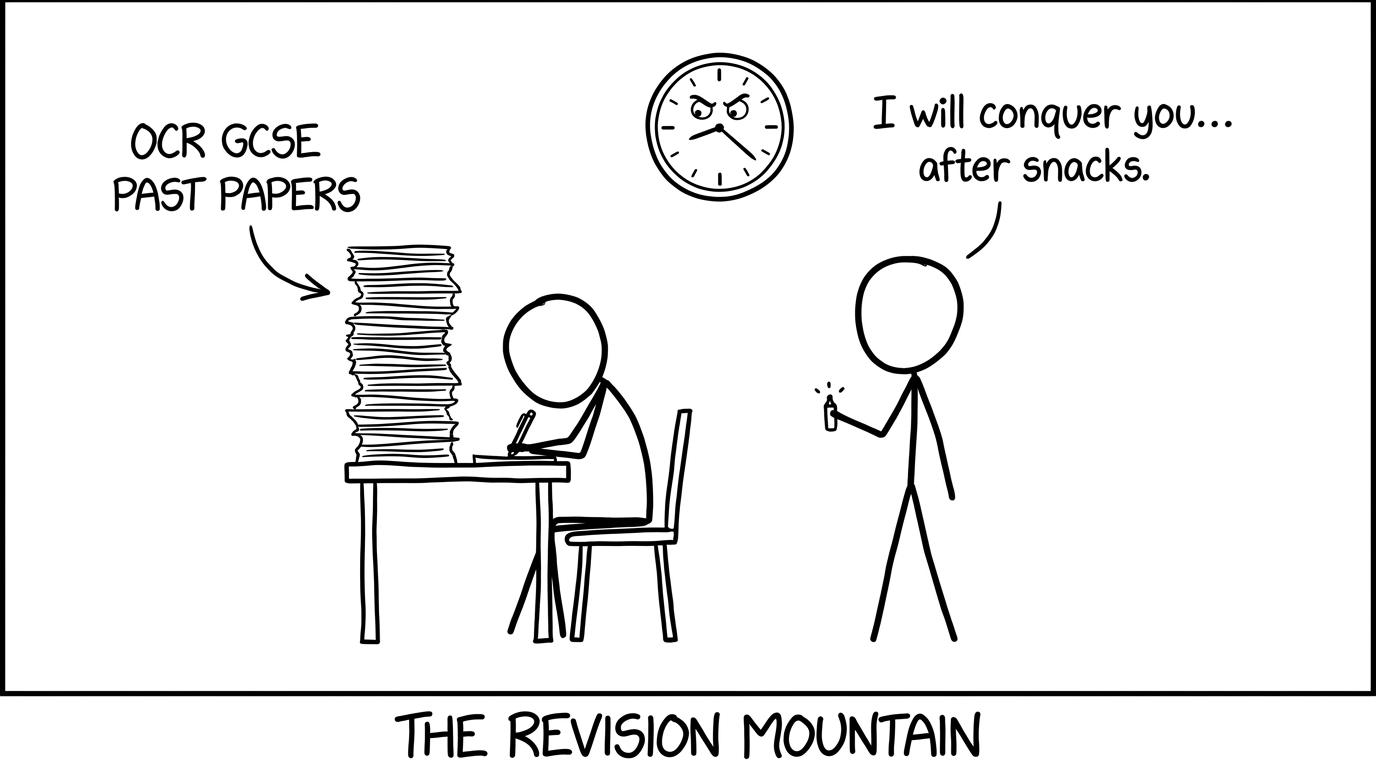 Student facing a towering stack of OCR papers
A quick checklist for using OCR GCSE Maths past papers properly
If you only remember one structure, remember this:
- Choose the right paper (OCR, correct tier, correct paper type).
- Sit it like the real GCSE (silence, timing, equipment).
- Mark it like an examiner (method marks matter).
- Sort mistakes into types (knowledge, method, accuracy, exam technique).
- Do targeted repair work (topic practice + a single clear method).
- Retake the same skills under time pressure (mini-retest).
On YesGenie, you can keep this loop in one place: start from GCSE Past papers and then move straight into topic revision and practice.
Start with the right OCR GCSE Maths papers
OCR papers are only useful if they match what you’re training for. Before you begin, make three decisions.
Make sure you’re on the right exam board and course
If your school enters you for OCR GCSE Maths, practise with OCR papers first. AQA, Edexcel and Eduqas are similar in content, but question style and mark schemes differ in small, costly ways.
Use the dedicated hub: OCR GCSE Maths on YesGenie. It pulls together revision lessons, topic-by-topic practice, worksheets, and OCR-specific past paper practice so your GCSE time goes into the right bucket.
Choose Foundation or Higher tier on purpose
Tier choice is strategy, not ego. Foundation focuses heavily on fluent basics; Higher adds more algebraic reasoning and multi-step problem solving.
A simple rule: if your current working grade is not secure for Higher, doing Higher papers “for confidence” can backfire because you don’t get enough repetition of the marks you can realistically win.
Respect calculator vs non-calculator skills
Many GCSE students revise calculator papers and forget that non-calculator marks are often the most predictable marks in the whole set of papers: fractions, standard form, rearranging, exact values, and clean arithmetic.
When you practise, label your paper attempt clearly as “calculator” or “non-calculator” and treat it like different training sessions.
Sit OCR past papers like the real GCSE (even when you’re not ready)
A past paper done casually is comfort. A past paper done properly is information.
The “real conditions” script
- Put your phone in another room.
- Use the correct equipment (ruler, protractor, compasses if needed).
- Sit at a table.
- Set a timer.
- Don’t pause the clock.
If full papers feel too heavy at first, use shorter resources and build up. YesGenie’s Resources page is useful for finding structured practice like mini tests and other paper-style formats.
The 3-pass method for time pressure
OCR papers are designed so time disappears if you get stuck early. Use this three-pass habit.
- Pass 1: do every question you can start within 202020 seconds.
- Pass 2: return to medium questions, show method clearly.
- Pass 3: attempt the hardest questions last, even if it’s just setting up a diagram, defining variables, or writing an equation.
This matters because GCSE mark schemes reward steps. A half-finished solution with correct structure often scores.
Mark like an examiner, not like a disappointed future you
The fastest way to improve from OCR GCSE Maths past papers is to mark them with calm precision.
What to look for in the mark scheme
Examiners don’t just reward the final answer. They reward method.
- If the mark scheme shows a line you didn’t write, you may have lost method marks.
- If your method was correct but you made a small arithmetic slip, you often keep most of the marks.
- If your working is invisible, the examiner can’t reward it.
When you mark, write a short label next to each lost mark:
- K = knowledge gap (you didn’t know the topic)
- M = method gap (you know the topic but chose the wrong approach)
- A = accuracy (arithmetic/algebra slip)
- T = technique (poor layout, rounding, units, not answering the question)
That single letter is the difference between “I did badly” and “I know what to practise next”.
Visual break:
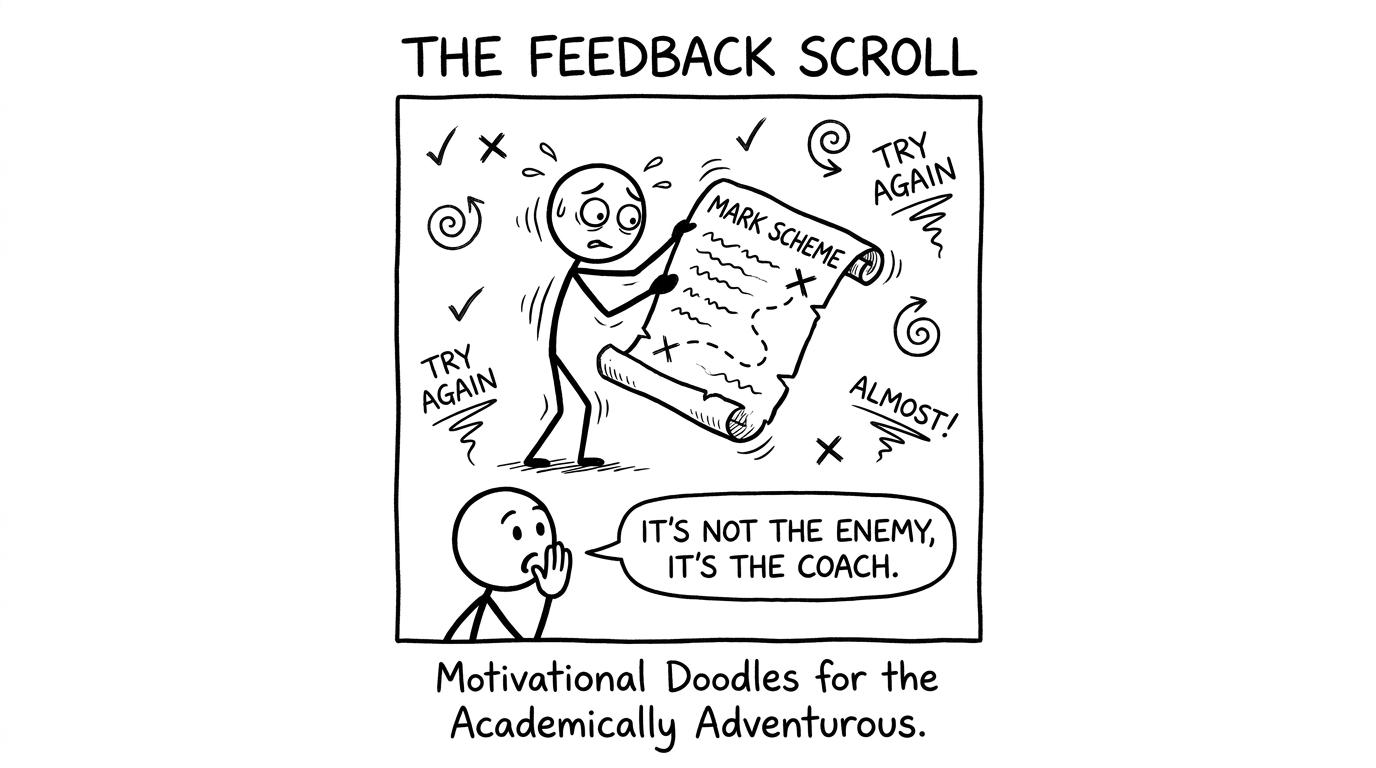 Mark scheme as a treasure map
Turn one OCR GCSE question into a method you can reuse
A past paper only becomes revision when you extract reusable methods.
Here are two worked examples in a GCSE style, showing how to write steps that earn marks.
Worked example: simultaneous equations (substitution)
Solve:
2x+y=113x−y=4\begin{aligned} 2x + y &= 11 \\ 3x - y &= 4 \end{aligned}2x+y3x−y=11=4Add the equations to eliminate yyy:
(2x+y)+(3x−y)=11+4(2x+y) + (3x-y) = 11 + 4(2x+y)+(3x−y)=11+4 5x=15⇒x=35x = 15 \Rightarrow x = 35x=15⇒x=3Substitute x=3x=3x=3 into 2x+y=112x+y=112x+y=11:
2(3)+y=11⇒6+y=11⇒y=52(3) + y = 11 \Rightarrow 6 + y = 11 \Rightarrow y = 52(3)+y=11⇒6+y=11⇒y=5So the solution is x=3x=3x=3 and y=5y=5y=5.
How to “paper-proof” this method for OCR GCSE:
- Always show the elimination step clearly.
- Use substitution after you’ve found one variable.
- Write the final answer as a pair.
If this was a weak area in your paper, do targeted practice immediately afterwards using a topic page such as Probability (OCR GCSE Maths) as a model of how YesGenie organises topic-by-topic skills and solutions.
Worked example: percentage change and reverse percentages
A jacket is reduced by 20%20\%20% in a sale. The sale price is £484848. Find the original price.
A 20%20\%20% reduction means you pay 80%80\%80% of the original.
Let the original price be £PPP.
0.8P=480.8P = 480.8P=48Divide both sides by 0.80.80.8:
P=480.8=60P = \frac{48}{0.8} = 60P=0.848=60So the original price was £606060.
This is a classic GCSE trap because many students do 48×1.248 \times 1.248×1.2 (which is only correct in some situations). If you lost marks here, practise “reverse percentage” questions until the structure new=multiplier×original\text{new} = \text{multiplier} \times \text{original}new=multiplier×original feels automatic.
For related exam-style guidance, YesGenie’s OCR revision guide on Best Buy Questions is a good example of turning a messy context into a repeatable method.
The “repair loop”: what to do the day after an OCR past paper
Most GCSE students do the paper, mark it, feel something (usually disappointment), and then move on. That’s the lost opportunity.
Here’s the repair loop that actually raises grades:
Build a mistake list that is smaller than your ego
Take the questions you dropped marks on and rewrite them as micro-topics:
- “Angles in parallel lines: alternate/corresponding”
- “Non-calculator fraction arithmetic”
- “Probability from a table”
- “Rearranging formulae”
Keep it to 555-to-888 items per paper. If your list is longer, prioritise the ones worth the most marks or the ones that appear repeatedly.
Do topic practice until you can explain the method
Use YesGenie topic pages from the OCR hub GCSE Maths OCR to practise that exact skill, with worked solutions when you get stuck.
The rule is: don’t just “get an answer”. Be able to say, out loud or on paper, what the method is.
Mini-retest under time pressure
The next day, re-attempt:
- the same question (if you have a clean copy), or
- two similar questions from a topic practice set.
Set a short timer, like 666-to-888 minutes for a multi-mark problem. You’re teaching your brain to do it when it counts.
Visual break:
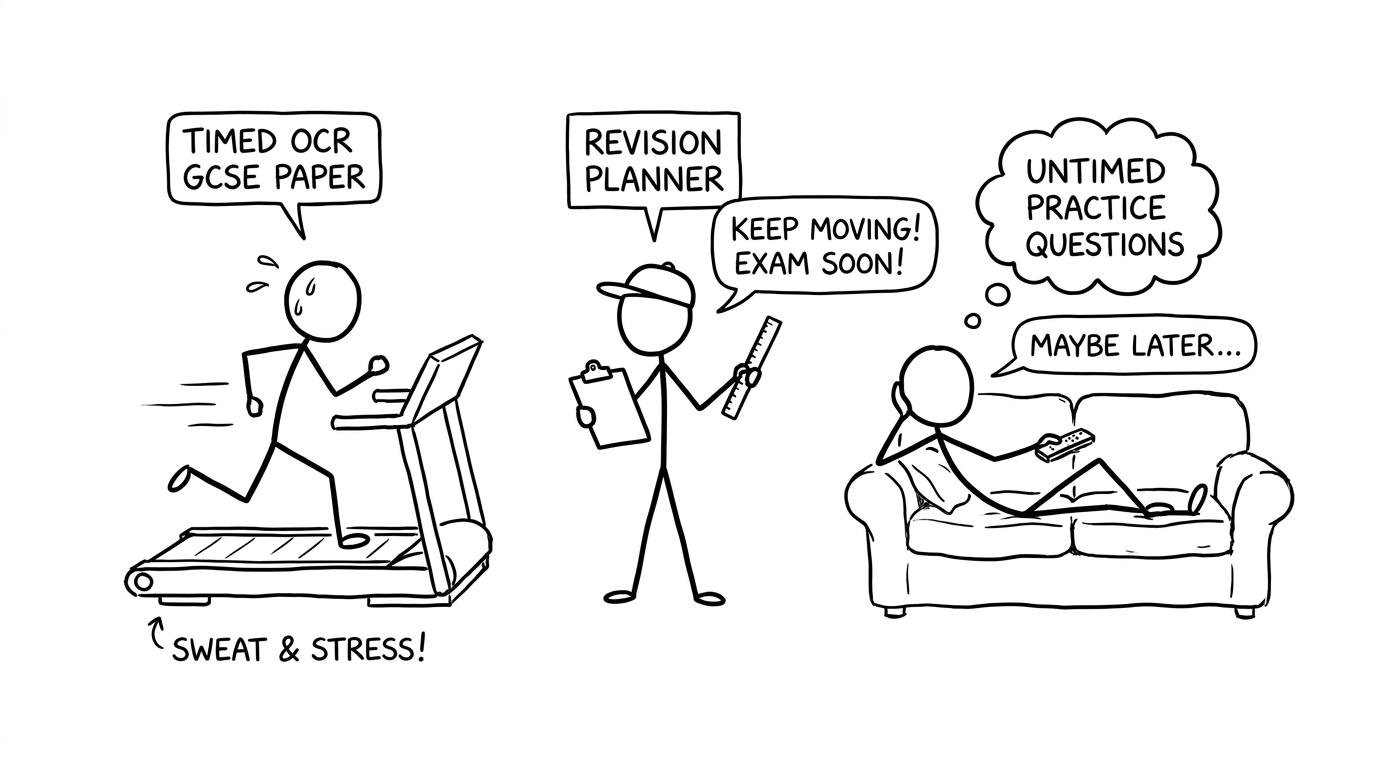 Timed paper treadmill vs untimed practice sofa
When to switch from topic revision to full OCR GCSE past papers
You don’t need to “finish content” before doing papers. But you do need a sensible ratio.
- Early revision: more topic practice, fewer full papers.
- Mid revision: mix topic practice with timed sections.
- Final stretch: mostly full papers, with rapid repair loops.
If you’re also doing A Level maths, there’s a quiet benefit to doing GCSE papers properly: they rebuild fluency. A Level success often comes from not wasting cognitive energy on basic algebra. If you’re balancing both, it can help to separate them: GCSE past paper practice for speed and accuracy, A Level papers for deeper reasoning (YesGenie also has Edexcel A Level Maths Past Papers for that side of your timetable).
Common mistakes when using OCR GCSE Maths past papers
- Doing too many papers, too quickly. You feel productive, but you repeat the same mistakes because you never repair them.
- Marking harshly and vaguely. “I’m bad at algebra” is not a plan. “I lost method marks on rearranging and factorising” is.
- Only checking answers, not working. GCSE mark schemes reward steps; hiding your thinking costs marks.
- Ignoring non-calculator fluency. You can’t afford to lose easy marks on fractions, standard form, and exact values.
- Not learning OCR phrasing. “Give your answer to 222 decimal places” and “show that” questions demand specific exam technique.
- Practising the wrong board. If you’re OCR, start with OCR to learn the style, then use other boards only as extra.
A closing thought: use papers to practise becoming calm
The best GCSE revision doesn’t make you feel busy; it makes you feel predictable. You see a style of OCR question and your hand starts moving, because you’ve met it before, marked it properly, and repaired the weakness it exposed.
If you want a clean system for that, start at OCR GCSE Maths on YesGenie, pick an OCR past paper, sit it under timed conditions, then use YesGenie’s revision lessons, practice questions, mark schemes, and topic pages to run the repair loop. Add in predicted papers and mini tests from Resources when you need variety and structure.
Do the next OCR past paper like it matters, and then use what it tells you. That’s how GCSE grades move.










