

Home-Schooled GCSE Biology: How to Sit the Exam
Home schooled GCSE Biology explained: choose an exam board, find a private candidate centre, arrange practical work and meet UK entry deadlines confidently.
The difficult part of taking a qualification outside school is often not learning the subject. It is finding the door into the exam room.
If you are searching for home schooled GCSE Biology guidance, the short answer is yes: home-educated students can sit GCSE Biology as private candidates. You need to choose a specification, find an approved exam centre willing to accept private candidates, arrange any required practical experience and complete your entry before the centre's deadline.
That sounds straightforward. In practice, each decision affects the next. Not every centre offers every exam board, practical arrangements can vary, and centres commonly set internal deadlines well before the awarding organisation's final date. Starting early is therefore the most useful advice in this article.
Your GCSE Biology entry checklist
Before beginning detailed revision, work through these steps:
- Decide whether you want separate GCSE Biology or Combined Science.
- Select an exam board and specification accepted by your intended centre.
- Contact several approved private candidate centres.
- Confirm the qualification title, specification code and tier.
- Ask how the centre handles required practical activities.
- Request a complete breakdown of entry and administration fees.
- Check the centre's own entry deadline, not just the national deadline.
- Discuss access arrangements immediately if you may need them.
- Enter through the centre and retain written confirmation.
- Build a revision plan around the correct specification and exam dates.
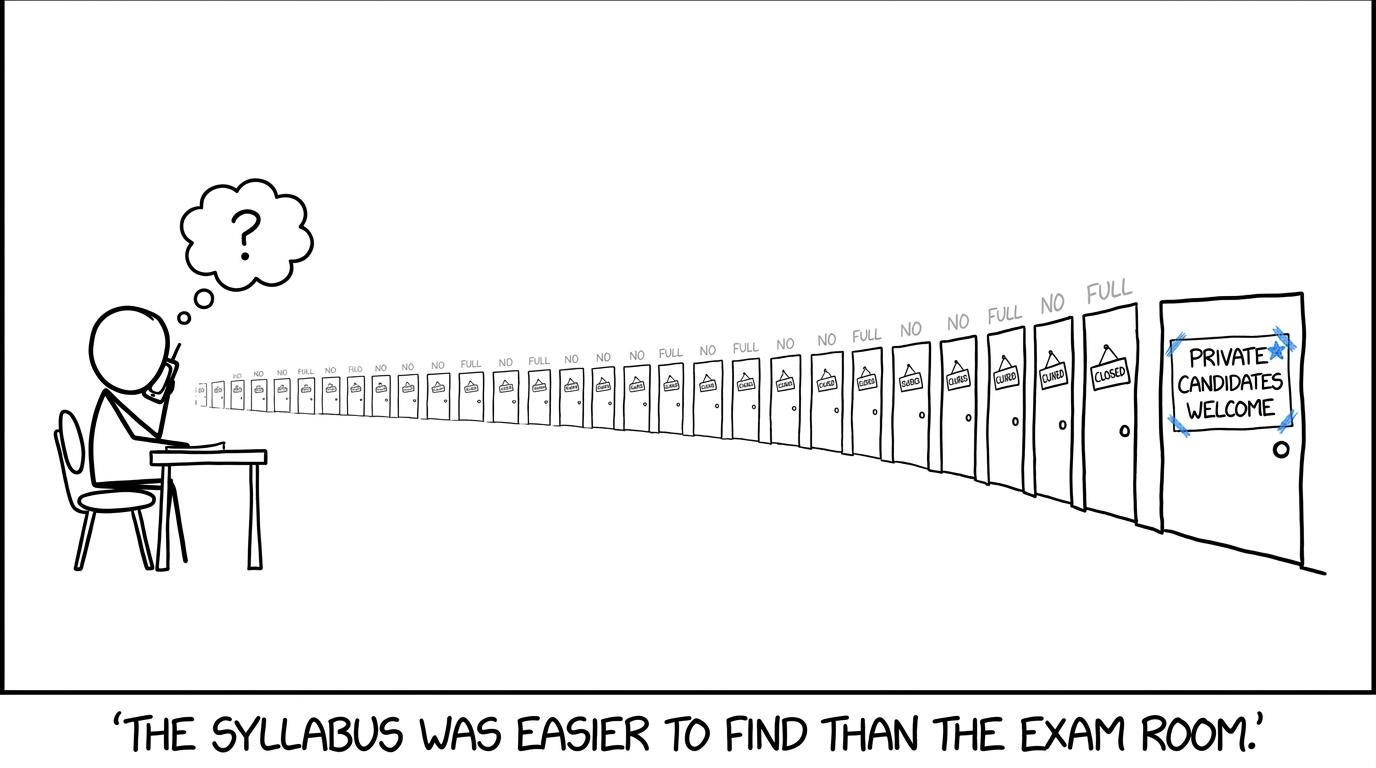 A home-schooled student searching for a welcoming private candidate exam centre
How home-schooled students enter GCSE Biology
Home-educated students do not normally enter directly with AQA, Pearson Edexcel, OCR or Eduqas. Instead, they enter as private candidates through an approved school, college or independent examination centre.
The centre acts as the administrative link between you and the awarding organisation. It submits the entry, verifies identity, provides the examination room, follows examination regulations and sends completed scripts for marking.
A centre is not required to accept private candidates. Some accept them for written examinations but cannot accommodate science practical work. Others offer only selected boards or specifications. This is why finding a centre should come before buying a course or committing to an exam board.
Decide between Biology and Combined Science
Separate GCSE Biology is one standalone GCSE. Combined Science covers Biology, Chemistry and Physics and normally produces two GCSE grades.
The right choice depends on your wider plans. Separate Biology may suit a student taking individual science qualifications, while Combined Science offers a broader route. However, Combined Science requires preparation for all three sciences. You cannot enter for only its Biology papers and receive the complete qualification.
Ask prospective centres which option they support. The wording matters: GCSE Biology and GCSE Combined Science are different qualifications with different specification codes and examination entries.
Choose the specification with the centre
AQA, Pearson Edexcel, OCR and Eduqas offer GCSE science specifications, but availability depends on the centre and where in the UK you live. Specifications differ in content organisation, required practical activities, paper structure and terminology.
Before confirming anything, obtain the following in writing:
- awarding organisation;
- exact qualification title;
- specification or entry code;
- foundation or higher tier, where applicable;
- examination series and year;
- practical arrangements;
- total fee and payment deadline.
Do not assume that two qualifications called GCSE Biology are interchangeable. Revision materials must match the specification on your entry confirmation.
Finding a private candidate exam centre
Awarding organisations provide tools or guidance for locating centres that may accept private candidates. These listings are a starting point, not a guarantee of availability. Contact each centre directly and explain exactly which qualification you intend to take.
An efficient first email should include:
- your intended GCSE Biology exam board and specification;
- the examination series you are considering;
- whether you require foundation or higher tier;
- your age at the time of the examinations;
- whether access arrangements may be needed;
- whether you need support accessing practical activities.
Contact several centres rather than waiting for one reply before trying another. Private candidate places can be limited, particularly where practical science provision or access arrangements are involved.
Questions to ask before paying
A low advertised entry fee does not always represent the final cost. Ask whether the quotation includes the awarding organisation's fee, centre administration, invigilation, practical provision, late-entry charges and any fees associated with access arrangements.
You should also ask:
- Will all papers be sat at the same venue?
- What identification must be provided?
- When will the final timetable and candidate details arrive?
- What happens if the awarding organisation changes an examination time?
- How will results and certificates be collected or delivered?
- What is the centre's cancellation and refund policy?
Keep emails, invoices and entry confirmation together. Good administration is not glamorous, but it prevents small uncertainties from becoming expensive problems.
GCSE Biology practical requirements
GCSE Biology specifications include practical skills and named required or core practical activities. These skills are assessed through written examination questions rather than through the separate practical endorsement used in A Level sciences.
That does not make practical work optional revision. Papers can test experimental methods, variables, accuracy, risk, graph interpretation, conclusions and evaluation. Students should understand the practical activities identified in their chosen specification and develop suitable hands-on experience where required.
The arrangements for private candidates can depend on the awarding organisation, specification and centre. Before entering, ask the centre to explain what it requires and whether it provides practical sessions. If it does not, ask what evidence or alternative arrangement it will accept under the relevant specification rules.
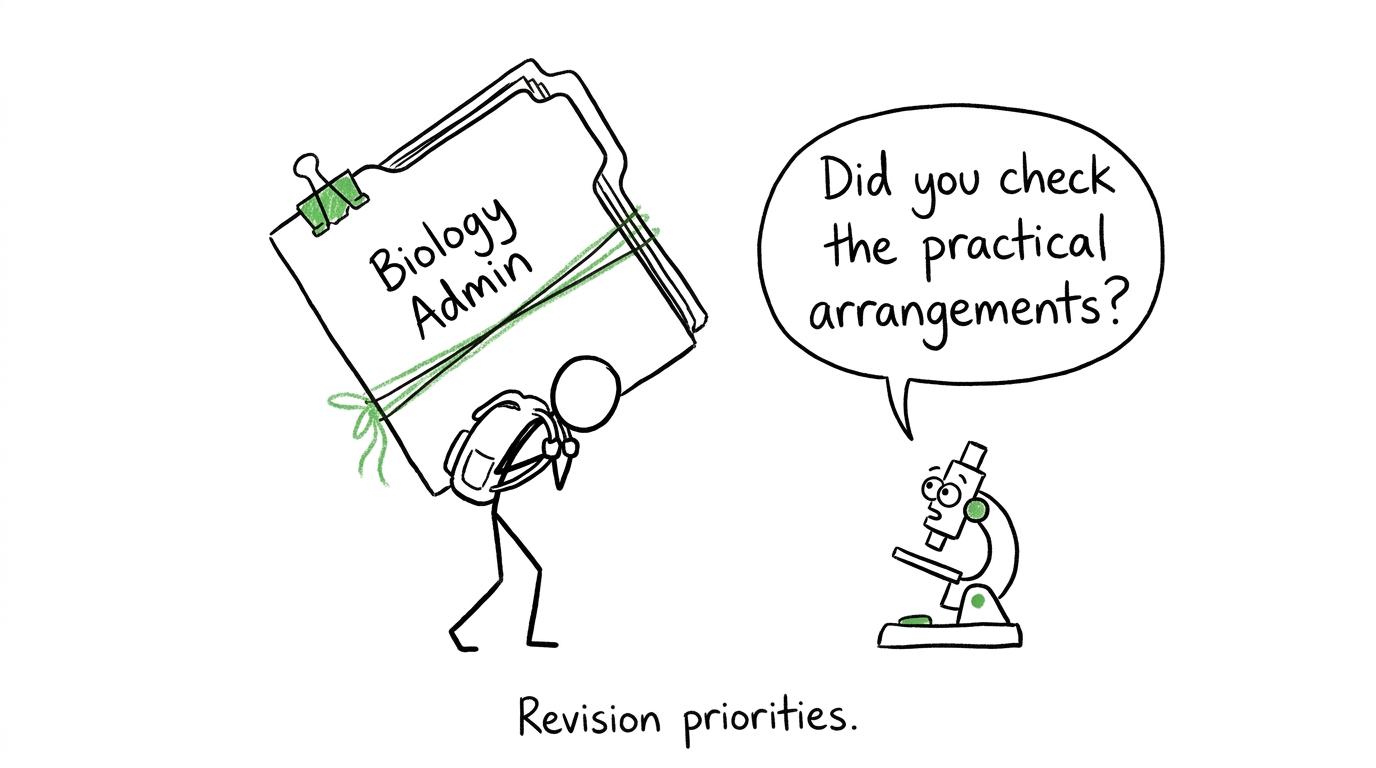 A student discovers that practical arrangements belong on the GCSE Biology checklist
Watching demonstrations can help with revision, but it is not automatically equivalent to completing practical work. The safest approach is to check directly with both the centre and the current specification rather than relying on advice written for another board or examination year.
Entry deadlines for private candidates
For the summer GCSE series, the standard awarding-body entry deadline is normally in February, commonly around 21 February. However, you should verify the published dates for your precise examination series because administrative dates, late-fee stages and qualification availability can change.
More importantly, an exam centre can impose a much earlier internal deadline. It needs time to collect documents, process payment, check codes and submit entries. A centre may close private entries when its capacity is reached, even if the awarding organisation's deadline has not passed.
A sensible timeline is:
Six to twelve months before the examinations
Research centres, compare specifications and investigate practical provision. If you require access arrangements, raise this immediately because assessment, evidence and application deadlines may apply.
During the autumn term
Select your centre, confirm the specification and request the full fee. Begin following a structured revision timetable.
Before the centre's winter deadline
Submit your details, identification and payment. Check every item on the entry confirmation, especially your name, date of birth, subject, board, specification code and tier.
During the spring term
Confirm practical arrangements, examination dates, arrival instructions and permitted equipment. Report an incorrect entry promptly.
Late entry may be possible, but it can involve additional fees and depends on the centre's willingness and capacity. GCSE Biology is generally offered in the summer series rather than the standard November GCSE series used for qualifications such as GCSE Maths and English Language. Always check availability before planning a resit.
Access arrangements and additional support
Private candidates may be eligible for access arrangements such as extra time, supervised rest breaks or modified papers, but these are not granted simply on request. The centre must follow current regulations, establish the candidate's normal way of working and hold appropriate evidence.
Tell centres about a possible requirement in your first enquiry. A centre may need to conduct its own assessment, and not every centre can provide every arrangement. Waiting until the entry deadline or examination day may be too late.
Do not neglect the maths inside Biology
GCSE Biology contains more numerical reasoning than its name might suggest. Students interpret graphs, calculate rates, use percentages, compare ratios, work with standard form and substitute values into equations. Marks can be lost through weak mathematical communication even when the biological idea is understood.
MathsGenie's free GCSE maths revision lessons can strengthen those underlying skills. The topic videos and practice questions allow you to revisit an area before applying it in a scientific context.
Use GCSE maths past papers to practise working accurately under time pressure. The MathsGenie mini tests are useful when you want focused practice without completing an entire paper, while predicted GCSE maths papers can support preparation for the current examination season.
If you are balancing several subjects at home, revising by difficulty can be more useful than simply revising by time. MathsGenie's revision by grade resources help identify which mathematical skills should receive attention next.
Common mistakes when arranging home schooled GCSE Biology
Choosing an exam board before finding a centre
A nearby centre may not offer your chosen specification. Find out what centres can support before paying for a course built around one board.
Confusing separate Biology with Combined Science
These are different entries. Check the full qualification title and code rather than relying on the word “Biology”.
Assuming practical work does not matter
Although practical skills are examined in writing, students must understand methods, variables, risks, data and evaluation. Confirm the current practical expectations with the centre.
Treating the national deadline as a personal deadline
Centres often close entries earlier. Your operative deadline is the date given by the centre, and places may fill before then.
Paying without requesting a complete quotation
Administration, invigilation, practical sessions and late entry can affect the total. Obtain an itemised fee and refund policy first.
Leaving access arrangements until the spring
The centre may need evidence, assessment and approval well before the examinations. Mention potential requirements during your first contact.
Revising from the wrong specification
Topics overlap between boards, but wording and assessment structures differ. Put the exact specification beside your revision plan and check off its content systematically.
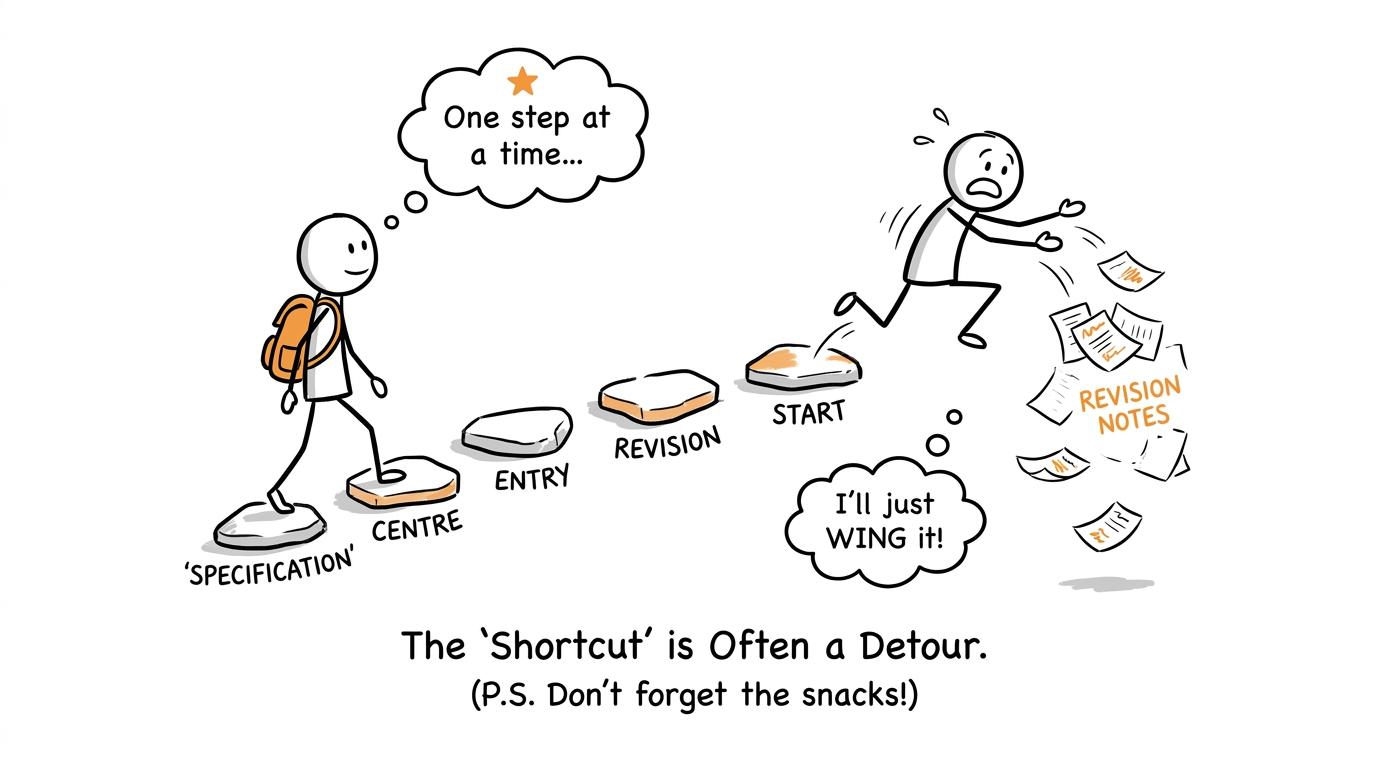 A calm student follows each step towards the exam instead of attempting one enormous leap
From private candidate to prepared candidate
Yes, a home-schooled student can sit GCSE Biology. The route is manageable when taken in the right order: find a suitable centre, choose the specification it supports, clarify practical provision, enter before its deadline and revise from the correct materials.
The paperwork creates access to the exam. Preparation creates the opportunity to perform well once you are there.
As Biology revision develops, use MathsGenie to keep the numerical side of your GCSE programme moving too. Start with the free revision lessons, complete targeted practice questions and mini tests, then progress to past papers, mark schemes, video solutions and predicted papers. A clear plan turns two large subjects into a series of smaller, finishable tasks; and that is usually how confident exam preparation begins.











