GCSE revision: how parents help without nagging
GCSE revision without nagging: practical ways parents can support English Language while protecting focus, confidence, and maths revision time too.
Parents usually start nagging with good intentions. It’s just that, in the middle of GCSE season, good intentions can sound like a timetable with a voice. You’re trying to revise English Language, keep maths ticking over, maybe juggle science too, and suddenly every “Have you done any revision?” lands like a mini mock you didn’t choose.
This guide is for a very specific moment: when a parent wants to help with GCSE English Language revision without turning the house into a pressure cooker. And it’s also for you, the student, because the best support often looks like fewer words and better systems.
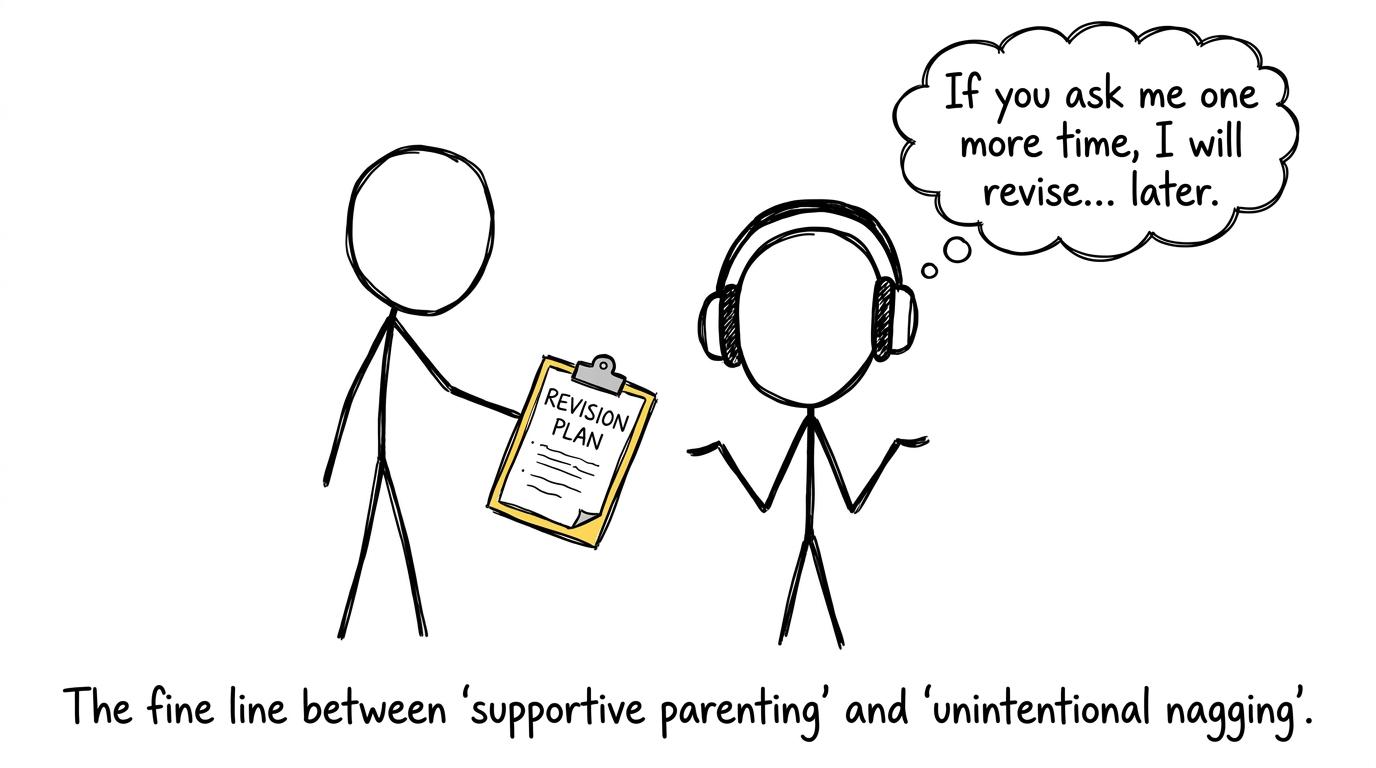 Parent with revision plan vs nagging
The no-nagging checklist (what actually helps)
If you want a simple rule, it’s this: parents can support the process, not police the outcome. Here’s the practical checklist that tends to work for GCSE households.
- Agree a short daily plan (two choices, not ten demands).
- Make revision visible (a timetable on the fridge beats verbal reminders).
- Use timed blocks (small starts reduce avoidance).
- Ask better questions (coach-style, not interrogations).
- Praise the behaviour (starting, finishing, reflecting) rather than the grade.
- Keep resources friction-free (open tabs, printed papers, a clear desk).
- Protect sleep and calm (the fastest grade gains need a functioning brain).
For maths, the “friction-free” part is where YesGenie shines: quick access to GCSE past papers, board-specific Edexcel GCSE Maths past papers, and short Edexcel GCSE Maths mini tests when you’re low on time but still want progress.
Why nagging fails (even when you care)
Nagging doesn’t fail because parents are wrong to care. It fails because GCSE revision is already full of invisible effort.
English Language revision often looks like “doing nothing” from the outside: reading a model answer, planning a paragraph, thinking about structure, re-reading an extract. Maths revision can look the same: staring at a question, trying to remember a method, making one correction that changes everything.
When someone interrupts that fragile concentration to check you’re concentrating, your brain gets a simple message: we don’t trust you to steer this. And if you feel mistrusted, you either argue or withdraw. Neither leads to better GCSE grades.
A better approach is to build a system where effort is observable without commentary: a plan you can point at, a timer that runs, and resources that are ready.
Reframe the role: from “manager” to “producer”
There’s a quiet difference between managing and producing.
- A manager checks, chases, escalates.
- A producer sets the scene so the work can happen.
For GCSE English Language, producing might mean: creating a calm 45-minute window, printing an extract, and leaving you alone. For GCSE maths, it might mean: making sure you’ve got your login, a notebook, and a clear next step, like an AQA lesson page.
If you revise maths on YesGenie, the “clear next step” can be as small as opening one topic and doing it properly. For example, here’s a solid, confidence-building algebra landing page parents can bookmark for you rather than talk at you: Simplifying Algebra (Edexcel). If you’re on AQA, the wider hub helps you choose efficiently: AQA GCSE Maths Lessons.
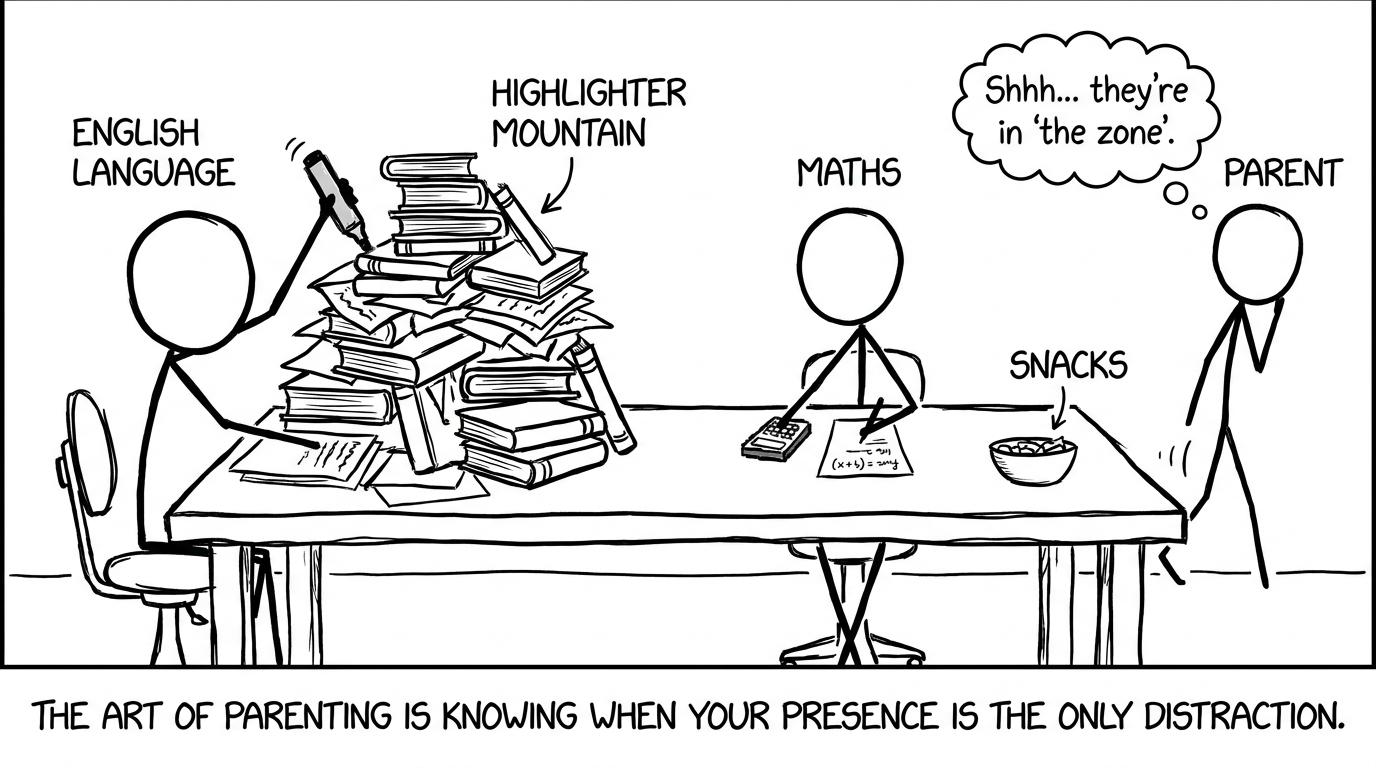 English and maths at the same table
The “two-question” script that replaces nagging
Parents often ask the worst possible question: “Have you revised?” It invites a yes/no answer and a fight.
Replace it with two questions that build autonomy (and still keep you accountable) during GCSE season:
“What’s your next small task?”
Small tasks prevent the spiral. “Revise English” is vague. “Plan one Question 5 opening” is concrete.
“What would make it easier to start?”
This is where parents can help without taking over: quiet room, snack, printing, finding the right paper, moving siblings away from the Wi-Fi router.
Notice what’s missing: judgement. The tone is supportive logistics, not inspection.
A worked example parents can understand: measuring progress in maths
English Language revision progress is hard to see. Maths revision progress is easier to measure, which is why it can become the “safe” subject to nag about. So here’s a simple GCSE-style worked example you can use to show what progress actually looks like: method, marks, reflection.
Example: simplifying algebra (quick wins, real method)
Simplify 3(2x−5)+4x3(2x-5)+4x3(2x−5)+4x.
3(2x−5)+4x=6x−15+4x3(2x-5)+4x = 6x-15+4x3(2x−5)+4x=6x−15+4xCollect like terms:
6x+4x−15=10x−156x+4x-15 = 10x-156x+4x−15=10x−15So the simplified expression is 10x−1510x-1510x−15.
If you want to go one step further, factorise:
10x−15=5(2x−3)10x-15 = 5(2x-3)10x−15=5(2x−3)This is the kind of visible improvement that reduces household stress: you can show a parent a page of questions, corrections, and one sentence of reflection: “I keep forgetting to distribute the 333 to both terms, so I’m underlining brackets first.”
If you want more practice in this exact skill, use YesGenie’s Simplifying Algebra topic or read the method-focused notes on Simplifying Algebra revision guides (AQA).
How parents can support GCSE English Language revision (without being English teachers)
Parents don’t need to know how to hit top-band analysis to be useful for GCSE English Language. The most helpful support is environmental and routine-based.
Make time blocks feel smaller than the fear
A parent can say: “Do 10 minutes, then you can stop.” Most students won’t stop they just need a start.
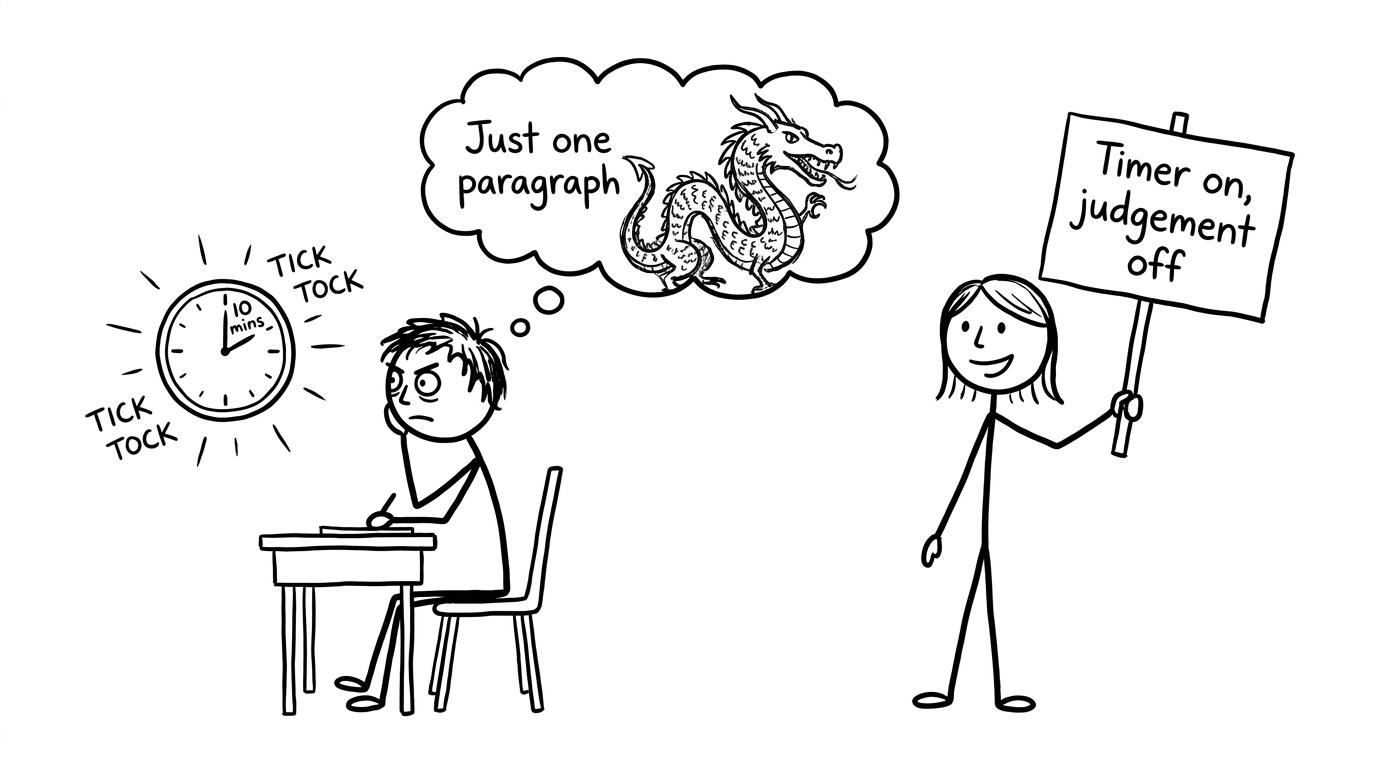 Timer on, judgement off
Swap “more time” for “better reps”
For English Language, “better reps” might be: one strong paragraph with clear structure, rather than three pages of rushed writing.
For maths, it’s the same principle: one past paper question done, marked, corrected, and reattempted is worth more than twenty glanced-at examples. YesGenie’s GCSE past papers plus mark schemes make that cycle simple.
Help students use mark schemes as feedback, not punishment
Mark schemes aren’t there to “catch you out”. They’re a map of what the examiner rewards.
Parents can support by normalising the routine: attempt, mark, note, retry. No commentary needed. Just consistency.
When English revision steals maths time (and what to do)
During GCSE season, English Language can expand to fill every evening because it’s harder to quantify. That’s when maths slips.
A simple weekly structure helps:
- 3 sessions English Language
- 3 sessions maths
- 1 session flexible (science, history, catch-up)
Keep maths sessions shorter but sharper. A mini test is ideal when motivation is low. Try Edexcel GCSE Maths mini tests or open the Resources page and choose something bite-sized.
If you also want a bank of starter questions for quick warm-ups (great for breaking the “I can’t start” feeling), use GCSE Starters.
Common mistakes (the nagging patterns to avoid)
- Asking for outcomes instead of inputs: “What grade are you on?” creates panic. “What’s today’s plan?” creates momentum.
- Correcting instead of coaching: If a parent rewrites your English paragraph, you lose ownership. If they time a session and make tea, you gain it.
- Overloading resources: Ten websites open equals zero work done. Pick one home base (YesGenie for maths; a single class booklet for English) and stick with it.
- Moving the goalposts: If you revise for 30 minutes and get told it’s “not enough”, your brain learns there’s no win.
- Treating rest as a reward: Sleep and breaks are part of the plan, not what you “earn” after suffering.
- Comparing siblings or classmates: Comparison burns time and confidence, both essential for GCSE performance.
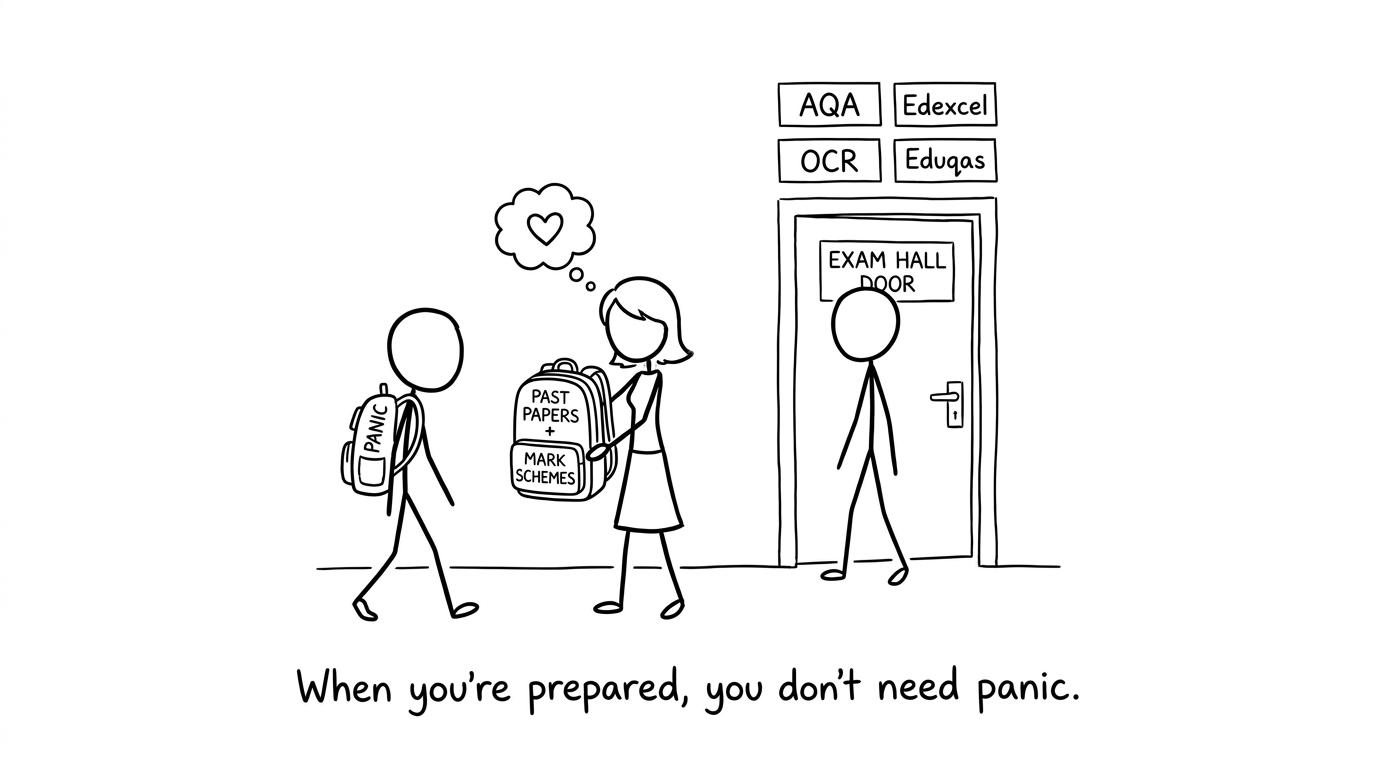 Swapping panic for past papers
Closing: the quiet kind of support that raises GCSE grades
The strange truth about GCSE revision is that the best support often looks like less talking. A parent who can swap nagging for structure gives you something rare: the feeling that you’re trusted to grow.
If you’re a student, you can make that trust easier by making your revision visible: a simple plan, a timer, and a clear next task. If you’re a parent, you can “produce” the conditions: calm space, short check-ins, and resources ready to go.
For maths, make YesGenie your home base: use the free GCSE revision lessons, practise with past papers, tighten weak topics with targeted pages like Simplifying Algebra, and build confidence fast with mini tests. Then carry that same calm system into English Language revision: small tasks, clear feedback, and no unnecessary noise.
Because the goal isn’t revision that sounds impressive. It’s revision that happens consistently, quietly, and well enough to earn the marks when it matters.