GCSE Biology Exam Week Checklist (for Maths Students)
GCSE Biology exam week checklist for calm, focused revision. Simple daily plan, maths-style methods, worked examples, and YesGenie resources.
GCSE exam week has a particular feeling: your bag is packed the night before, your brain is too loud at midnight, and every sentence in the revision guide starts to look like it was written in a hurry. If you’re a maths student, that chaos can feel even sharper; you’re used to methods, steps, and certainty. This GCSE Biology checklist is designed to bring that same calm structure into your week, without pretending you can learn an entire specification overnight.
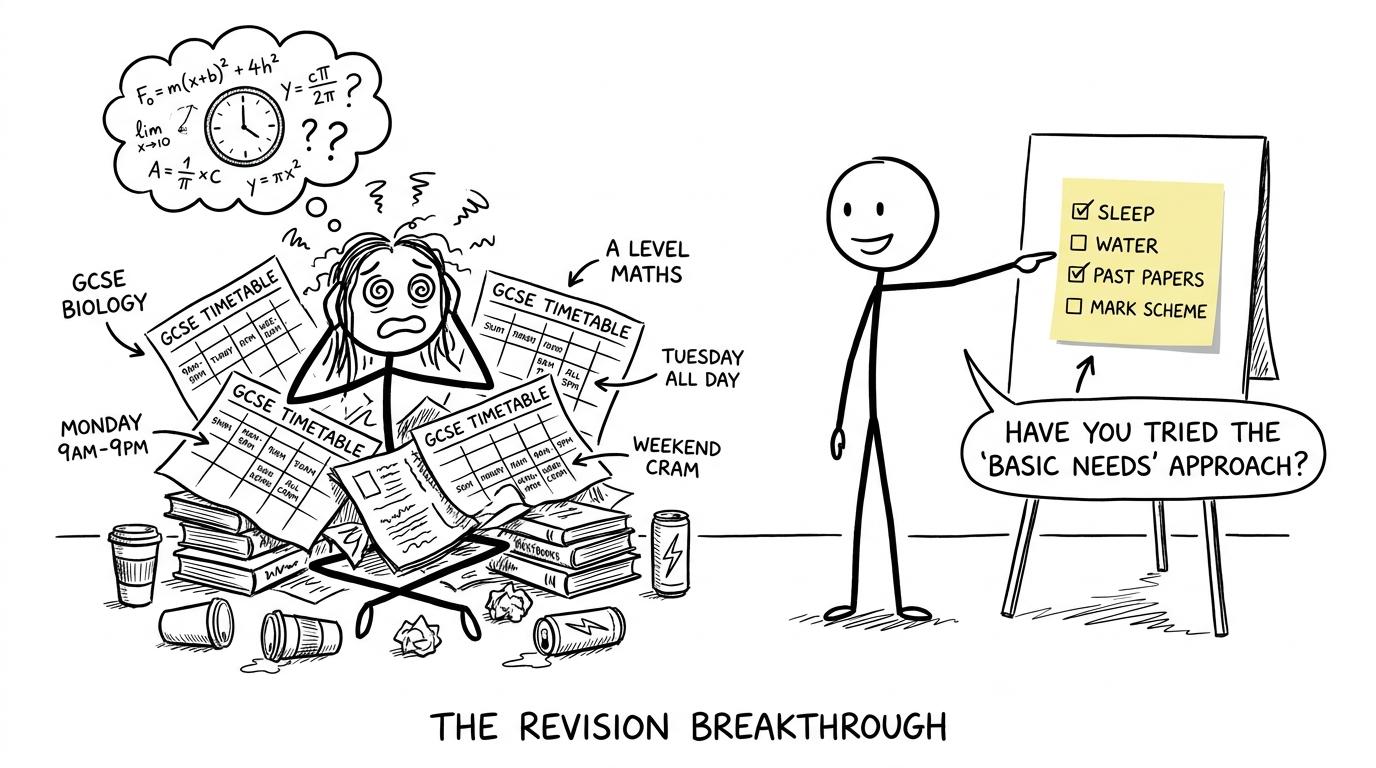 A student finds calm in a tiny checklist
Even though this is Biology, you’ll revise it better when you borrow maths habits: short cycles, mark schemes, error-spotting, and a simple plan you can actually follow. And when Biology is done for the day, you’ll still want your maths revision to be sharp and efficient, so we’ll anchor the week around YesGenie tools that make your GCSE Maths work feel manageable too.
The simple GCSE Biology exam week checklist
Use this as your “sticky note” plan for GCSE Biology exam week. The aim is not to do everything. The aim is to do the right things consistently.
Daily non-negotiables
- Sleep target: 888 hours if possible (minimum 777)
- Wake time consistent within ±30\pm 30±30 minutes
- Two short Biology blocks (not one long one)
- One timed practice (even if it’s only 202020 minutes)
- Mark and fix mistakes the same day
- Prepare your exam kit and plan the next morning before bed
Biology priorities (highest marks per minute)
- Practise exam questions by topic (then mix topics)
- Learn mark scheme wording for required practicals
- Master graphs, calculations, and “describe/explain” phrasing
- Build a small list of “repeat offenders” (things you keep forgetting)
Maths priorities (so it doesn’t slide)
- One short maths session daily, focused on weaknesses
- One mini test or half paper every other day
- Mark scheme analysis, not just doing questions
Use these YesGenie pages to make the maths side automatic:
- GCSE Past papers
- Edexcel GCSE Maths Past Papers
- Edexcel GCSE Maths Predicted Papers
- Edexcel GCSE Maths Mini Tests
- GCSE Maths (OCR)
- Eduqas GCSE Maths Question Bank
- Resources hub
- Other resources (self assessments)
A maths-student’s approach to GCSE Biology revision
The best GCSE Biology revision in exam week is less like “reading” and more like “debugging”. In maths, you don’t just admire a worked example. You attempt it, compare it to the mark scheme, and then correct the exact step you got wrong. Do that for Biology too.
Use short cycles: attempt, mark, fix
Try this rhythm:
- 252525 minutes: attempt questions (no notes)
- 101010 minutes: mark with mark scheme
- 151515 minutes: fix and rewrite the key idea in your own words
That last part matters. Many GCSE Biology marks aren’t about “knowing the topic”, they’re about using the expected phrasing under time pressure.
Build an “error log” like you would in maths
In maths revision, the student who improves fastest is usually the one who keeps a record of errors: wrong formula, slipped negative sign, forgot to round, misread the question. In GCSE Biology, your error log looks like:
- “I described the process but didn’t explain why”
- “I forgot to mention a control variable”
- “I used the word ‘energy’ but didn’t say ‘ATP’ when required”
- “I wrote ‘increases’ without stating what increases”
Keep this list short and alive. Revisit it daily.
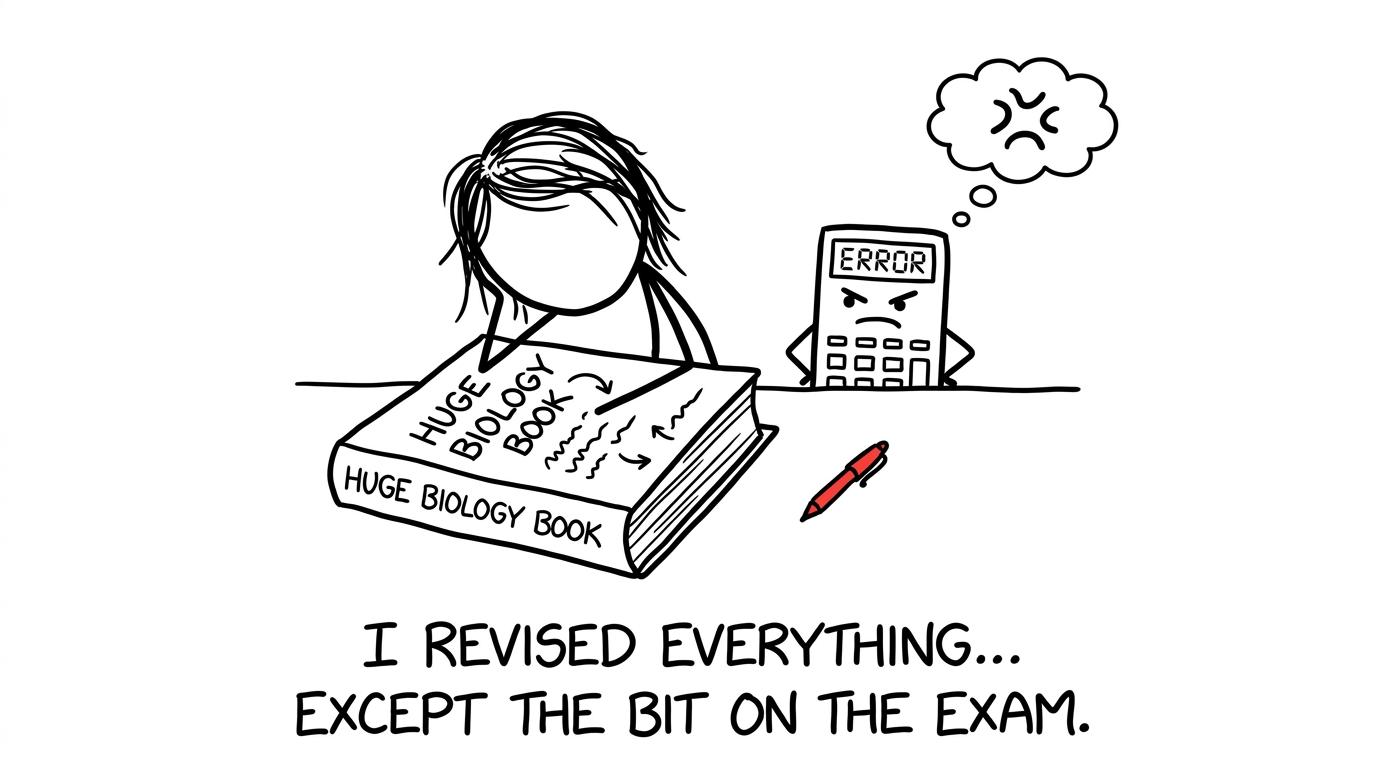 A student tries to memorise everything at once
The week plan (what to do each day)
This plan fits most GCSE timetables, whether you’re doing AQA, Edexcel, OCR or Eduqas Biology. Adjust the time blocks to match your actual exam days.
Two days before the GCSE Biology exam
- Do one mixed set of Biology questions under timed conditions.
- Mark it carefully and categorise mistakes: knowledge gap, exam wording, or maths/calc.
- Prepare a one-page “required practicals” sheet (aim, variables, method, risks, graph).
Then do a small maths session to keep momentum:
- Choose one weak topic from the question bank or lessons.
- Follow with 202020 303030 minutes from a mini test.
Good quick options:
One day before the GCSE Biology exam
This day is about confidence, not cramming.
- Practise required practical questions and mark scheme language.
- Do a short set on graphs and calculations (because these are predictable marks).
- Pack your bag: black pens, pencil, ruler, calculator (if allowed), water.
- Pick three “repeat offenders” from your error log and fix them.
Finish with gentle maths:
- One half paper or targeted questions only.
- Don’t chase brand-new topics tonight.
Use:
Morning of the GCSE Biology exam
- Eat something boring and reliable.
- Look at your one-page sheet only (not a whole book).
- Do one confidence task: a small calculation, a graph interpretation, or definitions you know.
The goal is to arrive feeling steady. You’re not trying to become smarter in the last 202020 minutes. You’re trying to become calmer.
Worked examples (Biology calculations, taught like maths)
Even in GCSE Biology, marks often hide inside calculations. Treat these like maths questions: write the formula, substitute, calculate, and round sensibly.
Worked example 1: Percentage change
A student’s heart rate increases from 727272 bpm to 909090 bpm.
Percentage increase is:
increaseoriginal×100=90−7272×100=1872×100=25% \frac{\text{increase}}{\text{original}} \times 100 = \frac{90-72}{72} \times 100 = \frac{18}{72}\times 100 = 25\% originalincrease×100=7290−72×100=7218×100=25%Common examiner expectation: you must show the substitution step. In GCSE mark schemes, method marks are often available even if the final answer slips.
Worked example 2: Magnification
An image of a cell measures 48 mm48\text{ mm}48 mm and the actual cell is 12 μm12\,\mu\text{m}12μm. Find the magnification.
First convert units so they match. Since 1 mm=1000 μm1\text{ mm} = 1000\,\mu\text{m}1 mm=1000μm:
48 mm=48×1000 μm=48000 μm 48\text{ mm} = 48\times 1000\,\mu\text{m} = 48000\,\mu\text{m} 48 mm=48×1000μm=48000μmMagnification:
magnification=image sizeactual size=4800012=4000 \text{magnification} = \frac{\text{image size}}{\text{actual size}} = \frac{48000}{12} = 4000 magnification=actual sizeimage size=1248000=4000So the magnification is ×4000\times 4000×4000.
This is the kind of GCSE Biology calculation that rewards tidy working. If you do A Level Maths, you already have the discipline; you just need to apply it.
Worked example 3: Required practical variables (structured like a method question)
Suppose you’re investigating how light intensity affects the rate of photosynthesis using pondweed.
Write it like a maths proof: define terms, then control what you’re not testing.
- Independent variable: distance of lamp (or measured light intensity)
- Dependent variable: bubbles per minute (or volume of oxygen produced)
- Control variables: temperature, type/length of pondweed, concentration of sodium hydrogencarbonate, time interval
A strong GCSE answer doesn’t just list variables; it states how you control them (e.g. “use a water bath to keep temperature constant”).
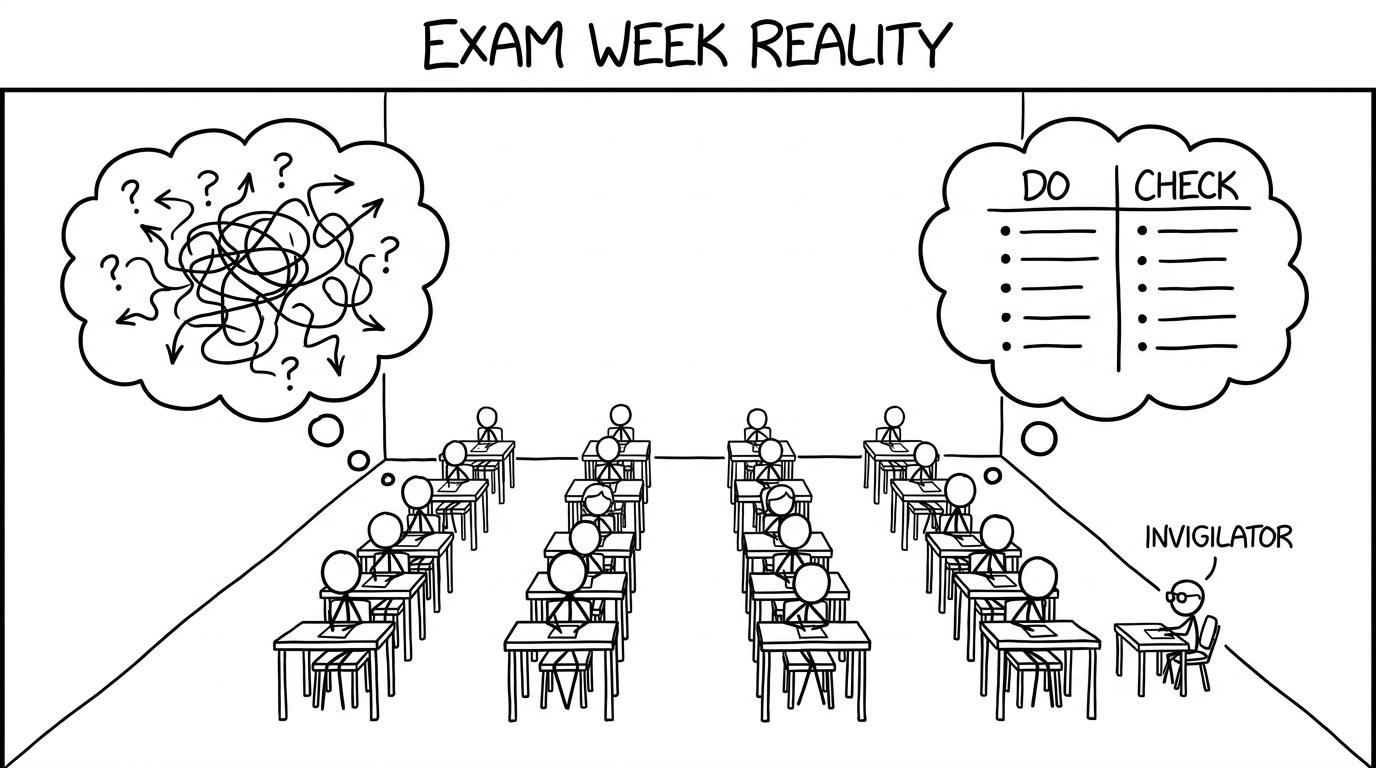 Exam hall planning beats panic
How to balance GCSE Biology with GCSE Maths in the same week
When Biology is urgent, maths can become the subject you “leave until later”. Later becomes after the exam season, which becomes never. The trick is to keep maths small but daily.
The 30-minute maths anchor
Every day of GCSE Biology exam week, do:
- 101010 minutes: fix one topic you keep dropping marks on
- 202020 minutes: timed practice and marking
Use YesGenie to avoid decision fatigue:
- If you’re Edexcel, run a past paper session and mark it.
- If you’re short on time, do a mini test.
- If you need targeted practice, use the question bank.
- If you’re unsure what to prioritise, open the resources hub and pick one clear task.
This is how you protect your GCSE Maths grade while pushing Biology up.
Common mistakes during GCSE exam week (and the fix)
Doing revision that feels productive but scores no marks
Reading, highlighting, rewriting notes can feel safe. But GCSE exams reward retrieval. The fix is to turn every topic into questions, even if you start by copying the style of the mark scheme.
Leaving marking until “later”
Unmarked work is like uncollected marks. The fix is simple: attempt, mark, fix, in one session. Treat the mark scheme like a coach, not a judge.
Ignoring command words
In GCSE Biology, “describe” is not “explain”, and “suggest” is not “state”. The fix is to practise with real questions and pay attention to how mark schemes separate description, explanation, and evaluation.
Panicking when you see numbers
Biology calculations often look unfamiliar, but the maths is usually basic: percentages, ratios, unit conversions, graph gradients. The fix is to show your method clearly and keep units consistent.
Sacrificing GCSE Maths entirely
You don’t need a full maths paper every day. You need a daily anchor. The fix is to commit to a small routine and use YesGenie past papers and mini tests to keep your skills warm.
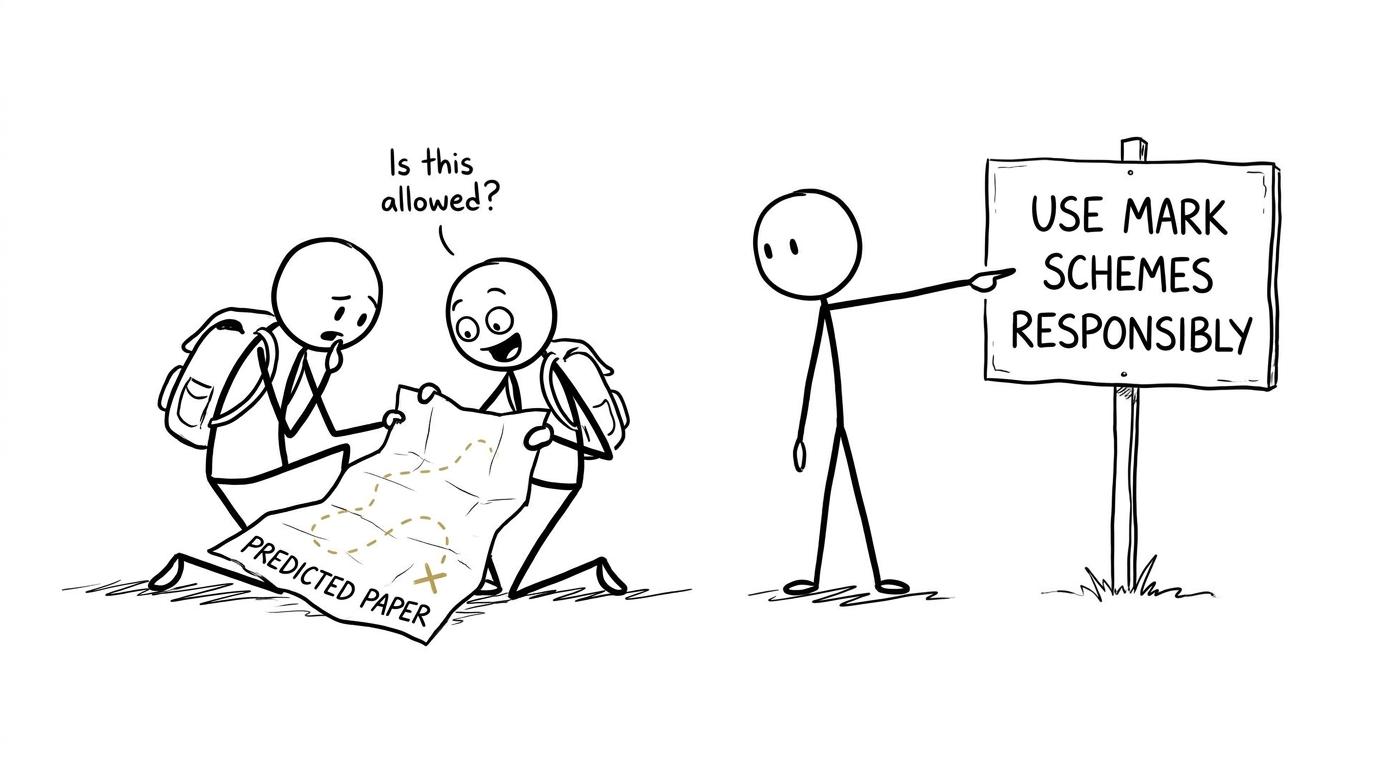 Predicted papers used responsibly
Closing: make GCSE exam week feel smaller
The strange truth about GCSE exam week is that it doesn’t get easier when you “try harder”. It gets easier when you make the day smaller: one checklist, two focused sessions, one timed practice, one marking review, then rest. That’s how you keep your confidence intact.
When you’re ready to switch back into maths mode, keep it simple and structured with YesGenie. Use the free revision lessons, question banks, mini tests, past papers, and predicted papers to practise exactly what the exam boards ask. Start with GCSE Past papers and build a routine you can repeat until the final paper. Your GCSE grades don’t come from heroic all-nighters; they come from calm consistency and honest marking.