Building Confidence Before the Resit
Building confidence before the resit takes focused practice. Use this calm GCSE maths resit plan to improve accuracy, timing and exam readiness.
A GCSE maths resit can feel heavier than the first attempt. You are no longer following the same timetable as everyone in Year 11. You may be balancing college lessons, coursework, employment or an apprenticeship, while the result you wanted still sits somewhere in the background.
Building confidence before the resit is not about convincing yourself that every topic is easy. It means collecting evidence that you can solve more questions, recover from mistakes and manage an exam paper more effectively than before.
Imagine a post-16 student opening a practice paper after college. The first difficult question brings back the disappointment of results day. The instinct is to close the paper. A better response is smaller: identify the topic, revise the method, answer three related questions and return tomorrow. Confidence begins there, with a useful action rather than a dramatic change in mood.
Your confidence-building checklist
Use this checklist to turn a vague goal into a practical plan:
- Confirm your exam board, tier, exam dates and entry with your college or exam centre.
- Complete a short diagnostic test without revising first.
- Sort mistakes by topic rather than simply counting marks.
- Repair one weak skill at a time using lessons and practice questions.
- Revisit corrected questions after a few days.
- Build gradually from mini tests to timed papers.
- Practise the routines you will use in the real examination.
The GCSE maths revision hub brings together exam-board resources, revision lessons, worksheets, practice questions and papers. Start with your actual specification rather than revising topics at random.
Understand what this resit is, and what it is not
A resit is not a verdict on your ability. It is another assessment under a new set of circumstances. You now know what a full GCSE maths series feels like, which parts of the paper slow you down and how exam pressure affects your decisions.
For students in England on relevant 16-19 study programmes, colleges are generally required to provide continued maths teaching where a grade 4 has not yet been achieved. That requirement can make resit lessons feel compulsory, but the qualification still serves a practical purpose. A stronger maths result may support future course, training and employment choices.
GCSE mathematics is available in the November series only to students who were aged 16 or over on 31 August of that year. Dates and entry arrangements can vary by qualification and centre, so always check the current timetable with your college. For example, the final Pearson Edexcel timetable for November 2026 places its three mathematics papers on 4, 6 and 9 November. Do not assume that a date found in an old revision post applies to your entry.
Build confidence from evidence
Confidence is often treated as a feeling that must arrive before work begins. In revision, it usually works the other way round. You complete a task, review it honestly and gain evidence that improvement is possible.
Start with a diagnostic session of 30-45 minutes. Choose a mixed set of questions and work without notes. Mark it carefully, then give every lost mark one label:
- knowledge gap
- method remembered incorrectly
- arithmetic or calculator error
- misread instruction
- unfinished because of timing
This distinction matters. A student who loses six marks through rushed arithmetic needs a different plan from one who has never understood ratio. Your total mark tells you where you are. The labels tell you what to do next.
If a full paper feels too exposed at first, use Edexcel GCSE maths mini tests or the equivalent resources for your board through the main revision hub. Short tests provide enough pressure to reveal weaknesses without turning every session into a complete mock.
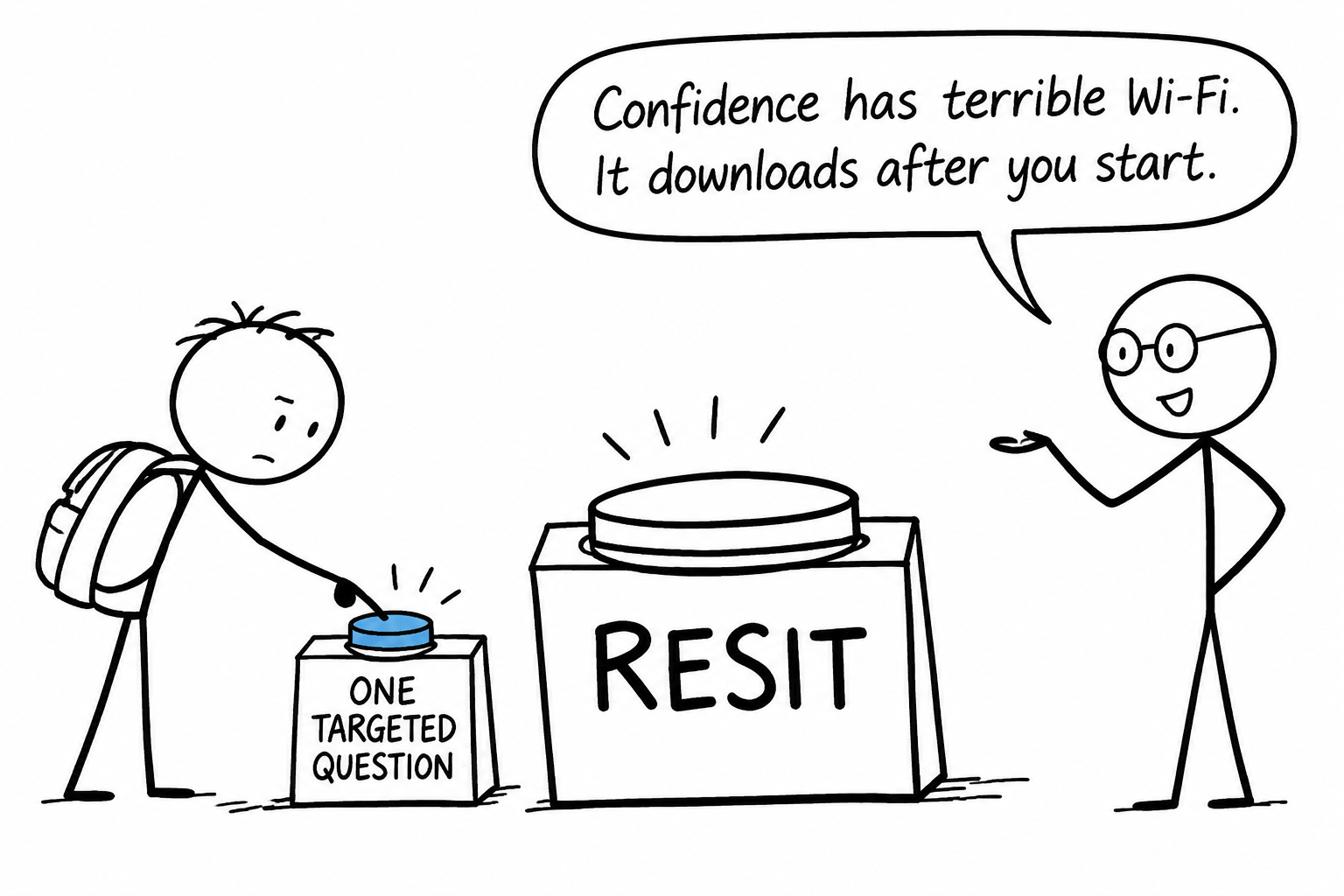 A post-16 student makes the resit feel smaller by starting with one targeted question
Use a repair, test and revisit cycle
Weak topics rarely improve because you watched one video and understood it at the time. Understanding during an explanation is useful, but the exam asks whether you can retrieve and apply the method independently.
Use a three-stage cycle.
Repair the method
Choose one specific skill from your diagnostic. Use a MathsGenie revision lesson, video solution or worked explanation, then complete practice questions while the method is fresh. Keep the target narrow. “Fractions” is broad; adding fractions with different denominators is actionable.
Test without support
Later that day, or the next day, answer a few questions without notes. Mark them with the available solutions or mark scheme. Where your method differs, find the precise line at which it stopped being valid.
Revisit after a gap
Return several days later. A correct answer after a delay is stronger evidence than a correct answer immediately after watching a solution. It shows that the method is becoming retrievable rather than merely familiar.
Use the free MathsGenie revision planner to organise these return visits around college, work and other subjects. A realistic 25-minute session completed three times is more valuable than a two-hour plan repeatedly postponed.
Make practice look more like the November resit
Topic practice builds methods. Timed mixed practice builds exam control. You need both.
Once your main gaps are improving, move to 45-minute GCSE maths tests. These sit between a worksheet and a full paper, helping you practise switching topics, selecting methods and moving on when a question stalls.
Then use GCSE maths past papers that match your board and tier. Complete them under suitable timed conditions, with the correct calculator rules and no interruptions. Afterwards, use the mark scheme and video solutions to investigate every lost mark.
Do not revise only to produce a higher score on the next paper. Revise to understand why the score changed. A four-mark improvement caused by better checking is useful. A four-mark improvement caused by a paper containing your favourite topics may not represent the same progress.
The Mock Exam Builder is especially useful here because you can build a paper around the areas that need attention. It turns “I need to get better at maths” into a defined set of questions that can be completed, marked and reviewed.
Practise an exam-day routine
Anxiety grows when the next action is unclear. A routine removes some of that uncertainty.
Before each timed practice, prepare your equipment, silence your phone and decide what you will do when stuck. A sensible routine is to underline key information, attempt the first step, leave space and return later. This prevents one stubborn question from consuming time that could earn marks elsewhere.
Also practise checking with purpose. Re-read units, signs, calculator entries and the exact instruction. If a question asks you to show working, make the reasoning visible. If it requests an estimate, do not give an unexplained calculator value.
In the final week, avoid replacing sleep with an exhausting sequence of papers. Use the free revision planner to schedule shorter reviews, selected questions and manageable timed practice. The aim is readiness, not punishment.
Common mistakes when building resit confidence
Repeating only comfortable topics
Familiar questions feel reassuring, but confidence built only on easy material is fragile. Keep some secure topics in each session, then include one area that genuinely needs repair.
Completing papers without reviewing them
A marked paper is a diagnosis, not the end of the task. Record why each mark was lost and complete a related question while the lesson is clear.
Treating one low score as a prediction
Scores move with topic mix, concentration and marking accuracy. Look for patterns across several pieces of work rather than allowing one result to define the entire resit.
Changing methods constantly
Collecting several approaches can create confusion. Choose one valid method that you understand, practise it consistently and compare it with the mark scheme.
Waiting to feel motivated
Post-16 timetables are busy. Revision needs a fixed place rather than perfect motivation. A short scheduled session lowers the effort required to begin.
Take the next useful step
Building confidence before the resit is quieter than it sounds. It is a sequence of corrected errors, remembered methods and papers that become less unfamiliar. You do not need to erase the previous result. You need to use what it taught you.
Choose three weak topics from your latest assessment, then build a targeted practice paper in Mock Exam Builder. Sit it, mark it and let the evidence shape your next session. MathsGenie gives you the free lessons, practice questions, mini tests, past papers, mark schemes and video solutions. Your job is simply to begin with the next useful question.