Urban vertical farming startups have faced tightening margins and escalating operational expenses. In 2023, industry expansion slowed, with indoor hydroponic farms opening fewer new facilities compared to previous high-growth years.
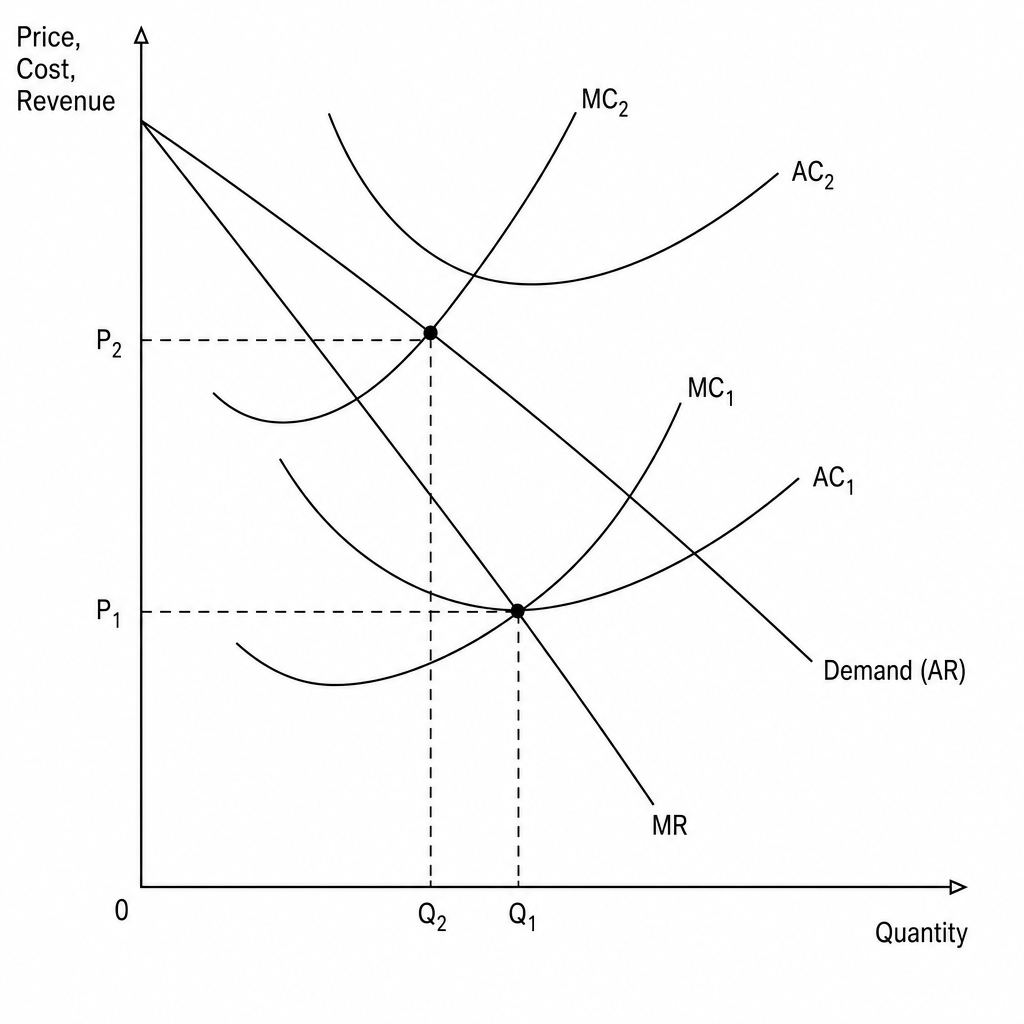
By 2024, multiple cost pressures hit the sector simultaneously: electricity tariff increases raised LED lighting and climate-control costs, qualified agricultural technician shortages led to an 8.5% increase in specialist labor wages, and urban commercial rents for warehouse space rose steadily.
Despite these challenges, premium grocers and high-end restaurants frequently prioritised fresh, locally-grown, pesticide-free greens over cheaper, soil-grown imported produce. Vertical farm operators must therefore innovate to maintain their premium appeal and reliability to stay competitive. However, with average net profit margins for vertical farms hovering around 4%, many struggle to survive when large, well-capitalised national agricultural conglomerates expand into urban distribution.
Using a cost and revenue diagram, discuss the likely impact of 'rising operating costs' (Extract A) on the profitability of urban vertical farming startups.