With reference to Figure 1 and Extract A, explain two likely influences on the level of Canadian real household consumption.
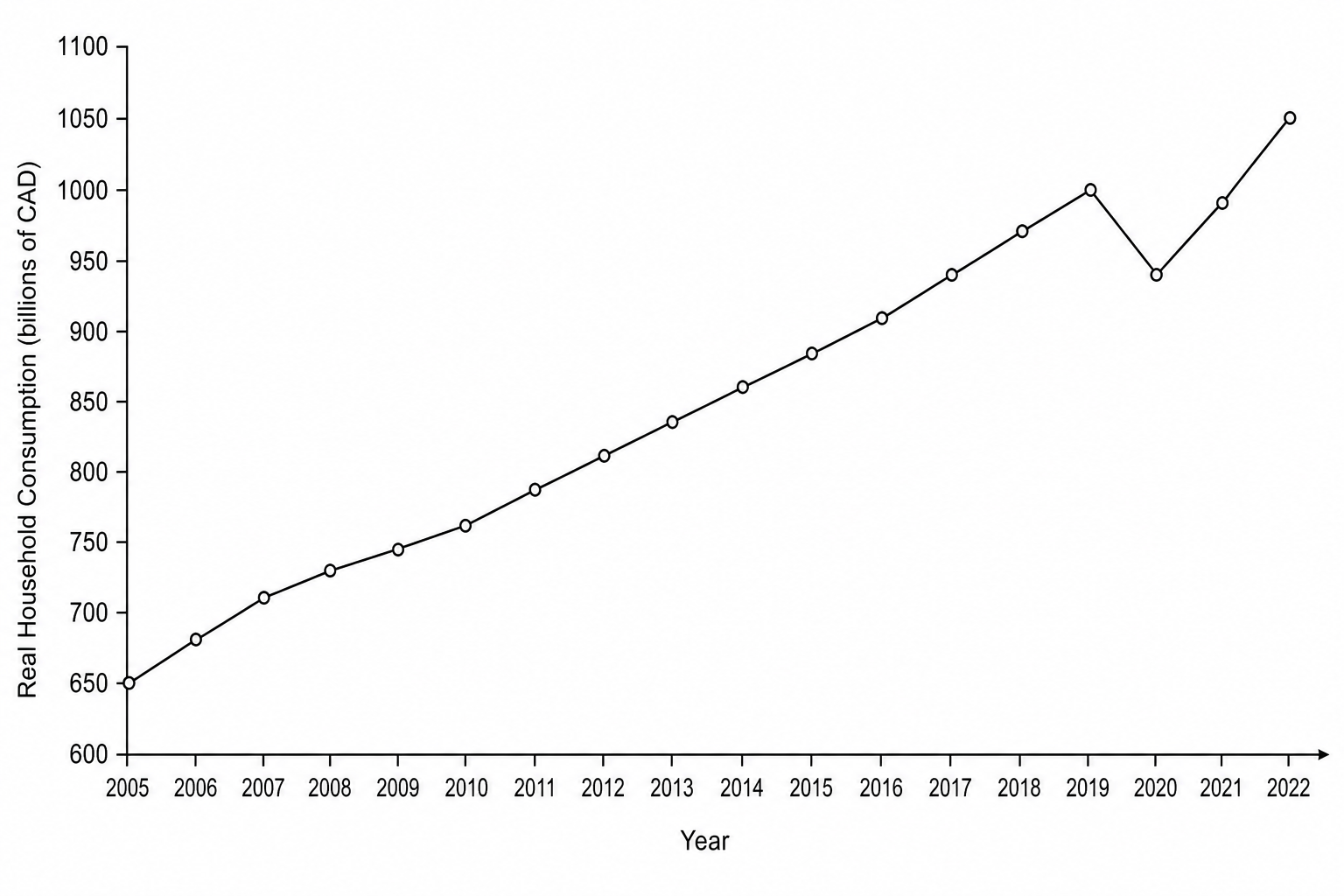
| Year | Rate (billions of CAD) |
|---|---|
| 2005 | 650 |
| 2007 | 710 |
| 2010 | 760 |
| 2012 | 810 |
| 2014 | 860 |
| 2016 | 910 |
| 2018 | 970 |
| 2019 | 1000 |
| 2020 | 940 |
| 2021 | 990 |
| 2022 | 1050 |
Despite high inflation and rising living costs, Canadian consumer spending rose robustly throughout 2022. Real household consumption increased by billions of dollars compared with 2021 levels. This resilience was initially supported by large pandemic-era savings cushions and a tight labor market that drove wage increases. However, the Bank of Canada increased its policy interest rate dramatically throughout 2022 to combat inflation, raising borrowing costs on variable-rate mortgages and lines of credit.
Household debt levels in Canada remain among the highest in the G7. Many consumers have increasingly relied on short-term credit and personal loans to sustain their spending patterns as high prices erode purchasing power. This persistent reliance on credit has raised concerns among policymakers at the Bank of Canada regarding household vulnerabilities, especially as mortgage renewals at higher rates loom. More expensive debt servicing costs are expected to constrain future discretionary spending.

