The diagram shows the biochemical pathways involved in the excretion of nitrogenous waste in human hepatocytes.
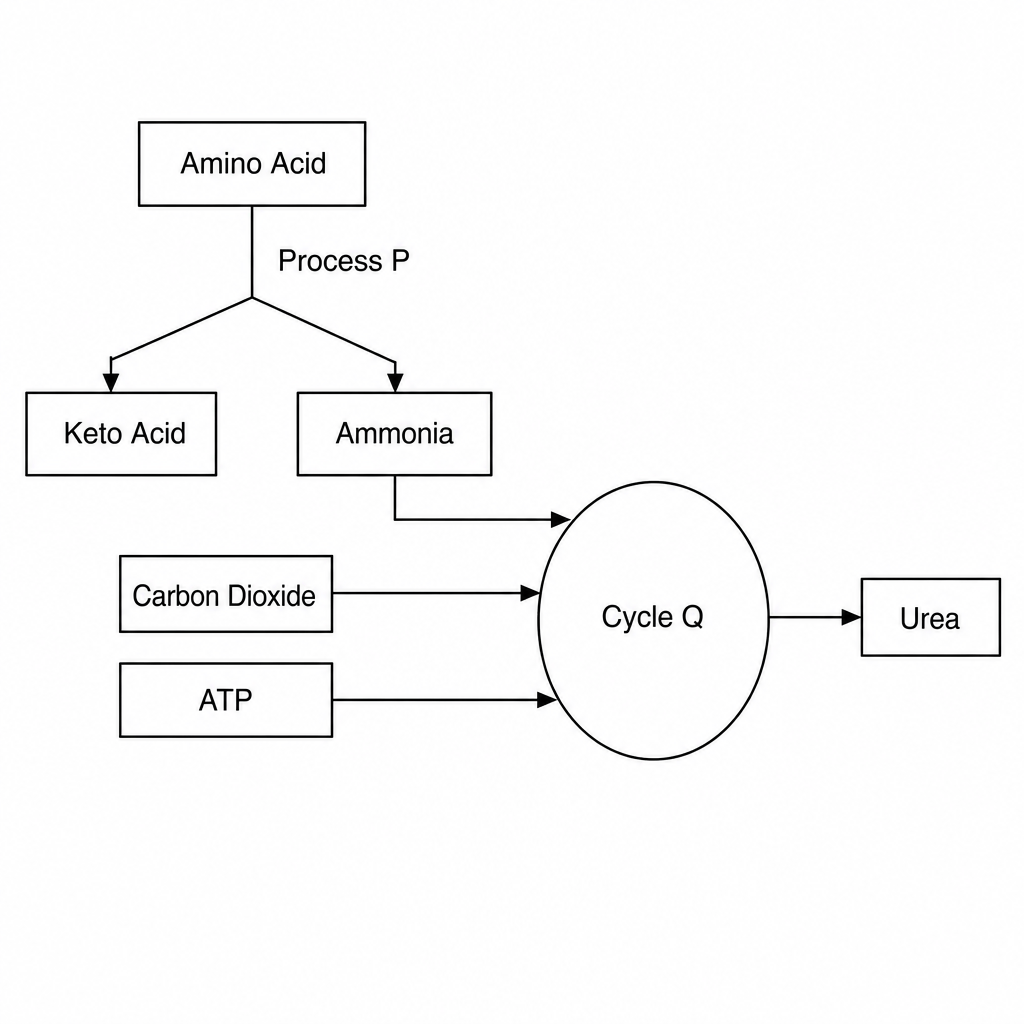
Which row in the table correctly identifies Process P, Cycle Q, the fate of the keto acid, and the relative toxicity of urea?
Process P: Deamination | Cycle Q: Ornithine cycle | Fate of Keto Acid: Respired or stored as glycogen/lipids | Toxicity of Urea: Lower than ammonia
Process P: Transamination | Cycle Q: Ornithine cycle | Fate of Keto Acid: Excreted in urine by the kidneys | Toxicity of Urea: Higher than ammonia
Process P: Deamination | Cycle Q: Krebs cycle | Fate of Keto Acid: Excreted in urine by the kidneys | Toxicity of Urea: Lower than ammonia
Process P: Transamination | Cycle Q: Krebs cycle | Fate of Keto Acid: Respired or stored as glycogen/lipids | Toxicity of Urea: Higher than ammonia