An engineering technician constructs experimental spring assemblies by joining high-tensile extension springs together using circular metal O-rings. They use a horizontal tension rig to stretch each assembly against a metric ruler.
For each assembly, they record:
Then they calculate the difference in length (extension) for each assembly.
The table below shows some of the results.
| Number of extension springs | Length when tension = 5.0 N5.0\text{ N}5.0 N (cm) | Length when tension = 2.0 N2.0\text{ N}2.0 N (cm) | Difference in length (cm) |
|---|---|---|---|
| 1 | 15.6 | 13.8 | 1.8 |
| 2 | 32.4 | 28.7 | 3.7 |
| 3 | 49.2 | 43.6 | 5.6 |
| 4 | 66.0 | 58.5 | 7.5 |
| 5 | 82.8 | 73.4 | [Missing] |
Calculate the missing difference in length.
The technician measures the outer diameter of one metal O-ring from the assembly against the ruler.
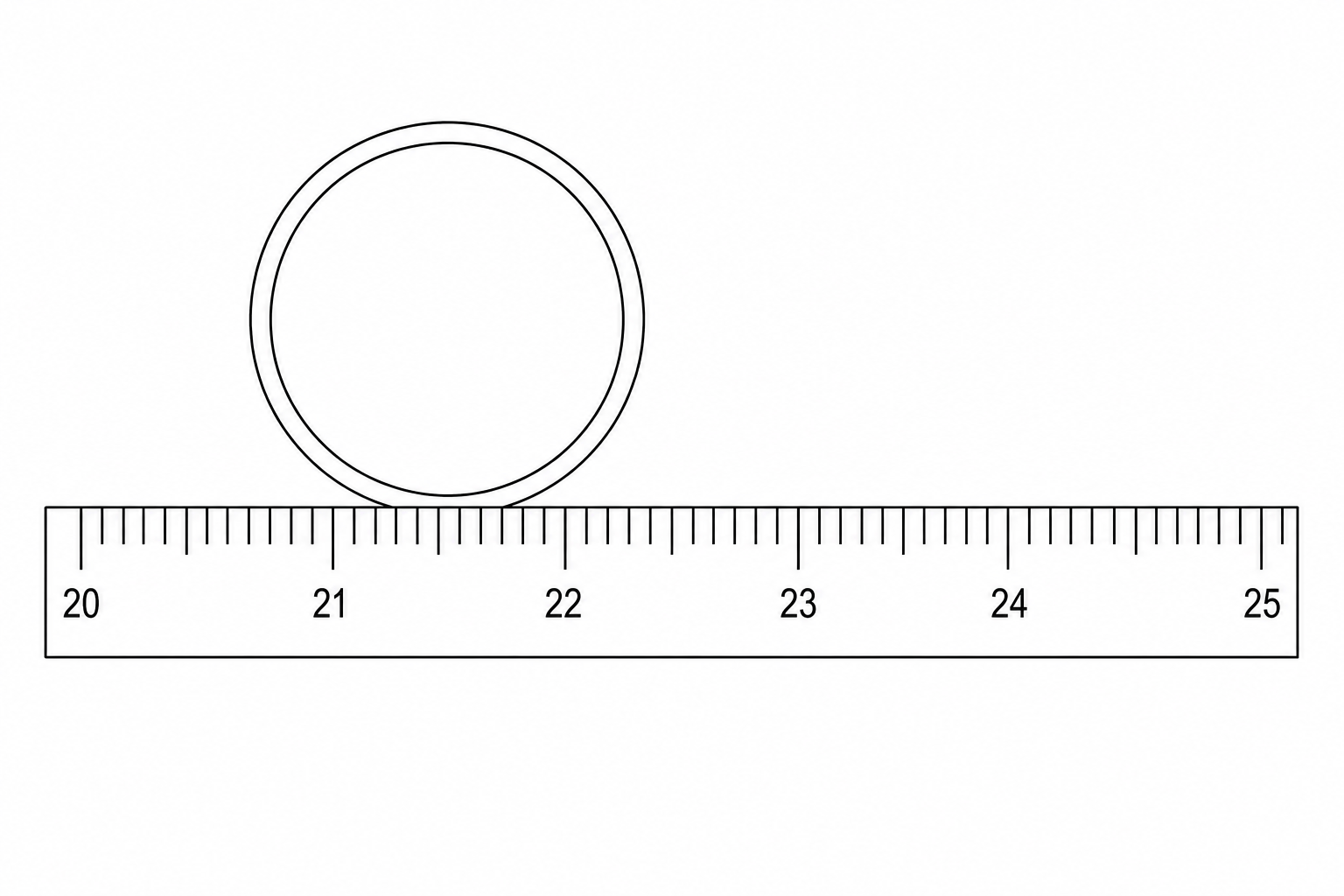
Estimate the diameter of this O-ring.
Suggest two ways that the technician could improve their measuring technique when measuring the length of the assembly.

