Cash and profit measure different things
Definition
Cash: money the business has available to make payments now.
Profit: the amount left when total costs are subtracted from revenue over a period of time.
- Profit measures whether revenue is greater than costs over a period, while cash measures whether money is available at a particular time to make payments.
- The timing can differ because business transactions do not always move cash at the same moment that revenue or costs are recorded.
Credit sales can increase revenue before the cash arrives
- When a business sells on credit, the sale contributes to revenue in the trading period even though the customer may not pay until weeks later, so the sale can contribute to profit before it increases the bank balance.
- If many customers owe money while wages and suppliers must be paid now, the business can report a profit yet still have too little cash to meet its immediate payments.
Example
- A business makes a credit sale in March but the customer will not pay until May, so March records the sale while the cash inflow appears later.
- If wages and supplier bills fall due before May, the business may need cash from elsewhere even though the sale has improved its trading result.
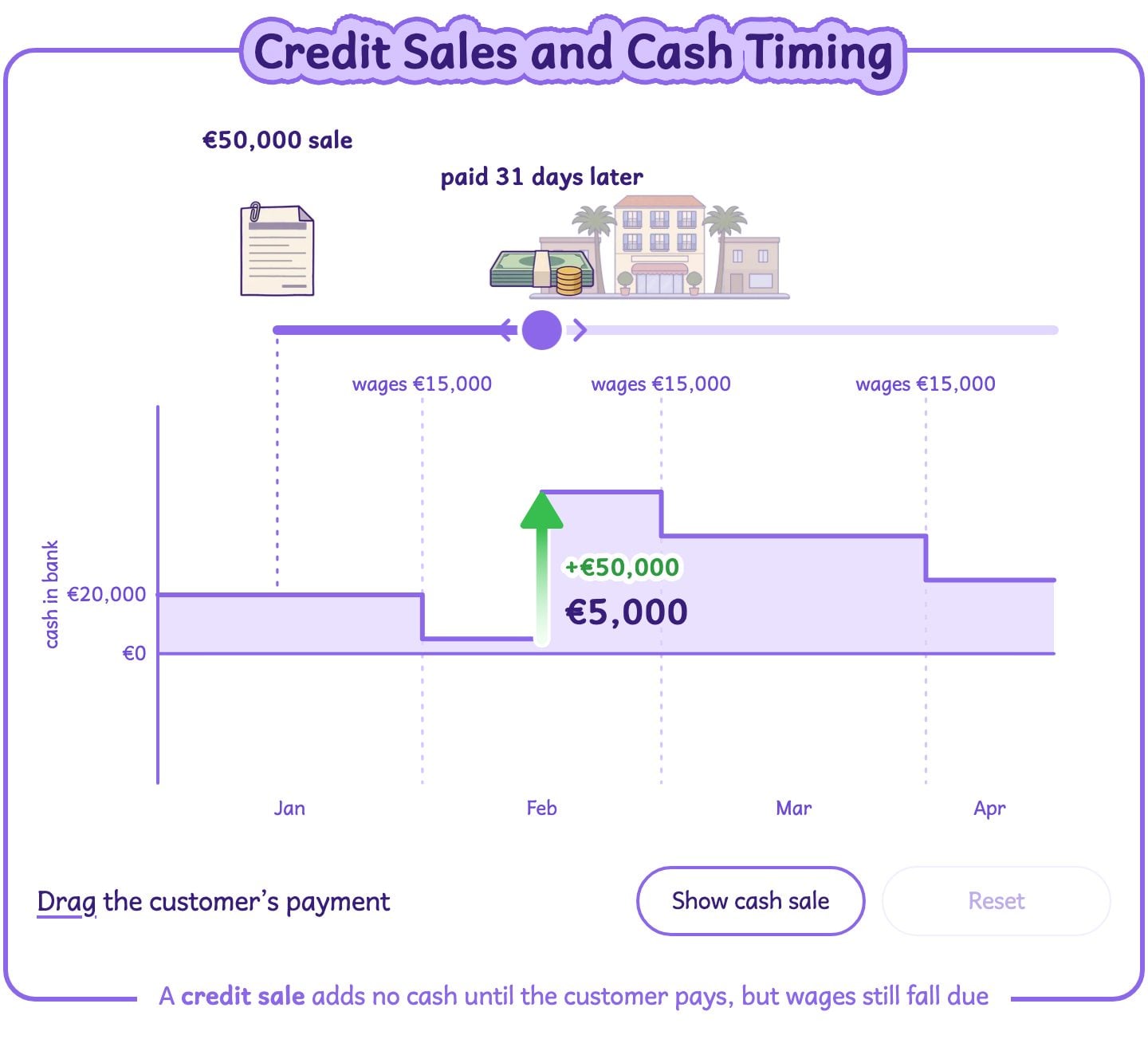
Follow the credit sale and see that cash does not arrive until the customer pays, though wages are due.
Some cash movements do not create profit
- Taking a loan or receiving new investment raises cash, but neither is sales revenue, so the cash increase does not by itself mean the business has made a profit.
- Buying a non-current asset or repaying borrowed capital uses cash, but these payments are not treated in the same way as the ordinary trading costs used to calculate profit for that period.
Common Mistake
Do not use the words cash and profit as if they mean the same thing: a cash inflow can come from borrowing, and a profitable credit sale may not provide cash until later.
A healthy business needs both profit and enough cash at the right time
- A profitable but cash-poor business can fail because it cannot make payments when they are due, while a cash-rich business can still be unprofitable if its bank balance has been boosted by borrowing rather than successful trading.
- Managers therefore monitor profit to judge trading performance and cash to judge whether the business can continue paying its short-term commitments.
Exam technique
- Ask whether the item changes trading revenue or costs, cash, or both.
- For a credit sale, separate when the sale is recorded from when the customer actually pays.
- When explaining business failure, show how a lack of cash prevents payments even if profit is positive.
Self review
- What is the difference between cash and profit?
- Why can a credit sale affect profit before it affects cash?
- Why does taking a loan increase cash but not profit?
- How can a profitable business still run out of cash?
- Why might a cash-rich business still be making a loss?