Cash-flow forecasts record when money is expected to enter and leave the business
Definition
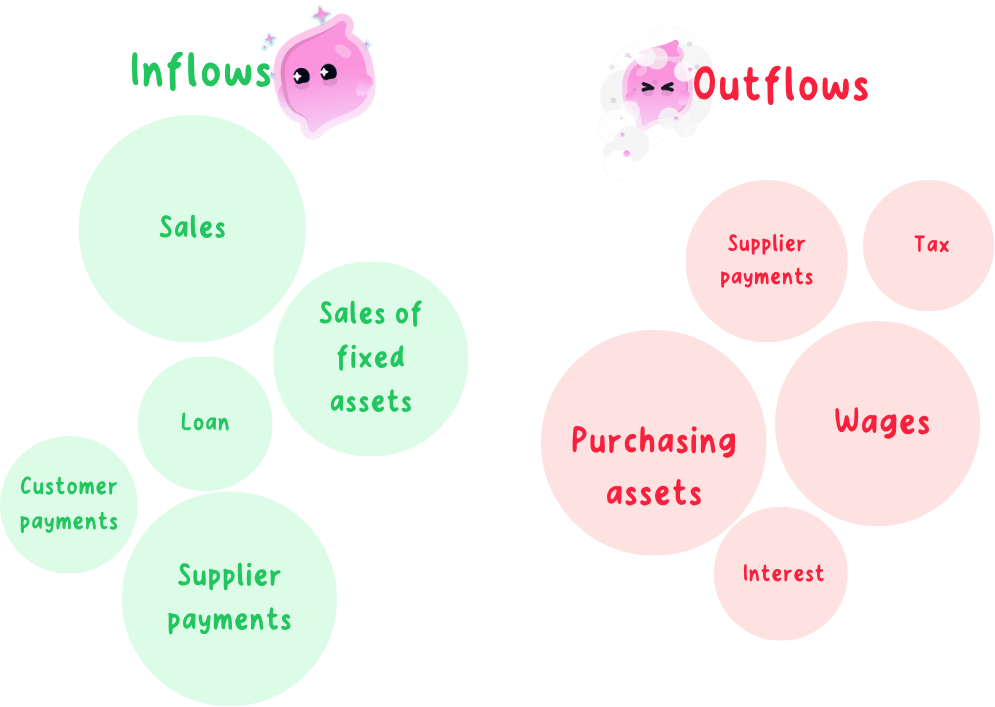
Cash inflow: money expected to enter the business, such as customer payments, borrowing, owner investment or money received from selling an asset.
Cash outflow: money expected to leave the business, such as payments to suppliers, wages, rent or loan repayments.
- A cash-flow forecast places each amount in the period when the money is expected to move, so it focuses on the timing of cash rather than when a sale or purchase was first agreed.
- For example, if a credit customer buys in March but is expected to pay in May, the forecast records the cash inflow in May because that is when the business expects to receive the money.
Inflows include trading receipts and finance entering the business
- Customer payments from sales are usually the main inflow, but a business can also receive cash from a bank loan, new owner investment or the sale of an asset.
- A loan is still an inflow even though it is not revenue or profit, because a cash-flow forecast records money moving into the bank account rather than the reason the money was received.
Outflows include operating payments and other cash leaving the business
- Regular outflows can include inventory purchases, wages, rent and utilities, while one-off outflows can include buying equipment or making a large repayment.
- A large one-off payment can make one month much weaker than the others, which is why the timing of an outflow matters when managers interpret a forecast.
Example
- A market stall expects £4,000 of customer payments in January.
- Its expected outflows are £1,500 for inventory, £900 for wages and £600 for rent.
- Inflows are greater than outflows, so the business receives more cash than it pays out during the month.
Forecasting the timing gives managers a chance to act early
- If expected outflows are unusually high or an inflow is delayed, managers can see the pressure before the month begins and may be able to delay spending, chase customer payments or arrange short-term finance.
- The forecast is based on estimates, so managers should update it when the timing or amount of expected receipts and payments changes.
Exam technique
- Classify an item by the direction of the cash movement: money received is an inflow and money paid is an outflow.
- Place the amount in the period when cash is expected to move, especially when credit delays payment.
- Do not exclude loans or owner investment just because they are not revenue; they are still cash inflows.
Self review
- What is a cash inflow? Give two examples.
- What is a cash outflow? Give two examples.
- Why is a bank loan recorded as a cash inflow?
- A credit customer buys in March and pays in May. In which month is the inflow forecast?
- Why can a one-off equipment payment create a weak cash-flow month?
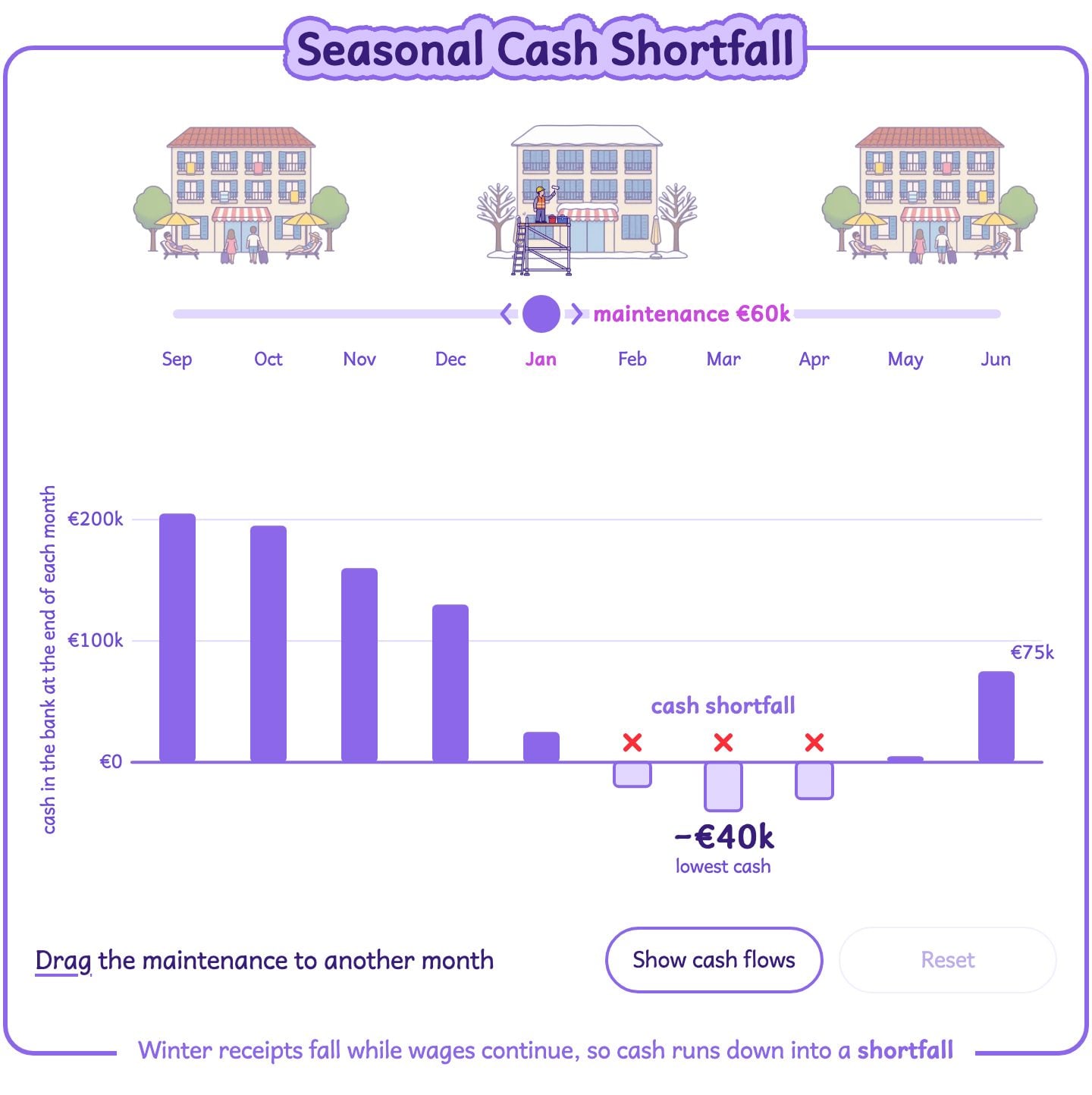
Watch receipts fall in winter while wages continue, and see the cash balance run down into a shortfall.