Cash keeps a business able to pay what is due now
Definition
Cash: money the business has available to make payments now, including money held in its bank account.
Insolvency: the position where a business cannot pay its debts when they fall due, which can force it to stop trading.
- Cash is needed to pay suppliers for materials and inventories, overheads such as rent and energy, and employees' wages or salaries when those payments become due.
- These payments cannot always wait for the business's customers to pay, so a business can be trading successfully but still face a cash shortage if receipts arrive too late.
Analogy
Cash is like fuel in a car: the journey may be worthwhile overall, but the car still stops if the fuel runs out before the next refill.
Running out of cash can stop normal operations very quickly
- If suppliers are not paid they may stop delivering, while late wage payments can damage morale and cause employees to leave, making it harder for the business to keep operating.
- If the business cannot raise enough cash to meet debts when they fall due, it becomes insolvent and may ultimately have to stop trading even if it owns valuable assets or expects future sales.
Example
A building contractor may have profitable projects underway but still face insolvency if customers pay after wages, suppliers and other bills are due and the business has no cash reserve or finance available.
Managing the timing of cash helps prevent insolvency
- Businesses can protect their cash position by encouraging customers to pay on time, negotiating suitable payment periods with suppliers and keeping access to a cash reserve or agreed short-term finance.
- The next step is forecasting when cash will enter and leave the business so a shortage can be identified before a payment is missed.
Exam technique
- Name the payment the business needs cash for, such as suppliers, overheads or employees.
- Trace what happens if the business cannot make that payment when it is due.
- Link a continuing inability to pay debts to insolvency rather than assuming that low cash automatically means the business has made a loss.
Self review
- Name three groups of payments a business needs cash to make.
- What is insolvency?
- How can late customer payments create a cash shortage?
- Why can a business with valuable assets still become insolvent?
- Give two ways a business can reduce the risk of running out of cash.
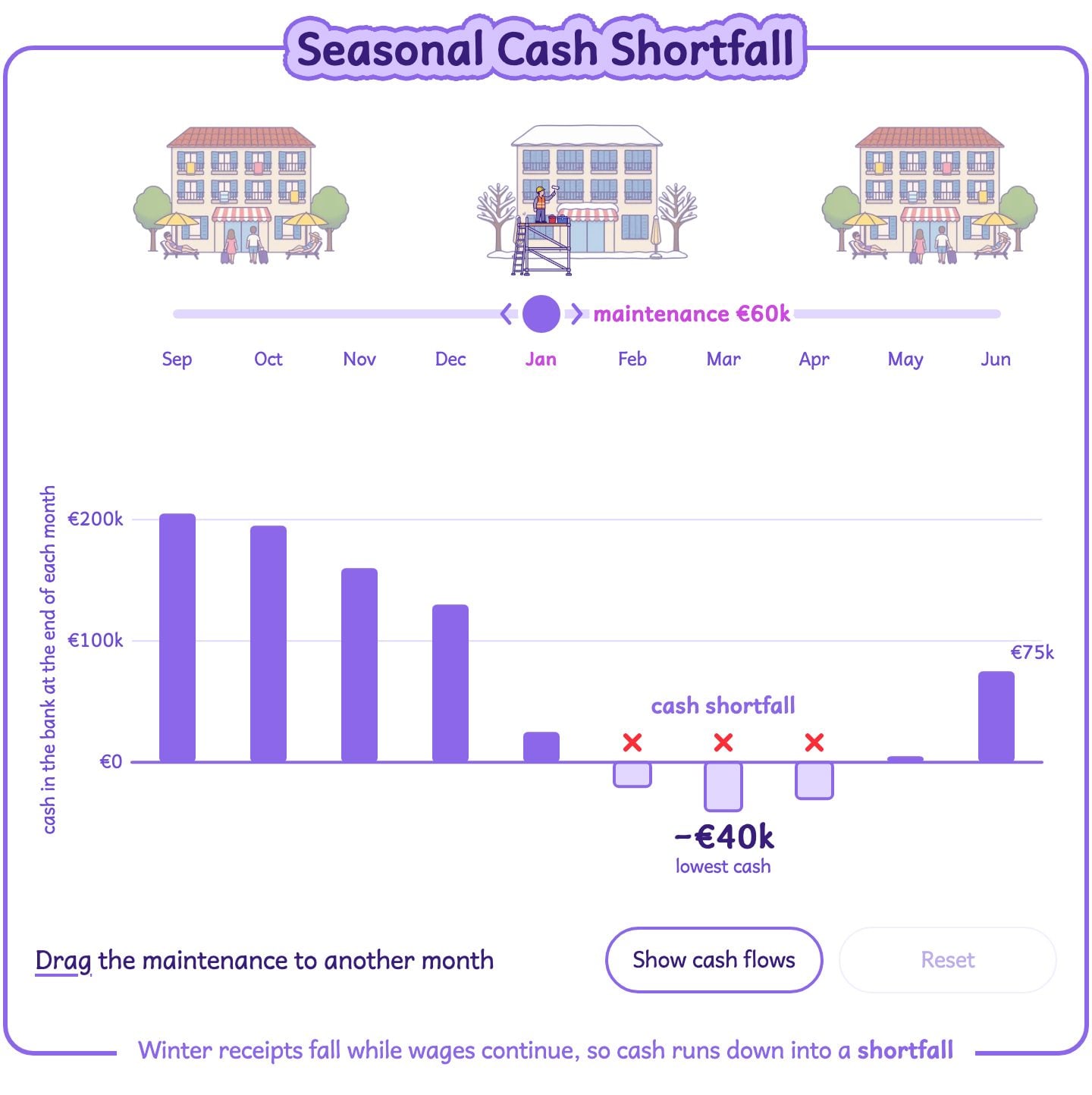
Watch receipts fall in winter while wages continue, and see the cash balance run down into a shortfall.