Skip to content
MathsGenie logo
Open app

Course home

  1. IGCSE
  2. Biology Edexcel
  3. Question bank

Level of organisation

EasyMedium
123456789
Question 9

The diagram below shows the major internal organs of a mammalian body.
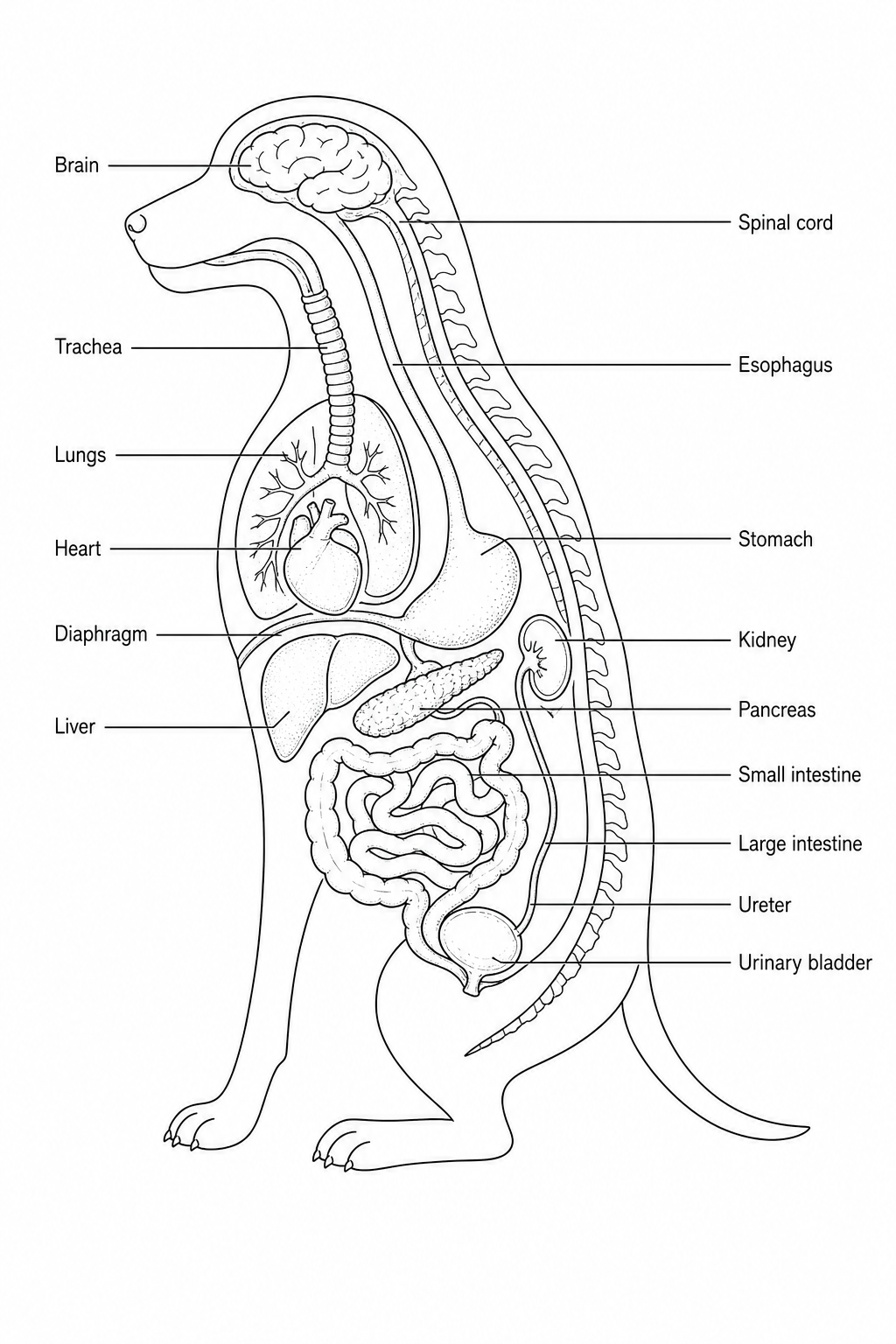
Schematic sagittal view of a mammal showing the main internal organs. The brain is located in the cranial cavity of the head, connected to the spinal cord. The trachea leads from the mouth/nasal cavity down to the lungs. The heart is located ventral to the lungs in the thoracic cavity. Below the diaphragm, the esophagus leads to the stomach. The liver lies anterior and ventral to the stomach, and the pancreas is located adjacent to the loop of the small intestine. The stomach leads through the small intestine to the large intestine. Towards the dorsal wall of the abdomen, the kidney is shown with a ureter leading to the urinary bladder.

a.

(i) What is meant by the term organ?

[2]
b.

(ii) Name the organ labelled in the diagram that is part of the circulatory system.

[1]
c.

(iii) Name three other mammalian organ systems shown in the diagram.

[3]
d.

(iv) Name one organ system that is not represented by any of the labelled organs in the diagram.

[1]
e.

The table lists several physiological processes that take place in mammalian organs. Complete the table by identifying the correct organ from the diagram for each process:


  • Pumping of blood at high pressure
  • Production of bile and urea
  • Gas exchange between air and blood
  • Secretion of the hormone insulin
  • Digestion of proteins in an highly acidic environment
[5]

Level of organisation Questions

  1. IGCSE
  2. /Biology
  3. /Level of organisation