Controlling Blood Glucose
Blood glucose
The concentration of glucose (sugar) dissolved in the blood, which the body keeps within narrow limits so cells always have a supply for respiration.
Insulin
A hormone that lowers blood glucose concentration; people with type 1 diabetes must be given insulin.
- Blood glucose is the concentration of glucose in the blood.
- It must be kept within narrow limits so cells always have glucose for respiration.
- Insulin is a hormone that decreases the blood glucose concentration.
The role of insulin in lowering blood glucose is Core; the fuller control by the liver and glucagon, and diabetes, are Supplement (Extended).
The Roles of Insulin and Glucagon
Glucagon
A hormone released by the pancreas when blood glucose is too low; it makes the liver break down glycogen into glucose and release it into the blood.
Glycogen
A carbohydrate stored in the liver and muscles that can be broken down into glucose when blood glucose is low.
- Both hormones are made by the pancreas and act on the liver.
- When blood glucose is too high, the pancreas releases insulin.
- Insulin makes the liver convert glucose into glycogen for storage, lowering blood glucose.
- When blood glucose is too low, the pancreas releases glucagon.
- Glucagon makes the liver break glycogen back down into glucose, raising blood glucose.
- This is an example of negative feedback, keeping blood glucose near its set point.
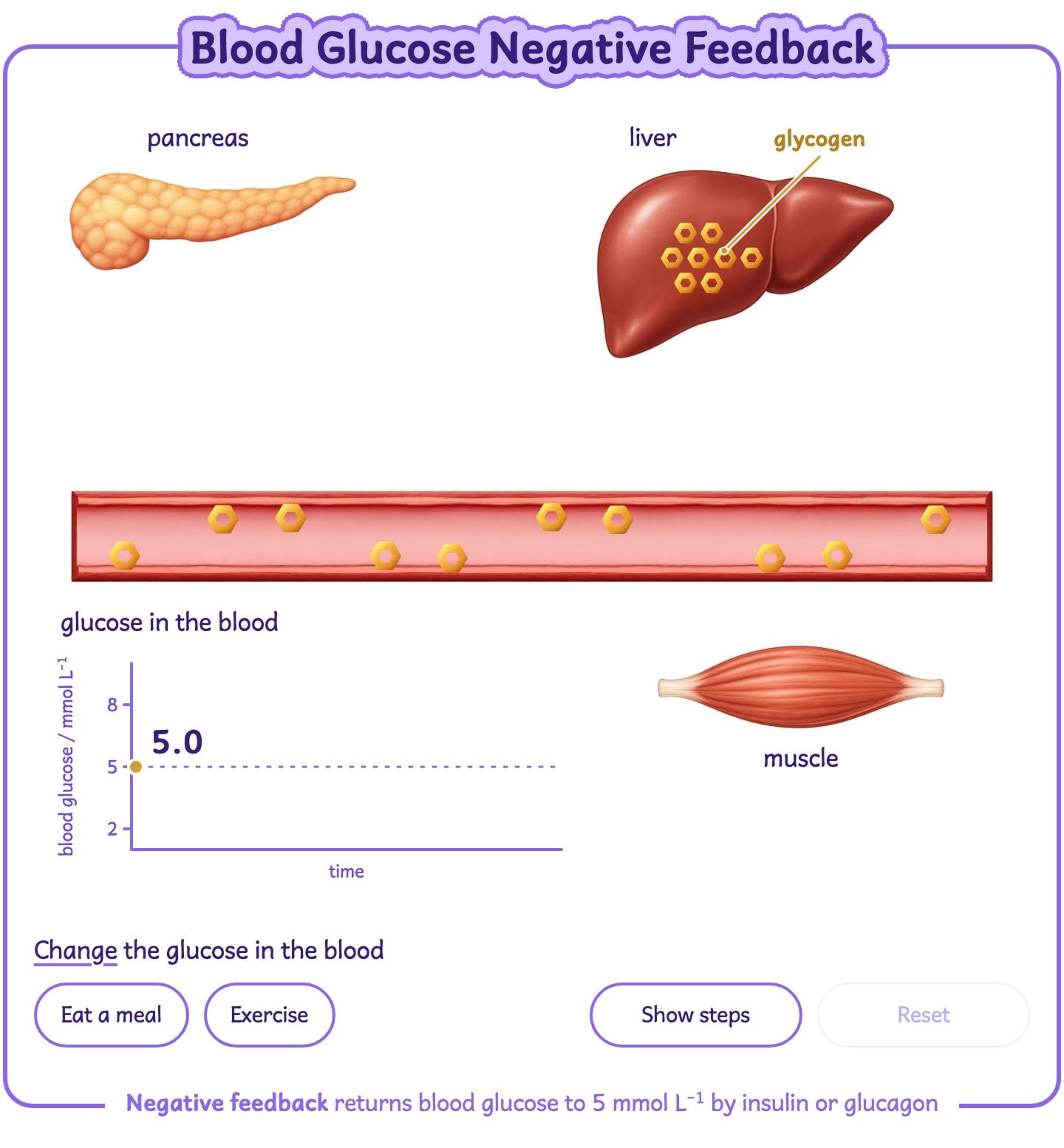
Change blood glucose and watch insulin or glucagon act to return it to the normal level.
Type 1 Diabetes
Diabetes
A condition in which blood glucose concentration cannot be controlled properly and can rise dangerously high, either because too little insulin is made (type 1) or because the body's cells stop responding to insulin (type 2).
- In type 1 diabetes, the pancreas cannot make enough insulin.
- Blood glucose can then rise dangerously high after eating.
- It is treated by injecting insulin, often before meals.
- People also manage it by controlling their diet and monitoring their blood glucose.
Insulin must be injected, not swallowed, because it is a protein that would be digested in the stomach.
Reading a Blood Glucose Graph
- After a meal, blood glucose rises, then insulin brings it back down.
- Between meals or during exercise, blood glucose falls, then glucagon brings it back up.
- In a person with untreated diabetes, blood glucose stays high for much longer.
- What effect does insulin have on blood glucose concentration?
- What does the liver do when insulin is released?
- Which hormone is released when blood glucose is too low?
- Why must insulin be injected rather than taken by mouth?
- How is type 1 diabetes treated?