A student investigates static electricity using a latex balloon.
Explain in terms of electrons why the latex balloon is normally uncharged.
Explain in terms of electrons why the balloon becomes charged when the student rubs it against a woolen sweater.
The diagram shows the electric field between two charges, X and Y.
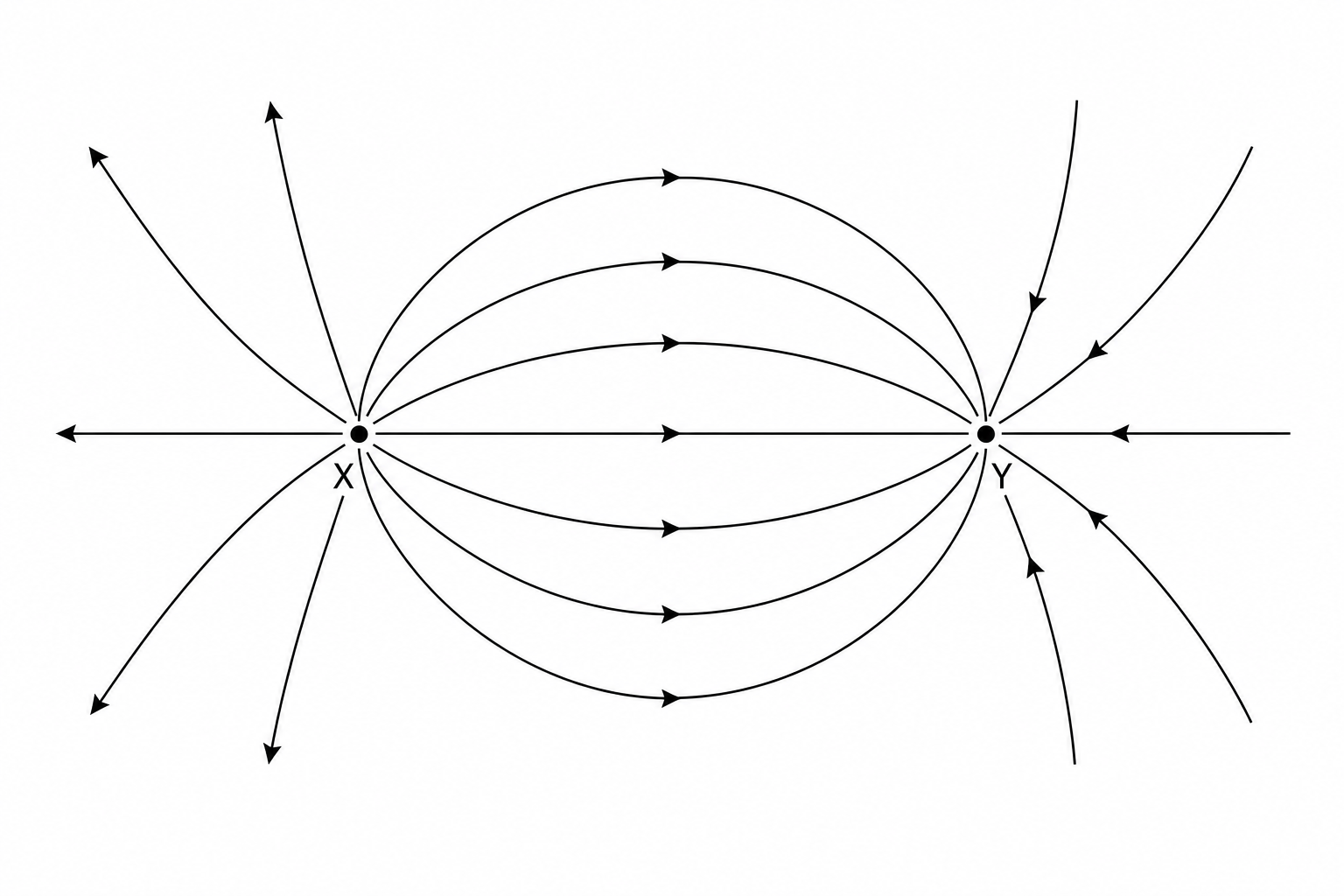
State the signs of the charges X and Y. Use the diagram to explain your answer.
Describe one similarity between this electric field line diagram and a magnetic field line diagram between two opposite magnetic poles.
Calculate the charge when 450 J450\text{ J}450 J of energy is transferred with a potential difference of 18 V18\text{ V}18 V.
Use the equation: energy transferred=charge×potential difference\text{energy transferred} = \text{charge} \times \text{potential difference}energy transferred=charge×potential difference