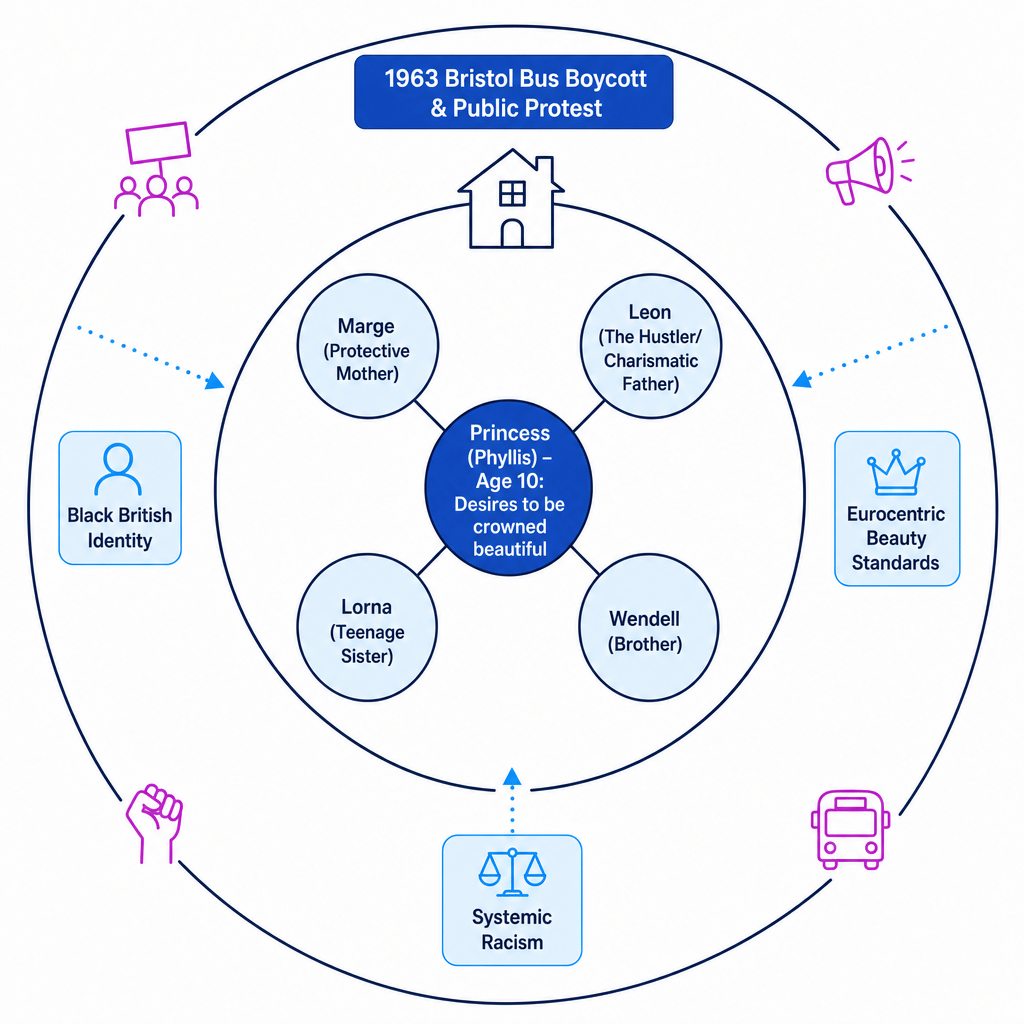
Crucial Historical Context (AO3)
You cannot fully appreciate this play without understanding its historical setting. In 1963, Britain did not have comprehensive laws outlawing racial discrimination in housing or employment.
The Bristol Bus Boycott
- The Cause: The Bristol Omnibus Company, run by the local authority, operated a "colour bar"—a policy that explicitly refused to employ Black or Asian bus crews (drivers and conductors), despite a severe labour shortage.
- The Protest: Inspired by the Montgomery Bus Boycott led by Rosa Parks in the USA, local West Indian activists, including Paul Stephenson and Roy Hackett, organized a boycott of the city's buses starting in April 1963.
- The Outcome: The boycott lasted for four months, gaining national attention and widespread support from Bristol university students and some local politicians. On 28th August 1963 (the very same day Martin Luther King Jr. delivered his "I Have a Dream" speech in Washington), the bus company capitulated and announced an end to the colour bar.
Why this matters for your exam
Odimba does not just write a dry historical reenactment. She uses the Bristol Bus Boycott to show how political actions divide and unite families. For instance, Leon ("The Hustler") is initially cynical about the protest, viewing it as a distraction from financial survival, whereas other characters find their political voices through it.
Key Structural Techniques (AO2)
Odimba employs several powerful dramatic techniques to structure her narrative:
- The Pageant Motif: Princess's obsession with the Weston-super-Mare beauty pageant runs throughout the play. The pageant is a symbol of Eurocentric beauty standards. Princess believes that by winning, she will prove she is a "real" princess, highlighting how young Black children internalise white-dominated beauty standards.
- Dramatic Irony: As a modern audience, we know the historical significance and successful outcome of the Bristol Bus Boycott. However, the characters are living through it in real-time, filled with fear, uncertainty, and doubt about whether their sacrifices will yield any results.
- Pacing and Scale: The action oscillates between the noisy, public, high-stakes arena of political street protest and the quiet, intense, claustrophobic kitchen-sink reality of the Coel household.
Analyzing Character and Theme
To get top marks in your GCSE essay, you must be able to track how a character’s personal journey reflects the play's wider themes. Let's look at how we can analyze a specific moment from the play's opening to demonstrate this skill.
Analyzing Princess's opening desires and symbolic meaning
Analyze how Odimba uses the character of Princess in the opening of the play to introduce the theme of identity and belonging.
- Identify the key evidence and context: In the opening of the play, Princess is seen practicing her pageant walk and declaring her intense desire to win the Weston-super-Mare beauty pageant, insisting she wants to be "a real princess."
- Examine the writer's methods (AO2): Odimba uses the pageant as a central motif and symbol. The phrase "real princess" operates as a metaphor for social acceptance and validation. In 1960s Britain, beauty and royalty were represented almost exclusively by white figures. By desiring this status, Princess is unconsciously seeking validation from a society that marginalizes her.
- Evaluate the effect on the audience and link to context (AO3): The audience feels a poignant sense of sympathy. We recognize the innocence of her childhood dream, but we also feel the weight of systemic racism. Odimba is showing how early in life Black children are forced to confront Eurocentric standards of beauty, which can lead to a fragmented sense of self-worth and identity.
Ignoring the child's perspective
A common pitfall is treating Princess's pageant obsession as a silly, trivial childhood hobby. Do not dismiss it! Odimba uses Princess's perspective to show how insidious racism is—it doesn't just exist on buses or in workplaces; it penetrates the minds and dreams of ten-year-old children.
In the exam
When writing about Princess & The Hustler in Paper 2, keep these core strategies in mind:
- Balance domestic and political: Always show how personal relationships inside the Coel home are directly affected by the public political environment (the boycott).
- Weave context (AO3) naturally: Do not just write a history paragraph about the Bristol Bus Boycott. Always tie the historical facts directly to a character's reaction, dialogue, or development (e.g., "Marge’s reluctance to join the boycott reflects the genuine fear of eviction and job loss faced by the Windrush generation").
- Analyse the methods: Look out for Odimba’s use of colloquial West Indian Patois alongside British slang, music, structural pacing, and stage directions. Stage directions are crucial in drama—how characters move or what they hold (like Princess's crown) carries immense thematic weight.
Check yourself
- Why is the setting of Bristol in 1963 so crucial to the conflict of the play?
- What does Princess's desire to be a "real princess" tell us about the psychological impact of living in a racially discriminatory society?
- How does the character of Leon ("The Hustler") represent a different response to systemic oppression compared to the political boycotters?
