Organic chemistry

EasyMedium
1234567891011121314151617181920212223242526272829303132333435363738394041424344
Question 38
Medium

This question is about carbon compounds and polymers.

Look at the displayed formulae of propane, butane, and tetrafluoroethene:
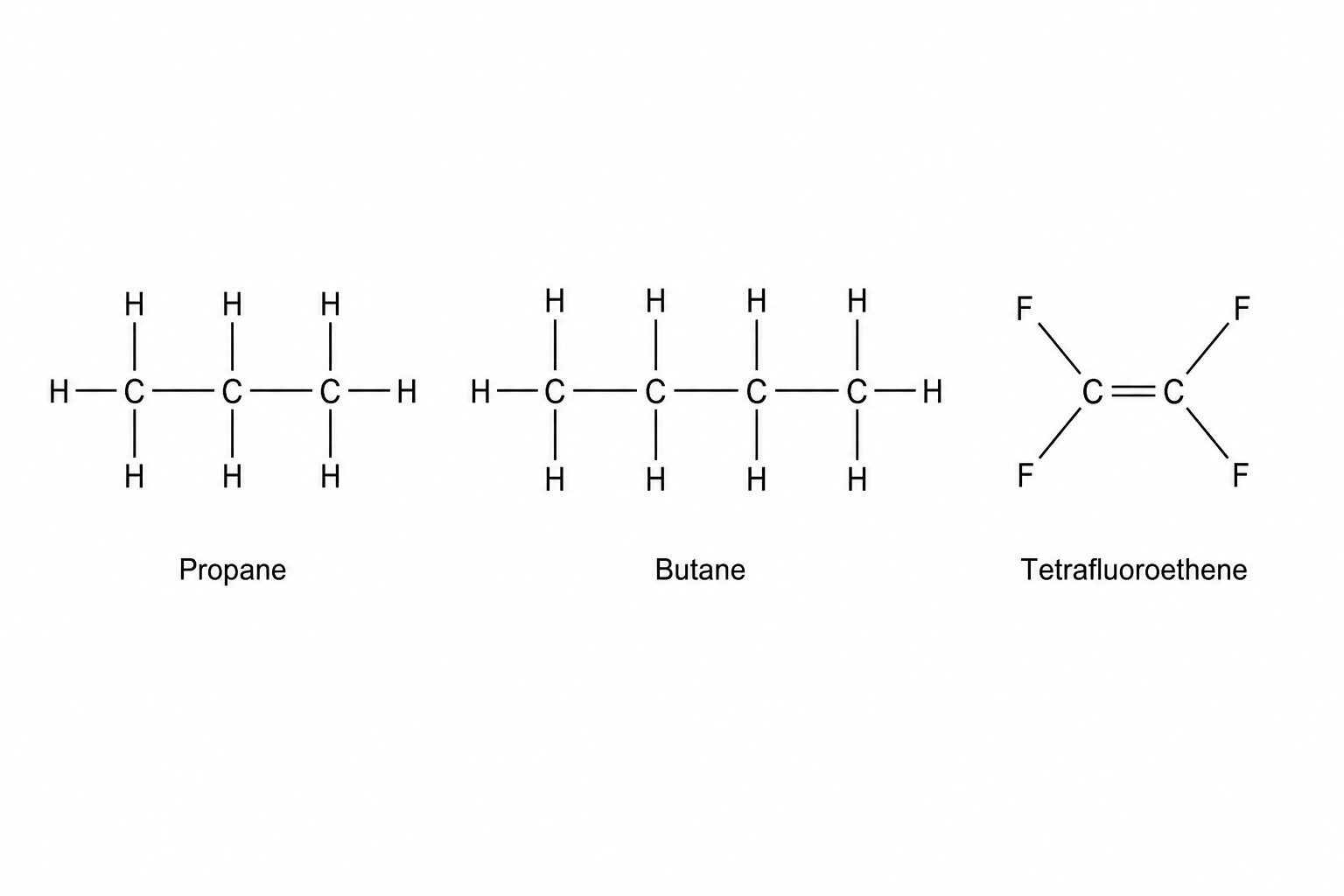
Displayed formulae of propane, butane, and tetrafluoroethene. Propane is represented as a chain of three carbon atoms single-bonded to each other, with eight single-bonded hydrogen atoms distributed around them (C3H8). Butane is represented as a chain of four carbon atoms single-bonded to each other, with ten single-bonded hydrogen atoms distributed around them (C4H10). Tetrafluoroethene is shown with two carbon atoms connected by a double bond, where each carbon atom is additionally bonded to two fluorine atoms (C2F4).

a.

Propane and butane are both members of the homologous series called the alkanes.

Write down two reasons why propane and butane are members of the same homologous series.

[2]
b.

Many tetrafluoroethene molecules react together to form the polymer poly(tetrafluoroethene) (PTFE). This reaction is called addition polymerisation.

Why do tetrafluoroethene molecules undergo polymerisation but propane molecules do not?

[1]
c.

Complete the diagram to show the displayed formula of the repeating unit of poly(tetrafluoroethene).
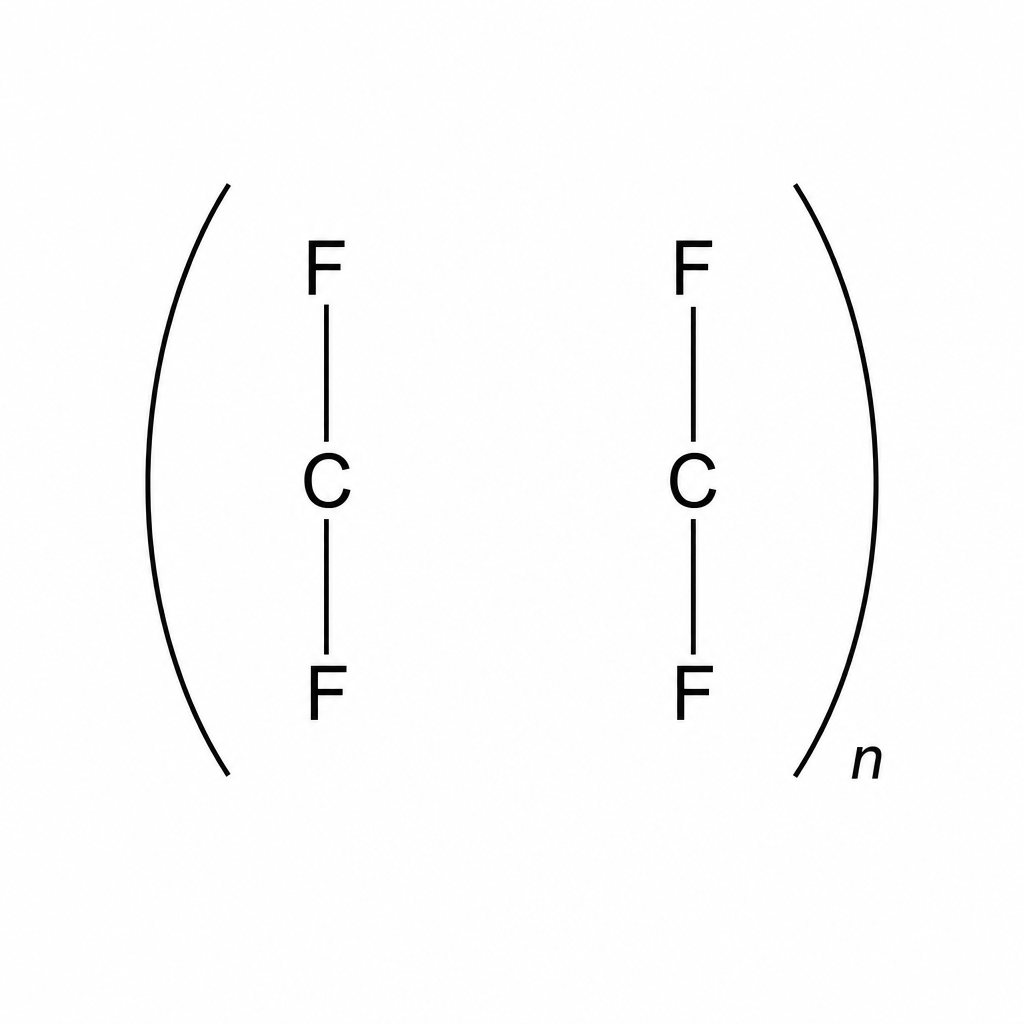
Incomplete repeating unit diagram for poly(tetrafluoroethene), showing two carbon atoms inside curved brackets with a subscript 'n' on the bottom right. Each carbon atom has single bonds leading upwards and downwards to fluorine atoms, but there is no bond shown between the two carbon atoms, nor are there any horizontal bonds extending outwards through the brackets on either side.

[1]
d.

Butane gas is often used as a fuel in portable camping stoves.

Incomplete combustion of butane can occur if the campers use the stove inside a poorly ventilated space, such as a closed tent.

Describe how incomplete combustion of hydrocarbons such as butane happens and the problems/hazards it can cause for campers.

Include a balanced symbol equation in your answer.

[5]

Organic chemistry Questions

  1. GCSE
  2. /Chemistry
  3. /Organic chemistry