Molecules and ionic structures can be represented using different diagrams or models.
The table shows a dot and cross diagram and a 3-D ball-and-stick model of ammonia, NH3\text{NH}_3NH3.
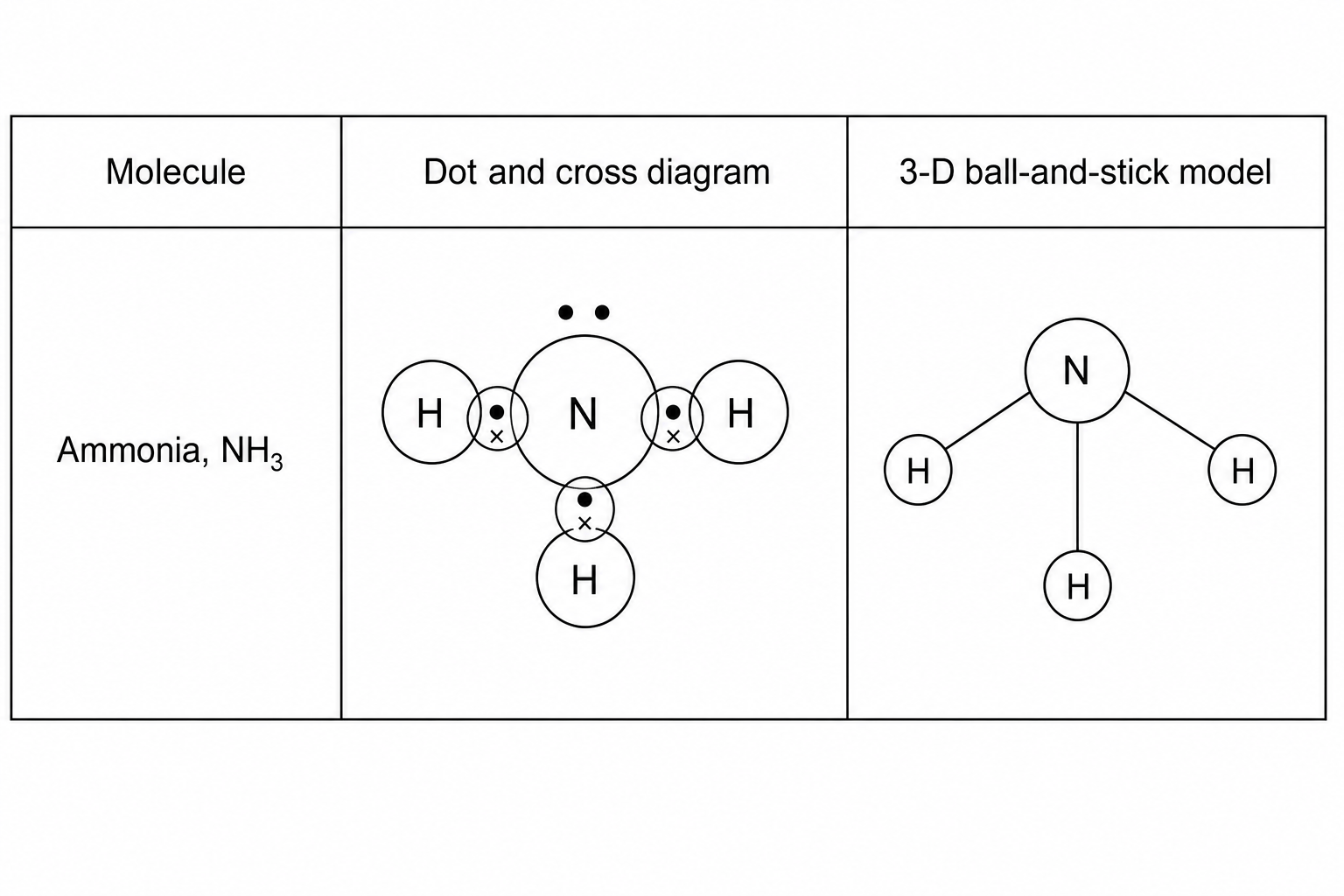
Describe the advantages and limitations of these two different ways of representing a molecule of ammonia.
Dot and cross diagrams can also be used to show ionic compounds.
Magnesium oxide, MgO\text{MgO}MgO, is an ionic compound.
- The electronic structure of a magnesium atom is 2.8.2.
- The electronic structure of an oxygen atom is 2.6.
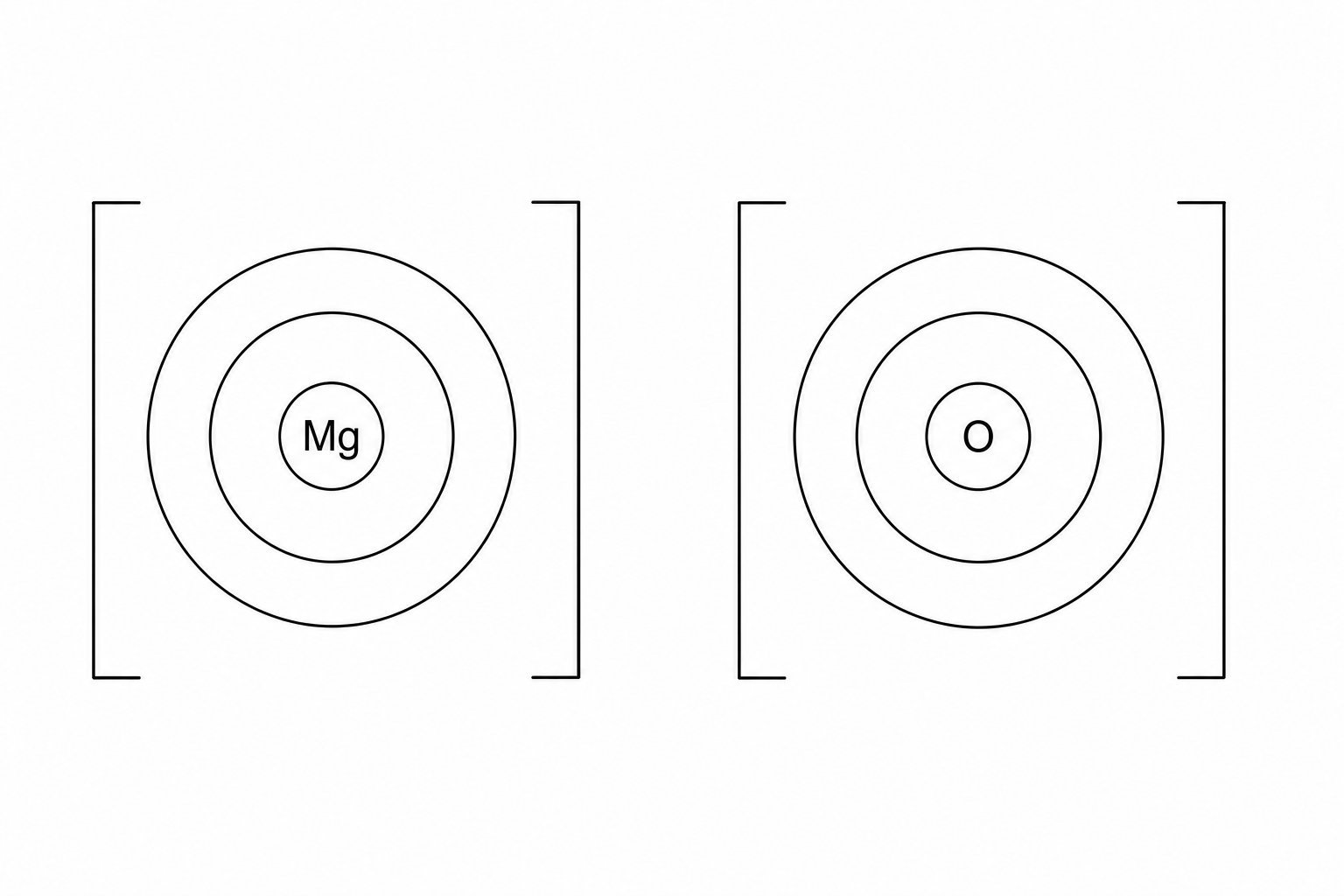
Complete the dot and cross diagram to show the arrangement of electrons and the charges on the ions in magnesium oxide.
Magnesium oxide has a giant ionic lattice structure and is a solid at room temperature.
Describe how the ions are arranged in a giant ionic lattice.
Which statements about magnesium oxide are correct?
Tick (✓\checkmark✓) two boxes.
[ ] Magnesium oxide has a simple molecular structure with weak intermolecular forces. [ ] Magnesium oxide can conduct electricity when in the solid state. [ ] Magnesium oxide contains a metal element and a non-metal element. [ ] Magnesium oxide can conduct electricity when molten. [ ] Magnesium oxide has a very low melting point.