Heat energy changes accompany many reactions
- Nearly every chemical change is accompanied by a transfer of heat energy.
- Energy either leaves the reacting mixture or is taken in from around it.
- When the reaction happens in solution, that transfer shows as a change in temperature.
- A thermometer in the mixture therefore measures the heat change indirectly.
- The four changes named in this topic are dissolving, neutralisation, displacement and precipitation.
Key Idea
A temperature change is the evidence for an energy change, not the energy change itself.
An exothermic change gives heat out
Definition
Exothermic reaction
A reaction in which heat energy is given out to the surroundings.
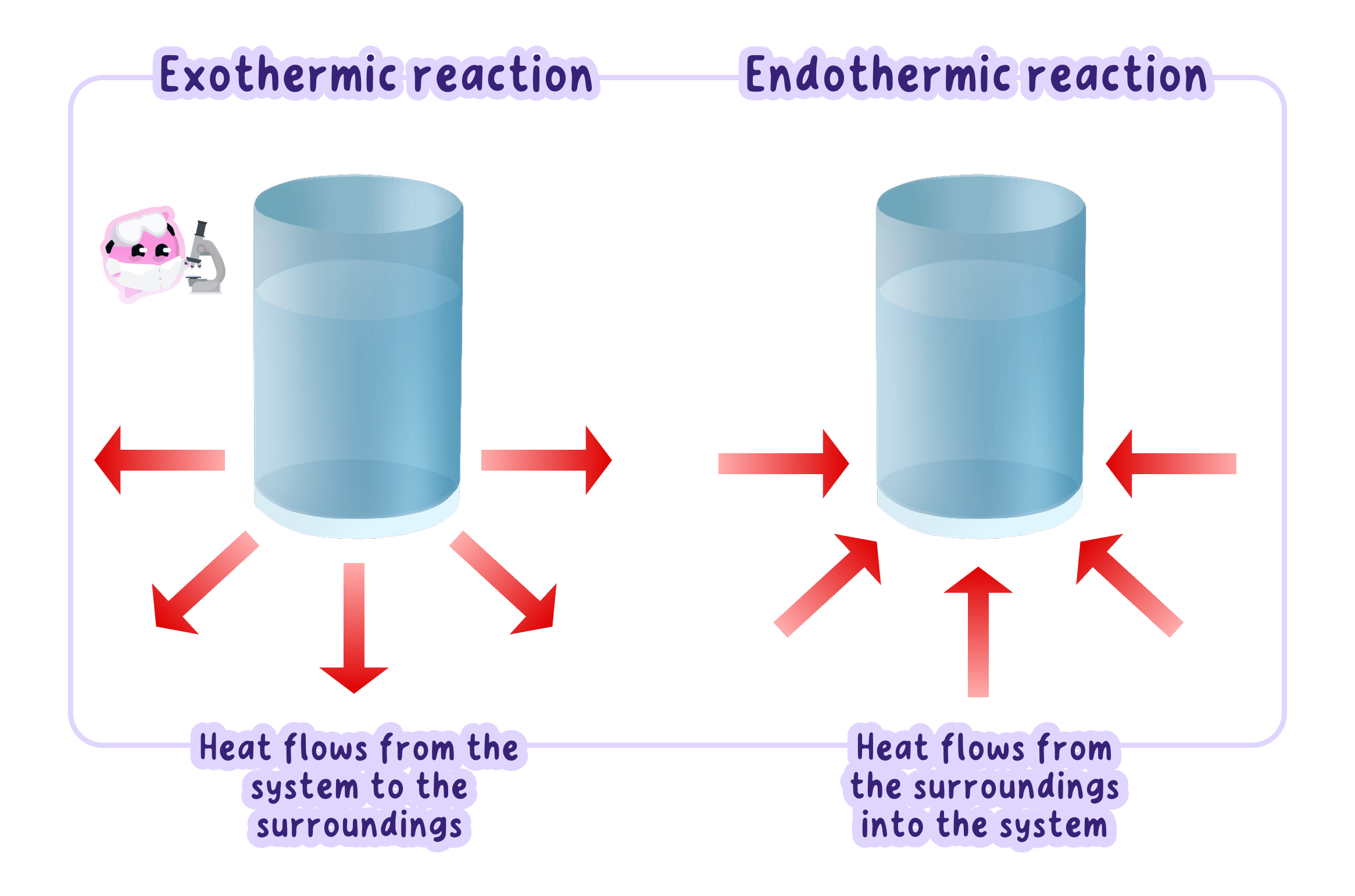
- An exothermic change releases heat energy into the surroundings.
- The surroundings get warmer, so the temperature of the mixture rises.
- Neutralisation of an acid by an alkali is exothermic.
- Displacement reactions, such as magnesium in copper sulfate solution, are exothermic.
- Combustion is the most familiar example, since burning always gives out heat.
Example
- Acid and alkali mixed: the temperature of the solution rises by several degrees.
- Magnesium in copper sulfate: the mixture warms noticeably as copper is displaced.
An endothermic change takes heat in
Definition
Endothermic reaction
A reaction in which heat energy is taken in from the surroundings.
- An endothermic change takes heat energy in from the surroundings.
- The surroundings get colder, so the temperature of the mixture falls.
- Some salts dissolving in water is endothermic, and the beaker feels cold.
- Ammonium nitrate dissolving is the usual example, which is how a cold pack works.
- Thermal decomposition is endothermic, since a compound is broken apart by heating it.
Common Mistake
Not every dissolving is endothermic: some salts warm the water instead.
Measuring the change with a thermometer
- The starting temperature of the solution is recorded before anything is added.
- The reactants are mixed and the temperature is followed until it stops changing.
- The highest reading is taken for an exothermic change and the lowest for an endothermic one.
- The temperature change is the difference between that reading and the start.
- A polystyrene cup with a lid reduces the heat lost to the room, which makes the reading more accurate.
Note
Stirring before each reading keeps the temperature even throughout the mixture.
Reading the direction from the data
- A rise in temperature means heat was given out, so the change is exothermic.
- A fall means heat was taken in, so the change is endothermic.
- The size of the change says how much energy moved, not which direction.
- A change of only a fraction of a degree may be within the uncertainty of the thermometer.
- Stating the direction and the evidence is what turns a reading into a conclusion.
Self review
- Name the four kinds of change listed in this topic as having heat energy changes.
- What happens to the temperature in an exothermic reaction?
- Give one example of an endothermic change.
- Why is a polystyrene cup used rather than a glass beaker?
- A mixture cools by 4 degrees when two solutions are mixed. What does that show?
